
Picture yourself standing at one end of a city street, looking toward the next intersection. That stretch of road in front of you? There is a good chance it measures close to 100 feet. But unless someone hands you a tape measure, 100 feet is just a number, hard to picture and harder to feel.
Have you ever wondered how long 100 feet really is? Is it the length of a building, a whale, or an airplane? The truth is, 100 feet shows up in everyday life far more often than most people realize.
In simple terms, 100 feet equals 30.48 meters or 1,200 inches, a distance long enough to matter in sports, construction, and travel, yet short enough to walk in about half a minute. Understanding it helps you estimate space, judge distances, and make sense of the world around you.
Below, you will find 10 real-life examples that turn 100 feet from an abstract number into something you can clearly see in your mind.
How Long Is 100 Feet?
One hundred feet is a measurement you will meet in many parts of daily life, from the height of buildings to the length of vehicles and sports fields. It sits in a useful middle zone: much longer than a room, much shorter than a city block.
Converted precisely, 100 feet equals 1,200 inches, 3,048 centimeters, or 30.48 meters. It is also 33.33 yards, exactly one third of the distance from goal line to goal line on an American football field.
Knowing this measurement pays off more than you might expect. It helps you picture how tall a 10-story building is, how much street parking seven cars need, or how far 100 feet of garden hose actually reaches. Once you can see it, you can use it.
100 Feet to Inches, Meters, and Centimeters
Here are the exact conversions for 100 feet and nearby values:
| Feet | Inches |
|---|---|
| 25 | 300 |
| 50 | 600 |
| 75 | 900 |
| 100 | 1200 |
| 125 | 1500 |
| Feet | Meters |
|---|---|
| 25 | 7.62 |
| 50 | 15.24 |
| 75 | 22.86 |
| 100 | 30.48 |
| 125 | 38.10 |
| Feet | Centimeters |
|---|---|
| 25 | 762 |
| 50 | 1524 |
| 75 | 2286 |
| 100 | 3048 |
| 125 | 3810 |
10 Real-Life Examples That Will Surprise You
From ocean giants to passenger jets, here are 10 things that measure about 100 feet.
Blue Whale

The blue whale is the largest animal known to have ever lived, and the biggest individuals stretch about 100 feet from head to tail, roughly 30 meters. Most adults measure between 75 and 90 feet, but exceptional specimens push right up against the 100-foot mark.
To picture it, imagine laying a blue whale across a basketball court: nose at one baseline, tail flukes hanging just past the other. Its sheer bulk makes 100 feet feel enormous, yet it moves through water with surprising grace.
A blue whale’s heart alone can weigh as much as a small car, and its tongue may weigh as much as an elephant. At about 100 feet long, it remains the standard reference for the largest creature on Earth.
Boeing 737

A Boeing 737-700, one of the most common passenger jets in the world, measures about 110 feet from nose to tail, just 10 feet longer than our 100-foot benchmark. The stretched 737-800 reaches nearly 130 feet.
Next time you board a flight, walk the aisle and count: the cabin you are sitting in spans a distance slightly longer than 100 feet. Standing on the tarmac beside one, its length runs about the same as a 10-story building laid on its side.
Airlines love the 737 because its size hits a sweet spot, big enough for around 140 passengers yet small enough for regional airports. Gate planners use its roughly 110-foot length to calculate exactly how much ramp space each parked aircraft needs.
10-Story Building

In residential construction, one story typically measures about 10 feet from floor to floor. Multiply by ten, and a standard 10-story apartment building stands about 100 feet tall.
Stand across the street from a mid-rise apartment block and count the floors to ten. The distance from the sidewalk to the roofline is your 100 feet, rising straight up instead of stretching out.
Here is the easiest mental ruler for vertical distances: each floor is about 10 feet, so a building’s height in stories times ten gives a quick estimate in feet. A 10-story building is practically the definition of 100 feet tall.
Basketball Court

A regulation NBA basketball court measures 94 feet from baseline to baseline, just 6 feet shy of 100 feet. Add the space behind one hoop and you have hit the mark almost exactly.
Anyone who has watched a fast break has seen 100 feet in motion: a player sprinting the full court covers nearly the entire distance in about four seconds.
The court’s 50-foot width is exactly half its near-100-foot length, a tidy ratio that makes basketball courts one of the handiest real-world references for both measurements.
Five 20-Foot Shipping Containers

The workhorse of global trade, the standard 20-foot shipping container, measures exactly 20 feet long. Line up five of them end to end and you have precisely 100 feet, no “about” needed.
Picture a container ship’s deck or a rail yard: those corrugated steel boxes in red, blue, and green. Five in a row is a length you can walk in half a minute, and a favorite reference for logistics planners.
In shipping, the 20-foot container is the base unit of capacity, one TEU (twenty-foot equivalent unit). So 100 feet of containers is literally 5 TEUs, a conversion freight professionals use every single day.
Two 53-Foot Semi-Trailers
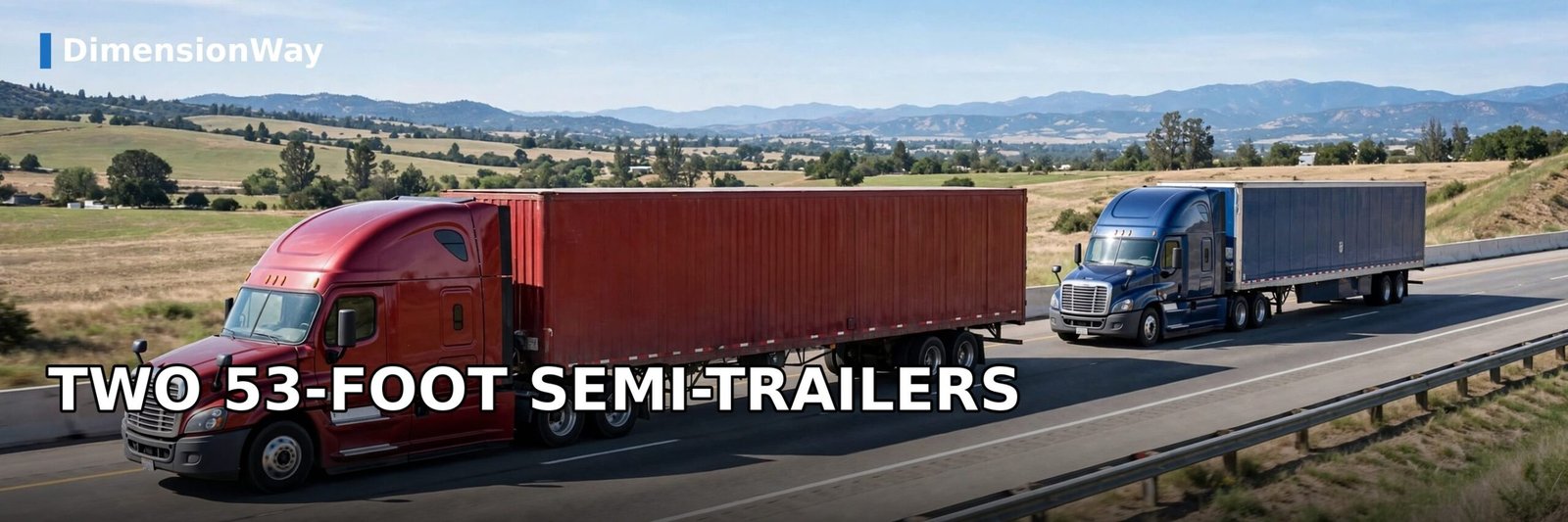
The standard semi-trailer on American highways measures 53 feet long. Park two of them bumper to bumper and they stretch 106 feet, just a touch beyond 100 feet.
On the interstate, you pass 100 feet of truck every time two big rigs line up at a rest stop. It is a distance built for cargo: wide enough for pallets, long enough for a small warehouse on wheels.
The 53-foot length is no accident. It is the federal maximum for trailers on US highways, balancing cargo space against turning radius. Two of them make one of the longest everyday objects you will ever see up close.
Seven Average Cars
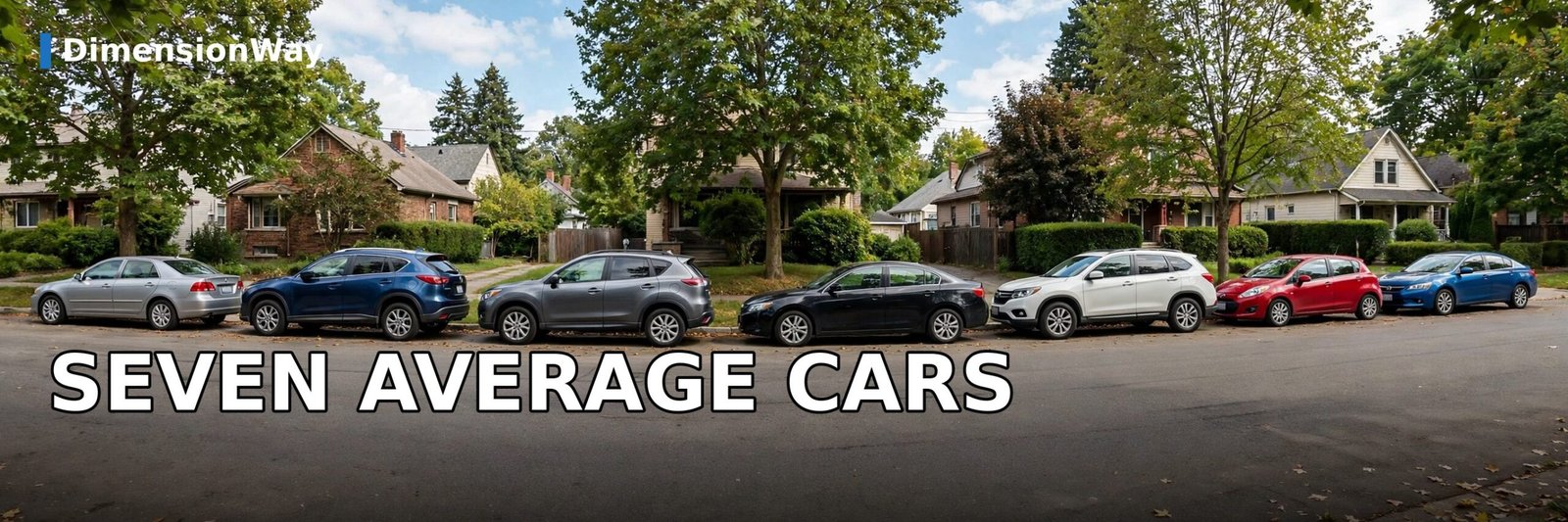
The average sedan or small SUV measures about 15 feet long. Park seven of them bumper to bumper and they cover roughly 105 feet, close enough to 100 feet to use as a mental measuring tape.
Look down any residential street: seven parked cars in a row is a completely ordinary sight, and now you know it represents about 100 feet of curb space.
City planners use this exact math when designing parking zones. A 100-foot stretch of curb fits about seven standard spaces, so next time you hunt for parking, count the cars to estimate the block.
100-Foot Superyacht

In the yachting world, 100 feet is a recognized milestone. A “100-foot superyacht” is a standard size class, measuring about 30.5 meters from bow to stern.
Picture a vessel longer than three school buses, with multiple decks rising above the waterline. At 100 feet, a yacht carries crew quarters, guest cabins, and often a helicopter pad.
Yachts are measured by LOA, or length overall, and brokers list it to the foot. Marina fees, crew requirements, and regulations all change at length thresholds, and 100 feet is one of the big ones.
Two Humpback Whales

An adult humpback whale typically measures about 50 feet long, half the length of its blue whale cousin. Two humpbacks swimming nose to tail would span just about 100 feet.
Whale-watching boats often encounter humpbacks in pairs. Imagine two of those massive bodies gliding side by side: the combined length fills 100 feet of ocean without effort.
Humpbacks are famous for their haunting songs, which can travel for miles underwater, and for breaching, launching their 40-ton bodies clear of the surface. Two of them end to end turn an abstract 100 feet into something alive.
Fire Truck Aerial Ladder

The aerial ladders mounted on fire trucks typically extend about 100 feet into the air, built to reach the upper floors of mid-rise buildings during rescues and firefighting.
Watch a ladder truck at work: the long ladder rising ten stories into the sky is 100 feet of reach, pivoting on a turntable while firefighters climb toward the tip.
Modern aerials can also pump water through a nozzle at the ladder’s tip, turning the full 100-foot extension into a giant water cannon. It is one of the few everyday machines designed around the 100-foot dimension.
How to Visualize 100 Feet in Everyday Life
Without a tape measure, use your body and your surroundings:
- Walk it: the average adult step covers about 2.5 feet, so 40 steps is roughly 100 feet.
- Third it: an American football field is 300 feet long, so 100 feet is exactly one third of it.
- Stack it: ten stories at 10 feet each, or seven cars at 15 feet each.
Pick the reference that fits the situation, walking for ground distances and stories for heights, and 100 feet becomes second nature.
FAQs
1. How many inches are in 100 feet?
There are 1,200 inches in 100 feet, since one foot equals 12 inches.
2. How many meters is 100 feet?
100 feet equals 30.48 meters, a little over 30 meters.
3. How many yards is 100 feet?
100 feet equals 33.33 yards, exactly one third of 100 yards.
4. How long does it take to walk 100 feet?
At a normal pace of 3 to 4 feet per second, it takes about 25 to 35 seconds, roughly half a minute.
5. How many steps is 100 feet?
With an average adult step of about 2.5 feet, 100 feet takes roughly 40 steps.
6. How many car lengths is 100 feet?
The average car is about 15 feet long, so about seven cars parked bumper to bumper equal 100 feet.
7. Is 100 feet longer than a basketball court?
Yes, slightly. A regulation court is 94 feet long, so 100 feet is 6 feet longer.
8. How many stories is 100 feet?
At about 10 feet per story, 100 feet is roughly a 10-story building.
9. Is 100 feet the same as 100 meters?
No, a common mix-up. 100 meters equals 328 feet, more than three times longer than 100 feet.
10. What is 100 feet compared to a football field?
An American football field is 300 feet long, so 100 feet is exactly one third of the field.
Conclusion
One hundred feet is no longer just a number. It is a blue whale gliding through the ocean, a Boeing 737 on the tarmac, a 10-story building against the sky. It is 1,200 inches, 30.48 meters, and exactly one third of a football field. Whether you are estimating parking space, picturing a construction project, or just satisfying curiosity, these real-world comparisons turn 100 feet into a distance you can see, walk, and remember.
Related Reading
Related reading:
- How Far Is 300 Feet (13 Real-Life Examples That Will Surprise You)
- 50 Feet Long (11 Real-Life Examples That Will Surprise You)
- How Long Is 3 Feet? (10 Real-Life Examples That Will Surprise You)
Sources
- NOAA Fisheries (blue whale size data)
- Boeing 737 family specifications
- NBA Official Rule Book (court dimensions)
- ISO 668 (freight container dimensions)
- US Federal Highway Administration (53-foot trailer standard)

James Carter is the founder and editor of DimensionWay, where he researches, measures, and verifies real-world dimensions — from everyday objects to world-famous landmarks. Every number published on DimensionWay is cross-checked against manufacturer specifications and official sources, so readers always get accurate, easy-to-visualize comparisons.

7 thoughts on “How Long Is 100 Feet? (10 Real-Life Examples That Will Surprise You)”