
Understanding how far 300 feet is becomes much easier when you compare it to familiar things around you. Instead of seeing it as just a number, imagining real objects and places helps turn this distance into something you can clearly picture in your mind.
When you break it down, 300 feet is longer, taller, and wider than most people realize. From the height of famous structures to the size of everyday objects, using simple comparisons makes this distance feel more real and easier to visualize.
You might be surprised to see how often a distance like 300 feet appears in the world around you. By relating it to things you already know like buildings, natural wonders, and large open spaces, it becomes much clearer and much easier to understand.
How Far Is 300 Feet?
When you first hear the question How Far Is 300 Feet?, it might feel like an abstract measurement. But once you start imagining it through real examples, the distance becomes almost visual. It turns into something you can feel, compare, and understand in a more natural, personal way.
By connecting 300 feet to everyday scenes and remarkable landmarks, the number stops being just a figure and becomes a clear picture. This simple shift makes learning about distance more enjoyable, more relatable, and surprisingly satisfying as each comparison builds a stronger sense of scale.
300 feet = 3,600 inches = 9,144 centimeters = 91.44 meters = 100 yards = 0.091 kilometers = 0.0568 miles
How Long is 300 Feet to Walk?
When you think about how long it takes to walk 300 feet, the truth is—it’s much shorter than most people imagine. At a normal, relaxed walking pace, this distance usually takes less than a minute to cover. It feels like a short stroll, the kind you take when moving from one end of a parking area to another or walking across a small open space.
Even when walking slowly, the distance doesn’t feel tiring or long; it passes naturally, almost effortlessly. Understanding this helps the reader picture 300 feet not just as a measurement, but as a small, everyday movement that fits easily into real life.
13 Real-Life Examples That Will Surprise You
1. Statue of Liberty
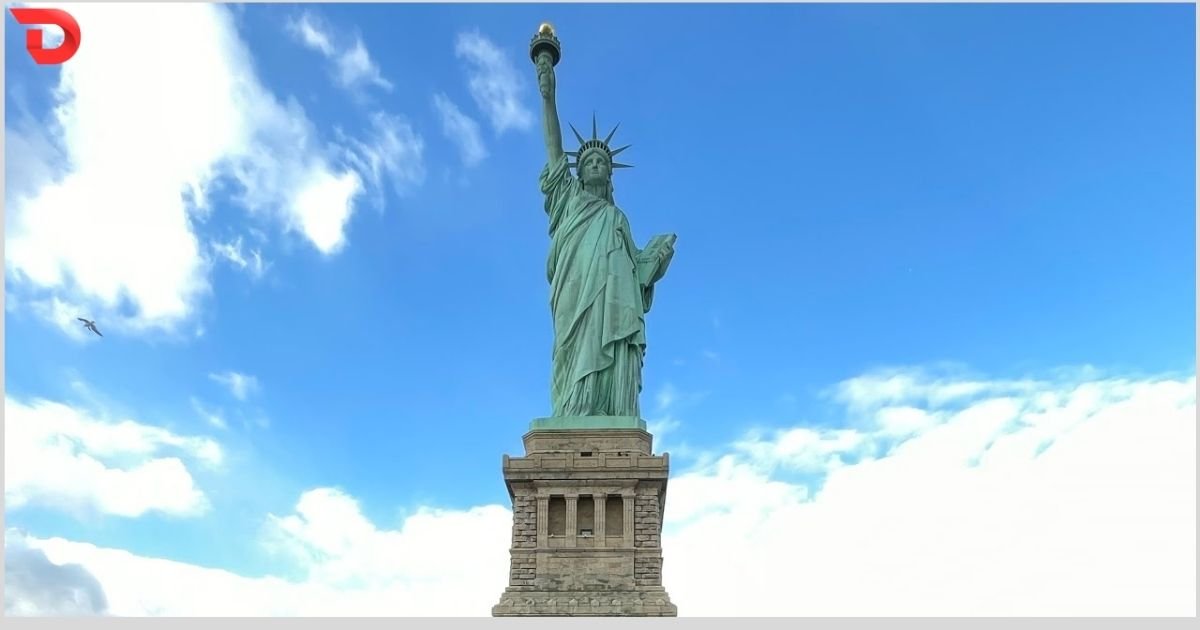
The Statue of Liberty herself is about 151 feet tall from base to torch – the often-quoted 305-foot figure is the total height including her pedestal and foundation. Even at 151 feet, she towers over New York Harbor, and imagining two of her stacked gives a real sense of 300 feet.
Stand at the statue’s feet and look up: the torch feels impossibly high. Doubling that distance in your mind gives you a true-to-life reference for 300 feet.
A gift from France dedicated in 1886, she has greeted ships in New York Harbor for well over a century – and her 151-foot figure makes the double-height of 300 feet easy to picture.
2. Three Blue Whales

A single blue whale is about 100 feet long. Line up three of them, and you get a total of 300 feet. Imagining these massive creatures stretched out makes the distance feel enormous, yet tangible.
Blue whales are the largest animals on Earth, and their combined length can stretch across a big yard or field. Thinking in terms of whales helps the mind grasp the sheer size of 300 feet.
Three of the largest animals on Earth, lined up nose to tail, turn an ocean-scale creature into a measurement you can picture.
3. Big Ben (Belfry Level)
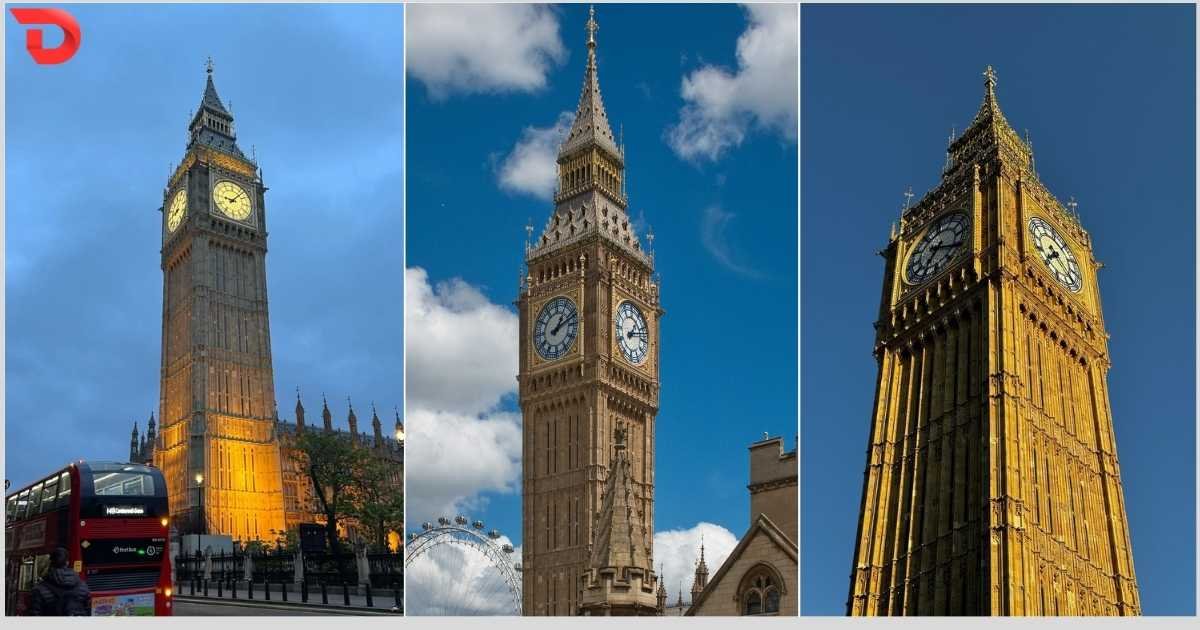
Big Ben’s clock tower is iconic. The bell level, or belfry, sits roughly at 300 feet. Standing below and looking up gives a feeling of vertical distance that matches the measurement perfectly.
From street level, 300 feet is high enough to notice the details on the tower fading as you look up. It’s taller than most residential buildings and gives a strong sense of scale.
Completed in 1859, the tower has watched over London for more than 160 years – and its belfry gives that long history a height you can see.
4. Space Needle Mid-Height

The Space Needle is 605 feet tall. Its middle point is about 300 feet. Looking up to this height gives a clear idea of what 300 feet feels like in a vertical sense.
From the ground, 300 feet reaches just below the observation deck. Walking this distance horizontally is short, but vertically, it shows how high a tall structure really is.
Built for the 1962 World’s Fair as a symbol of futuristic design, the Needle’s mid-height makes 300 feet feel both impressive and reachable.
5. The Shambles (3/4 Length)

The Shambles street in York is about 400 feet long. Covering three-quarters of it equals roughly 300 feet. Walking along it gives a clear idea of how far 300 feet stretches.
From the beginning to near the end, 300 feet takes a minute or two to walk. The narrow street lined with buildings makes it easy to picture the length in a familiar way.
One of England’s oldest streets, dating back to the 14th century, the Shambles packs 300 feet of medieval charm into a two-minute stroll.
6. Two Airport Runways

A typical airport runway is about 150 feet wide. Place two side by side, and you reach 300 feet. Imagining this helps visualize the distance across a large open area.
Walking along two runways side by side would feel long and spacious. It gives a clear sense of 300 feet horizontally, stretching further than most open spaces we experience daily.
From early grass strips to today’s paved runways, airports have grown enormously – and two runway-widths side by side show just how much space modern aviation needs.
7. Missouri State Capitol (Width)

The front of the Missouri State Capitol building spans about 300 feet wide. Visualizing this distance helps picture the grandeur of large public buildings.
Standing at one corner and looking across the façade shows how long 300 feet really is. Walking this width feels like crossing a small square or plaza.
Finished in 1917 in grand classical style, the capitol’s 300-foot-wide facade shows how civic architecture was built to impress at scale.
8. Blackpool Tower (3/5 Height)

Blackpool Tower reaches 518 feet tall. About 300 feet equals roughly three-fifths of its height. Imagining this portion gives a realistic sense of vertical distance.
Looking up to three-fifths of the tower’s height feels high, yet achievable in mental comparison. It’s a way to turn abstract measurements into something visual and understandable.
Opened in 1894 as the centerpiece of British seaside entertainment, the tower’s three-fifths mark is a handy visual anchor for 300 feet.
9. White Knight Tree

The White Knight Tree, a towering coast redwood, reaches around 300 feet. Thinking of this giant tree helps visualize extreme height in nature.
Standing next to it, 300 feet stretches far above the treetops. Walking the base around the tree gives a perspective on both vertical and horizontal scale.
Some coast redwoods have stood for thousands of years; the White Knight Tree puts 300 feet of that ancient growth into a single towering view.
10. American Football Field

From one goal line to the other, an American football field is exactly 300 feet. This makes it an easy, familiar way to picture the distance.
Running across a field shows how long 300 feet feels in motion. A single sprint gives a physical sense of the number, making it easier to remember.
The standardized 100-yard field is one of America’s most familiar measurements – exactly 300 feet, goal line to goal line.
11. Professional Soccer Field (Minimum Length)

A standard soccer pitch starts at around 90 meters, which equals roughly 300 feet. This is the minimum length for professional play.
Walking from one goal to the other demonstrates the distance clearly. Imagining a match in progress makes 300 feet feel like part of a real event.
A full-size pitch’s minimum length lands right at 300 feet, making a soccer field a ready-made measuring stick.
12. Twenty Parked Cars

An average car is 15 feet long. Line up twenty cars bumper-to-bumper, and you get 300 feet. This everyday example helps visualize the distance in practical terms.
Walking along twenty cars shows the space 300 feet covers. It’s easy to relate to parking lots or streets, making the measurement tangible.
Twenty average cars bumper to bumper turn an everyday parking-lot sight into a 300-foot measuring tape.
13. One City Block

A typical city block measures roughly 300 feet. Walking one block gives a simple sense of how far this distance really is.
Crossing a block is familiar to most people. It’s short enough to walk comfortably, yet long enough to measure 300 feet in everyday life.
A typical city block is about 300 feet – a distance most people walk in a minute or two without thinking about it.
For perspective, 300 feet equals exactly 100 yards – the full length of an American football field.
FAQs
1. How long does it take to walk 300 feet?
At a normal walking pace, 300 feet takes about 1 to 2 minutes to cover.
2. How many meters is 300 feet?
300 feet equals 91.44 meters.
3. How many yards is 300 feet?
300 feet is exactly 100 yards – the length of an American football field from goal line to goal line.
4. How many inches are in 300 feet?
There are 3,600 inches in 300 feet.
Conclusion
After exploring landmarks, animals, and everyday objects, it is clear how far is 300 feet. From towering buildings to long streets, these comparisons make the distance easy to picture. Now 300 feet is no longer just a number; it is something you can truly imagine and understand.
Related reading:
50 Feet Long (11 Real-Life Examples That Will Surprise You)
How Long Is 3 Feet? (10 Real-Life Examples That Will Surprise You)

James Carter is the founder and editor of DimensionWay, where he researches, measures, and verifies real-world dimensions, from everyday objects to world-famous landmarks. Every number published on DimensionWay is cross-checked against manufacturer specifications and official sources, so readers always get accurate, easy-to-visualize comparisons.

7 thoughts on “How Far Is 300 Feet (13 Real-Life Examples That Will Surprise You)”