You are standing in a furniture store, staring at a couch, wondering if it will fit through your front door. Or you are at a park, eyeing the gap between two trees for a hammock. There is no tape measure in your pocket. Now what?
Good news: your body is already a measuring toolkit. With a little practice, you can estimate most everyday distances within about 5 to 10 percent of their true length, no tools required. This guide teaches you seven reliable methods, from counting your paces to using your phone, so you never have to guess blindly again.
Can You Really Estimate Distance Without Measuring Tools?
Yes, and more accurately than most people think.
Every method below works on the same principle: you calibrate once against a known measurement, then reuse that personal reference forever. Measure your own pace on a football field one time, and you can estimate any outdoor distance for the rest of your life. Check your arm span against a doorway once, and you carry a yardstick on your body.
Accuracy varies by method. A calibrated pace count lands within about 5 to 10 percent. Your phone’s GPS is even better outdoors. Rough tricks like the thumb method are wider, around 20 to 30 percent, but still far better than a wild guess. The comparison table later in this guide ranks all seven so you can pick the right one for the job.
7 Reliable Ways to Estimate Distance Without a Tape Measure
Start with the method that fits your situation. Each one includes how to calibrate it, because an uncalibrated estimate is just a guess.
Method 1: Count Your Paces
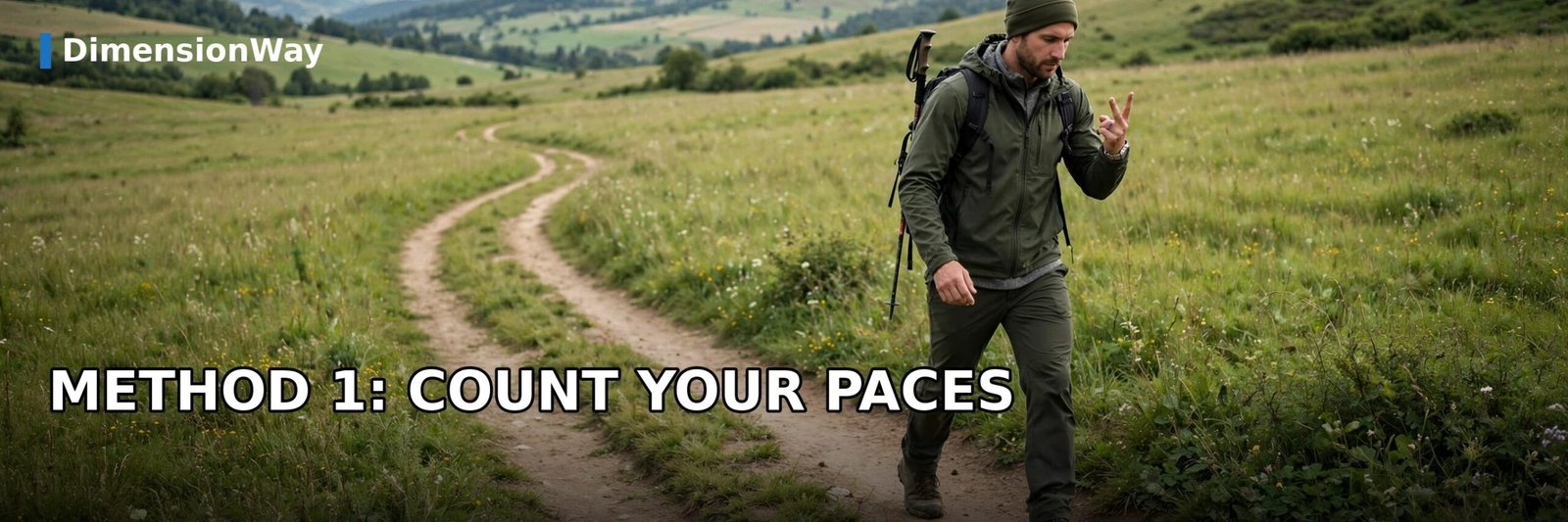
This is the classic outdoor method, taught in military land navigation for decades. A “pace” means two natural steps, one with each foot. For most adults, one pace covers about 5 feet.
To calibrate, walk a known 100-foot stretch (a basketball court is 94 feet, close enough for practice) and count your paces. Divide the distance by your pace count to get your personal pace length. Most people land between 4.5 and 5.5 feet.
In the field, walk the distance while counting paces, then multiply. Twenty paces at 5 feet each is 100 feet. The method shines on open ground like fields, trails, and parking lots. It gets harder on steep slopes or in thick brush, where your stride shortens without you noticing.
Method 2: Use Your Body as a Ruler
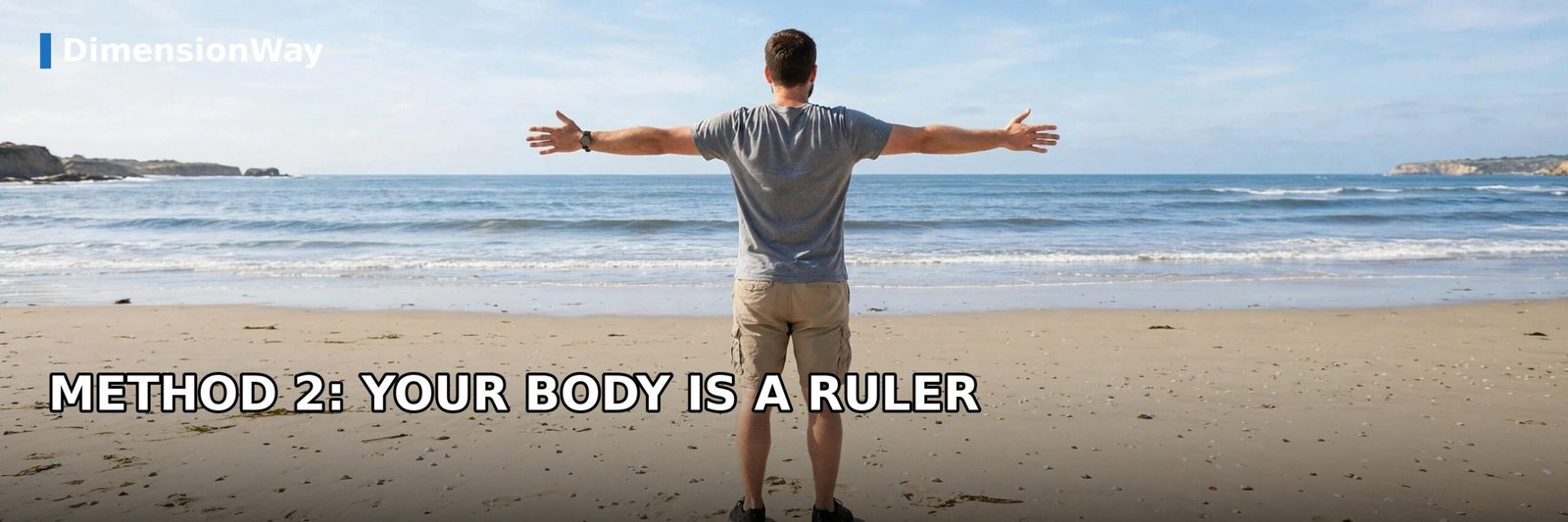
You carry several surprisingly consistent measuring tools. Your arm span, fingertip to fingertip, is roughly equal to your height. A 6-foot person has about a 6-foot wingspan, which makes a great rough yardstick for walls and rooms.
Your foot is another one. An adult man’s foot measures about 10 to 11 inches long, a woman’s about 8.5 to 9.5 inches. Walk heel to toe along a short distance and count feet. Twelve of your feet is roughly 10 feet.
Your hand helps too. The span from thumb tip to pinky tip with fingers spread is about 8 to 9 inches for an adult man and around 7 inches for a woman. The width of your four fingers together is roughly 3 to 4 inches. Measure each of these once against a real ruler and write the numbers in your phone. From then on, your body is a calibrated toolkit.
Method 3: The Thumb Trick
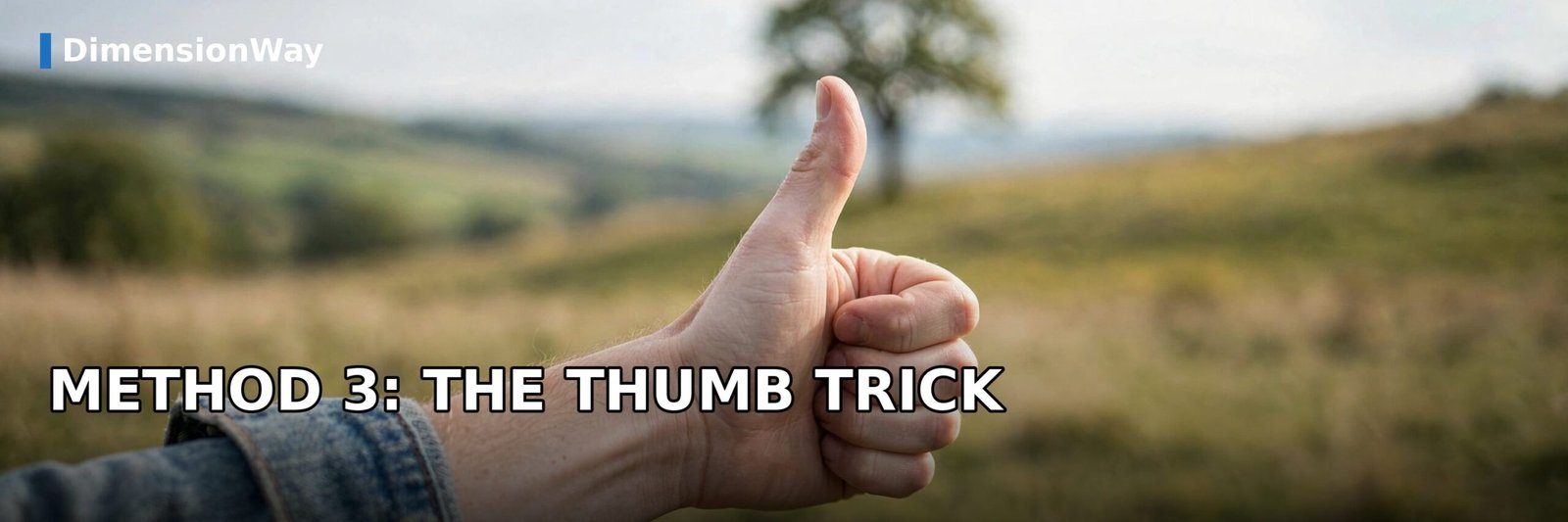
This old scout trick estimates the distance to a far object, like a tree or a building. Hold your arm straight out with your thumb up. Close one eye and note what your thumb covers. Then switch eyes. Your thumb will appear to “jump” sideways against the background.
Here is the useful part: the distance to the object is roughly ten times the distance your thumb appeared to jump. Estimate the jump against the landscape (say your thumb seemed to move about 30 feet across a distant field), multiply by ten, and the object is about 300 feet away.
This method is the roughest of the seven, typically within 20 to 30 percent, because judging the jump distance is itself an estimate. Use it for quick far-distance guesses, not for anything that matters.
Method 4: Everyday Objects as References
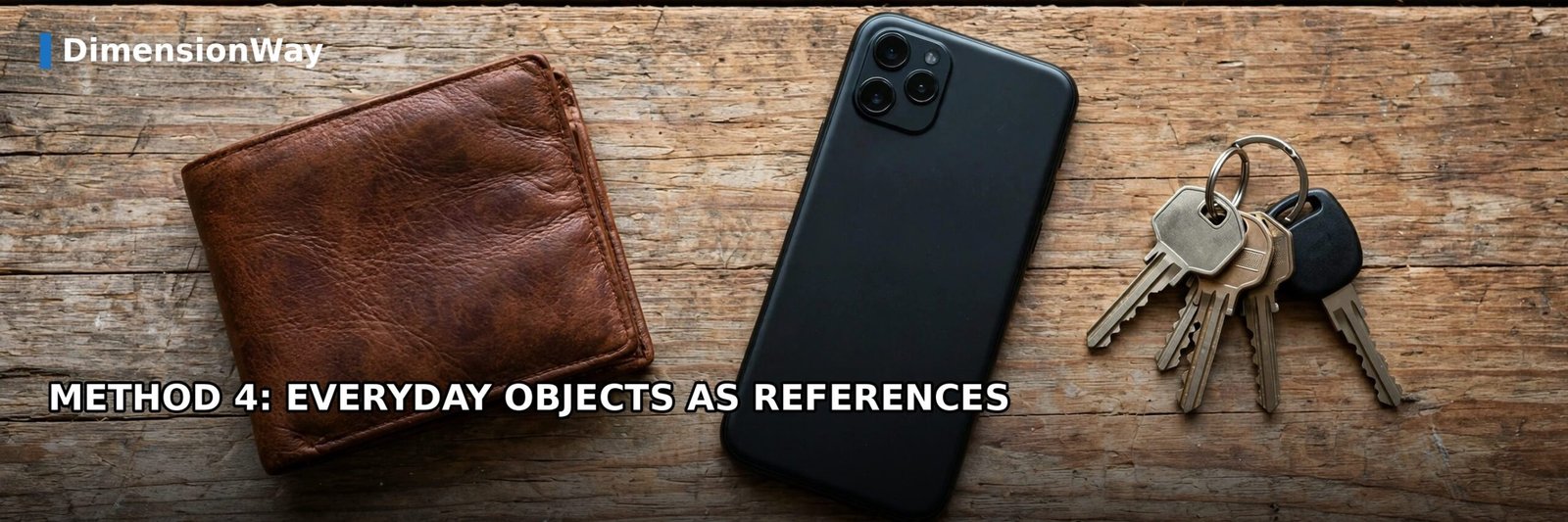
Your pockets and wallet hold standard-size objects. A US dollar bill is exactly 6.14 inches long. A credit card is 3.375 inches long and 2.125 inches wide, an international standard. A US quarter is just under an inch across at 0.955 inches.
Chain them together. Four dollar bills laid end to end are about 24.5 inches, just over 2 feet. Three credit cards are about 10 inches. Need to check if a shelf gap is 2 feet? Two credit cards plus a dollar bill gets you close enough to decide.
Your phone works the same way once you measure it. Most modern phones are about 6 to 6.5 inches tall. Measure yours once against a ruler, memorize the number, and you have a pocket ruler forever. This method is excellent indoors, where pace counting does not fit.
Method 5: The Stick and Similar Triangles
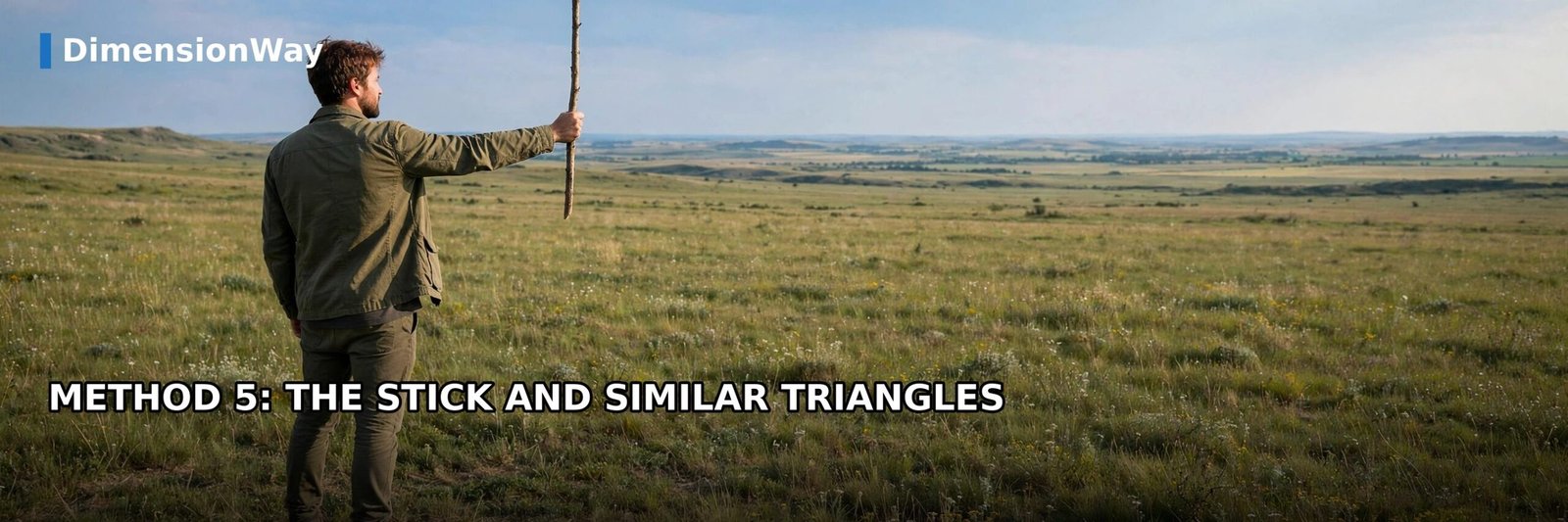
This clever geometry trick measures heights and far distances with any straight stick. Hold the stick vertically at arm’s length. Slide your thumb up or down the stick until the visible length between the top of the stick and your thumb exactly matches the height of the object you are measuring, like a tree.
Now rotate your wrist 90 degrees so the stick is horizontal, keeping your thumb at the same mark. Note where the top of the stick now points on the ground. Pace off the distance from the tree to that point. Because of similar triangles, that ground distance roughly equals the tree’s height.
It sounds fiddly, and the first try feels awkward, but the math is sound and the accuracy is decent, around 10 to 15 percent with practice. Campers and surveyors have used versions of this for centuries.
Method 6: Use Sound and Time
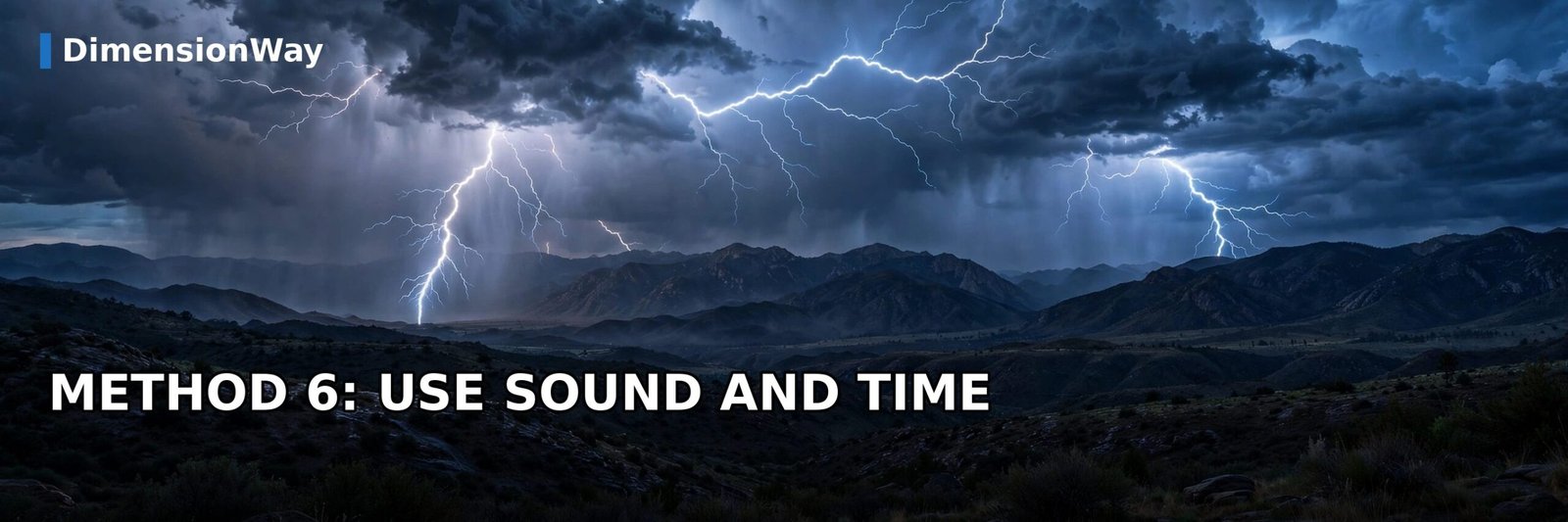
For storm distances, sound is your measuring tape. Light travels effectively instantly, but thunder crawls at about one mile every five seconds. Count the seconds between the lightning flash and the thunder, then divide by five. Three seconds means the strike was about three-fifths of a mile away. Fifteen seconds means about 3 miles.
The same idea works at smaller scales with echoes, though it is much less reliable. A sharp clap near a large wall returns an echo after roughly one second per 550 feet of round trip, but wind and background noise make this a party trick rather than a tool. Stick with the thunder rule for weather and skip echo ranging for anything serious.
Method 7: Your Phone’s GPS and Apps
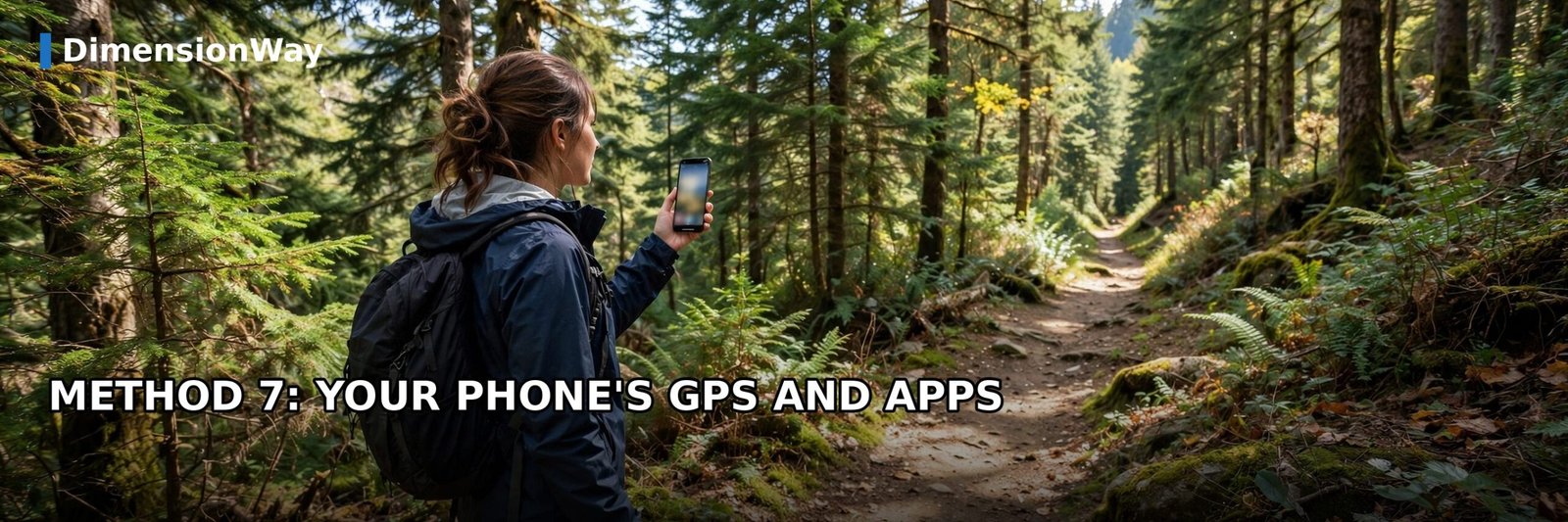
The most accurate tool-free method is the one already in your pocket. Your phone’s built-in map app can measure straight-line distance between any two dropped pins, usually within 10 to 16 feet outdoors. That is about 1 to 3 percent error on a 500-foot measurement, better than any body-based method.
GPS works poorly indoors and under heavy tree cover, so treat it as an outdoor tool. For rooms and furniture, a free augmented-reality measuring app uses your camera to estimate lengths, typically within a few percent at short range. When precision matters and you have no tape, the phone wins.
How Accurate Is Each Method?
No method is perfect. This table ranks all seven by typical accuracy once calibrated, so you can match the method to the moment.
| Method | Typical Accuracy | Best For |
|---|---|---|
| Count your paces | About 5 to 10% | Medium outdoor distances |
| Body as a ruler | About 10% | Short indoor lengths |
| Thumb trick | About 20 to 30% | Rough far-distance guesses |
| Everyday objects | About 5% | Short lengths, furniture |
| Stick and triangles | About 10 to 15% | Heights and far objects |
| Sound and time | About 10% | Storm distances in miles |
| Phone GPS and apps | About 1 to 3% | Any outdoor distance |
The pattern is simple: calibrated references beat uncalibrated ones every time. A pace you measured yourself beats a guessed stride. A phone you checked against a known distance beats an AR app you just installed. Spend ten minutes calibrating once, and every method on this list gets noticeably better.
5 Tips to Sharpen Your Distance Estimates
Calibration is the whole game. These five habits make every method above more reliable.
1. Measure yourself once. Walk a known 100 feet and count paces. Measure your foot, hand span, arm span, and phone against a real ruler. Save the numbers in a phone note.
2. Practice on known distances. A football field, a basketball court, or a measured hallway gives instant feedback. Guess first, then check.
3. Combine two methods. Pace off a distance, then sanity-check it with the thumb trick or your phone. Two independent estimates that agree are very likely right.
4. Account for slope. Uphill paces are shorter than flat ones. On a hill, add about 10 percent to pace-count estimates.
5. Round honestly. Saying “about 40 feet” is more useful and more honest than “37.5 feet” when you estimated it. False precision helps nobody.
FAQs
How can I measure 100 feet without a tape measure?
Count your paces. At about 5 feet per pace, 20 paces is roughly 100 feet. Calibrate your pace on a known distance first for the best accuracy.
How accurate is pace counting?
About 5 to 10 percent once you have calibrated your personal pace length. Uncalibrated guessing is closer to 15 to 20 percent off.
What body parts can I use to measure distance?
Your arm span (roughly your height), your foot (about 10 to 11 inches for men, 8.5 to 9.5 for women), and your hand span from thumb to pinky (about 7 to 9 inches). Measure each once against a ruler.
How long is a dollar bill?
A US dollar bill is exactly 6.14 inches long and 2.61 inches wide, per the Bureau of Engraving and Printing. Four bills end to end are just over 2 feet.
How does the thumb trick work?
With your arm outstretched and thumb up, closing one eye and then switching makes your thumb appear to jump. The distance to the object is roughly ten times the jump distance. It is a rough estimate, good within 20 to 30 percent.
Can my phone really measure distance?
Yes. Dropping two pins in your map app gives straight-line distance within about 10 to 16 feet outdoors. AR measuring apps handle short indoor distances within a few percent.
How far away is lightning?
Count the seconds between the flash and the thunder, then divide by five to get miles. A 10-second gap means the strike was about 2 miles away.
What is the easiest method for a beginner?
Start with everyday objects for short distances and pace counting for longer ones. Both need only one quick calibration, and both beat guessing by a wide margin.
Conclusion
You do not need a tape measure to measure well. Count your paces for outdoor distances, use your body and everyday objects indoors, try the thumb trick or the stick method for far objects, listen for thunder in storms, and let your phone’s GPS handle anything where precision counts. Calibrate each method once against a known distance, and your estimates will land within 5 to 10 percent of the truth.
The real skill is not any single trick. It is the habit of checking your guesses against reality until your eye learns what 10 feet, 50 feet, and 100 feet actually look like. If you want to train that eye, start with our guide to how long 100 feet really is, then practice on the world around you.
Related Reading
– How Long Is 100 Feet? Everyday Examples, Visualized – How Far Is 300 Feet? – How Long Does It Take to Walk 100 Feet?
Sources
– U.S. Bureau of Engraving and Printing: US currency note dimensions (6.14 by 2.61 inches) – ISO/IEC 7810: credit card dimensions (3.375 by 2.125 inches) – U.S. Mint: quarter diameter (0.955 inches) – U.S. Army land navigation training (pace count method): a standard pace of two steps covers about 5 feet – National Weather Service (NOAA): thunder travels about one mile every five seconds – Widely cited anthropometric references: arm span roughly equals height; adult foot and hand-span averages

James Carter is the founder and editor of DimensionWay, where he researches, measures, and verifies real-world dimensions — from everyday objects to world-famous landmarks. Every number published on DimensionWay is cross-checked against manufacturer specifications and official sources, so readers always get accurate, easy-to-visualize comparisons.
