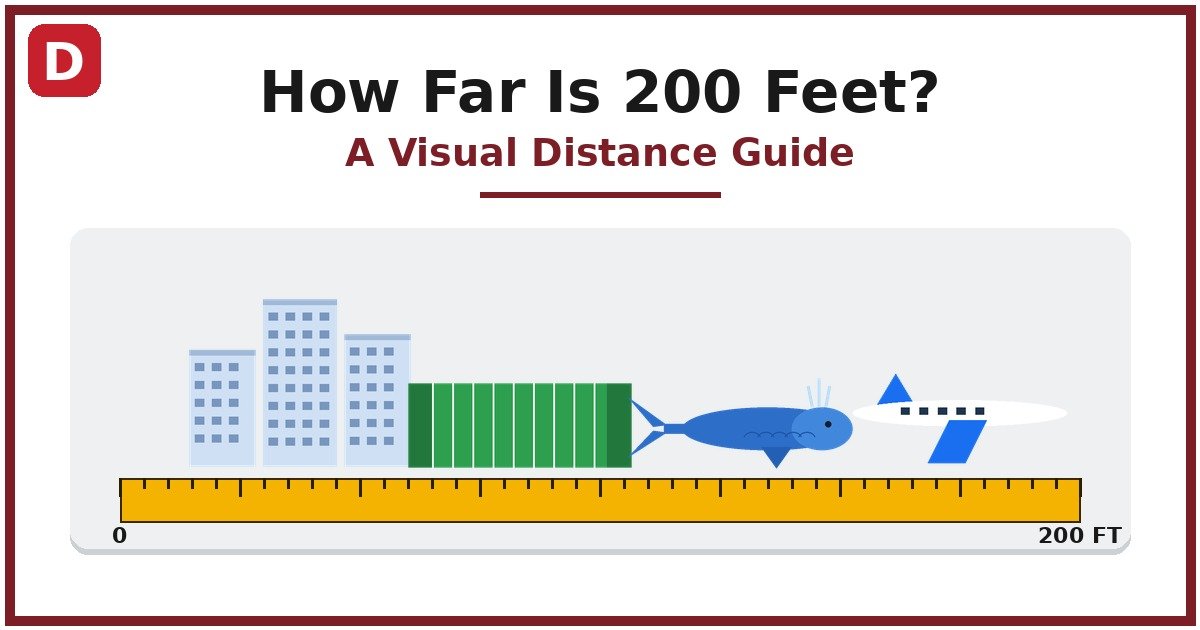
Two hundred feet sounds simple until you have to picture it. Is it the length of a building? A few buses? A city block? Most of us never measure anything that long, so the number floats in our heads with nothing attached to it.
How far is 200 feet in terms you can actually see? This guide answers that with exact conversions, walking time, and ten everyday things that measure about 200 feet, from football fields to city blocks. By the end, you will be able to look down any street and estimate 200 feet with confidence.
How Far Is 200 Feet?
Two hundred feet is a medium-long distance you meet in daily life more often than you think. It is longer than half a football field but shorter than a full one, and it is about the length of a short city block.
The exact numbers: 200 feet equals 2,400 inches, 60.96 meters, and 66.67 yards. In metric terms, that is just under 61 meters, which helps if you think in meters.
Why does this distance matter? Builders, coaches, delivery drivers, and dog walkers all deal in 200-foot stretches. Once you can picture it, reading maps, judging throws, and estimating walking time all get easier.
200 Feet Conversion Tables
200 Feet to Inches
| Feet | Inches |
|---|---|
| 150 | 1,800 |
| 175 | 2,100 |
| 200 | 2,400 |
| 225 | 2,700 |
| 250 | 3,000 |
200 Feet to Meters
| Feet | Meters |
|---|---|
| 150 | 45.72 |
| 175 | 53.34 |
| 200 | 60.96 |
| 225 | 68.58 |
| 250 | 76.20 |
200 Feet to Centimeters
| Feet | Centimeters |
|---|---|
| 150 | 4,572 |
| 175 | 5,334 |
| 200 | 6,096 |
| 225 | 6,858 |
| 250 | 7,620 |
Walking 200 Feet
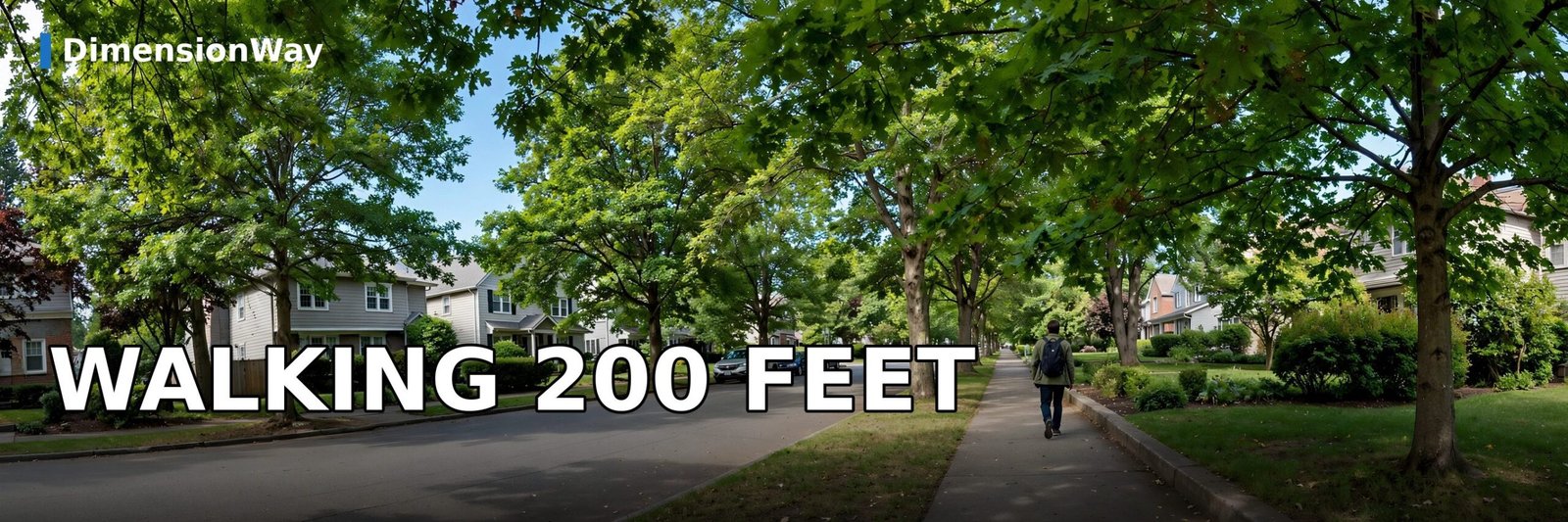
At a normal walking pace of about 3 miles per hour, you cover 200 feet in roughly 45 seconds. Expect to take around 80 steps, since the average adult step is about 2.5 feet. A slow stroll stretches that to about a minute, while a brisk walk cuts it closer to 35 seconds.
Two-Thirds of an American Football Field
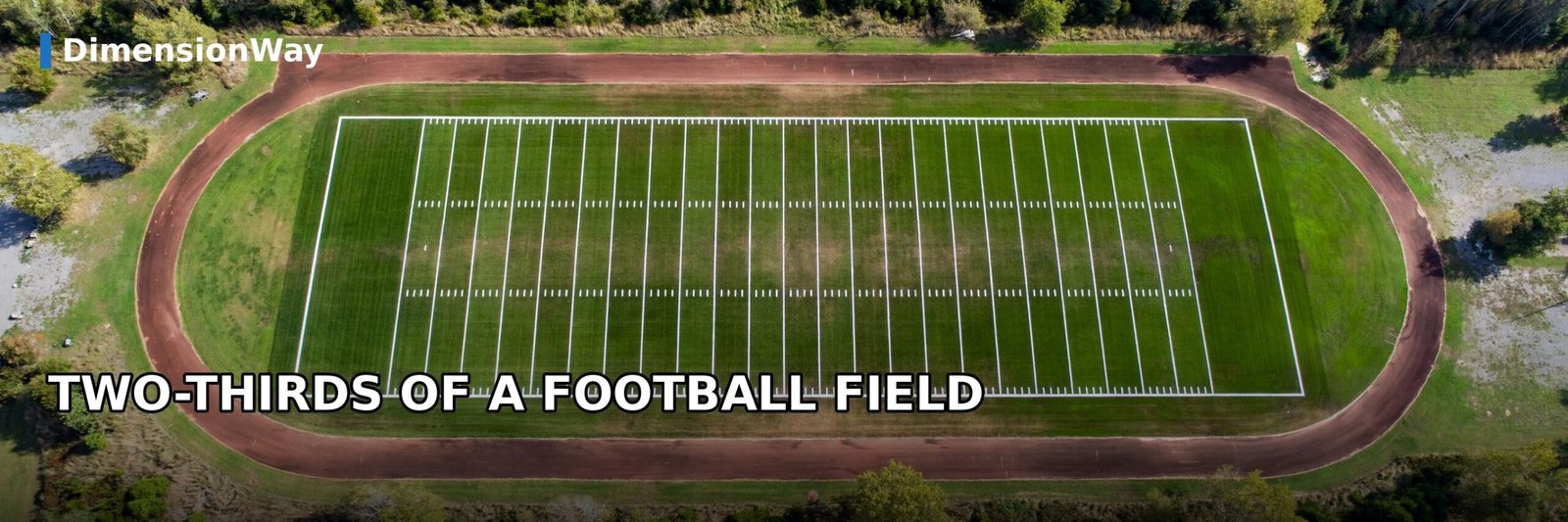
The playing field of an American football field, measured goal line to goal line, is exactly 300 feet long. Two hundred feet is precisely two-thirds of that distance. Stand on one goal line and look toward the other end zone: 200 feet takes you to the opponent’s 33-yard line, since 200 feet equals 66.7 yards.
This is one of the handiest ways to picture the distance because almost everyone has seen a football field, in person or on television. Next time you watch a game, pick a spot two-thirds of the way down the field. That is your 200-foot mark.
The full field including both end zones stretches 360 feet, so 200 feet is a little more than half of the entire stadium length from back line to back line.
A 20-Story Building Laid on Its Side

Commercial buildings average about 10 feet per story once you count floor thickness, ductwork, and ceiling space. Multiply that by 20 stories and you land right around 200 feet. If you tipped a typical 20-story office tower onto its side, it would stretch 200 feet down the street.
Downtown streets are full of buildings in this height range. Walk past any mid-rise office block, apartment tower, or hotel with about 20 floors and you are looking at roughly 200 feet of vertical distance.
This example also helps with a common mix-up. People often guess a 20-story building is much taller than it is. Ten feet per floor is the standard planning figure used by architects and city planners.
A Portland City Block

Portland, Oregon is famous among urban planners for its compact 200-foot-square city blocks. Walk from one corner to the next along any downtown Portland street and you have traveled exactly 200 feet.
Most American city blocks are larger, often 300 to 600 feet long, which is why Portland’s grid feels so walkable. The small blocks mean more intersections, shorter crossings, and a new storefront every few seconds on foot.
If you have ever visited Portland and thought the downtown felt easy to cross on foot, those 200-foot blocks are the reason. It is a real place you can visit to calibrate your sense of the distance.
Five Telephone Poles End to End
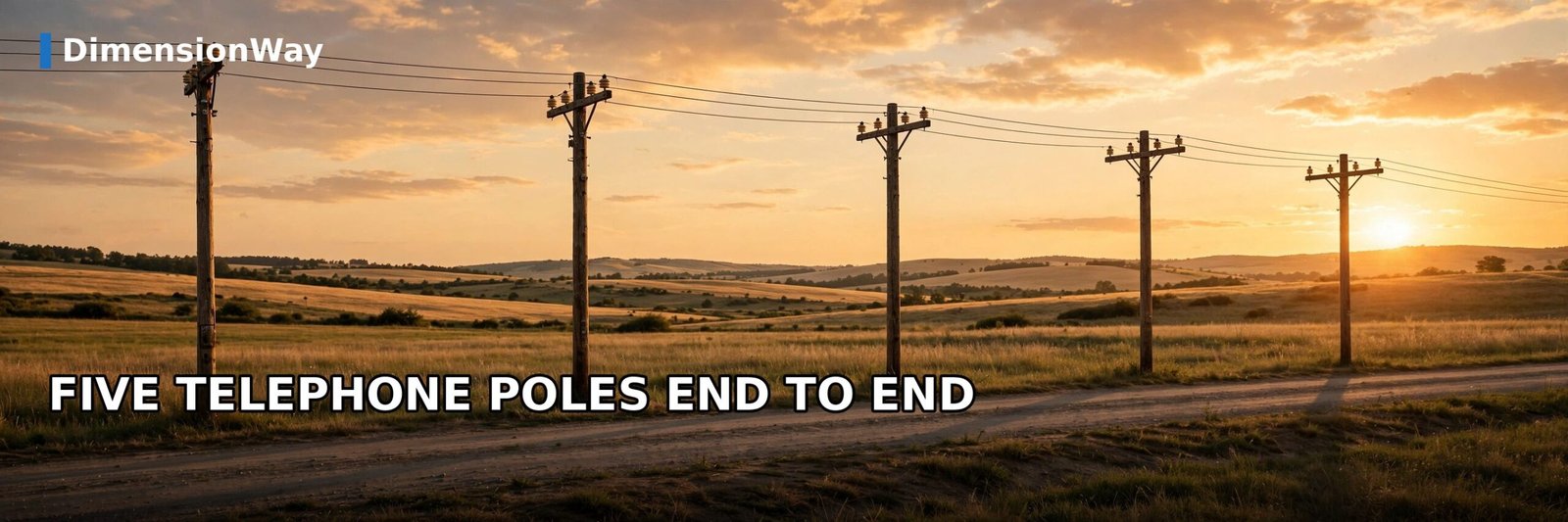
A standard wooden utility pole stands about 35 to 40 feet tall, with several feet buried underground. Line up five of them end to end and you get roughly 200 feet. Road crews and utility workers use this exact trick to estimate distances along streets and highways.
Look down any suburban road with overhead power lines. The poles are typically spaced 100 to 150 feet apart, so two gaps between poles is close to 200 feet. That spacing is set by engineering standards for wire sag and tension.
This is one of the most practical visualizations on this list because telephone poles are everywhere. Count two spans between poles and you have your distance.
Two Blue Whales

Blue whales are the largest animals ever known to exist, and large adults reach about 80 to 100 feet long. Place two big blue whales nose to tail and their combined length is approximately 200 feet.
To put that in perspective, a single blue whale is already longer than an NBA basketball court. Two of them together stretch farther than most city buses parked in a row. Their hearts alone are the size of small cars.
Marine researchers measure whales with aerial photography and laser systems, and the 100-foot figure for exceptional individuals is well documented. Two of these ocean giants give you one of nature’s most dramatic 200-foot rulers.
A Boeing 777-200 Airplane

The Boeing 777-200, one of the most common long-haul airliners in the sky, measures 209.1 feet from nose to tail. That is just 9 feet over our 200-foot mark, close enough to count as a real-world match.
Stand at one end of this airplane and you genuinely cannot see fine details at the other end. Airport ground crews deal with this scale daily when guiding planes into gates with only feet of clearance on each side.
The 777 family was designed to fill the gap between the 767 and the 747, and its length puts it in the same class as many wide-body jets. If you have ever walked the full length of a parked airliner at an airport gate, you have walked about 200 feet.
A Little League Outfield Fence
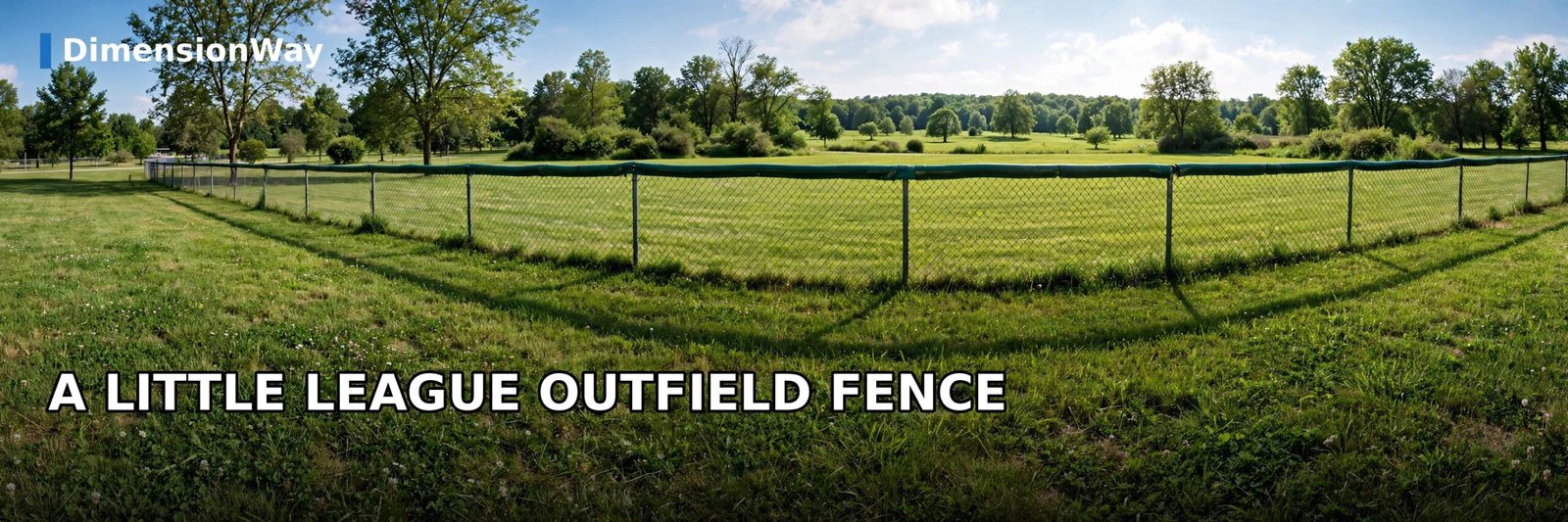
On a regulation Little League field, the outfield fence sits about 200 feet from home plate. Every home run hit by a 12-year-old travels roughly our target distance before clearing the fence.
This is a distance millions of parents have watched in person. If you have ever sat in the bleachers behind home plate at a youth baseball game, you have stared straight down a 200-foot line to the outfield wall.
Major League fences sit much farther back, typically 400 feet to center field, which is why a Little League homer looks so achievable by comparison. The 200-foot fence is set for young arms and young legs.
Three Semi-Trailer Trucks
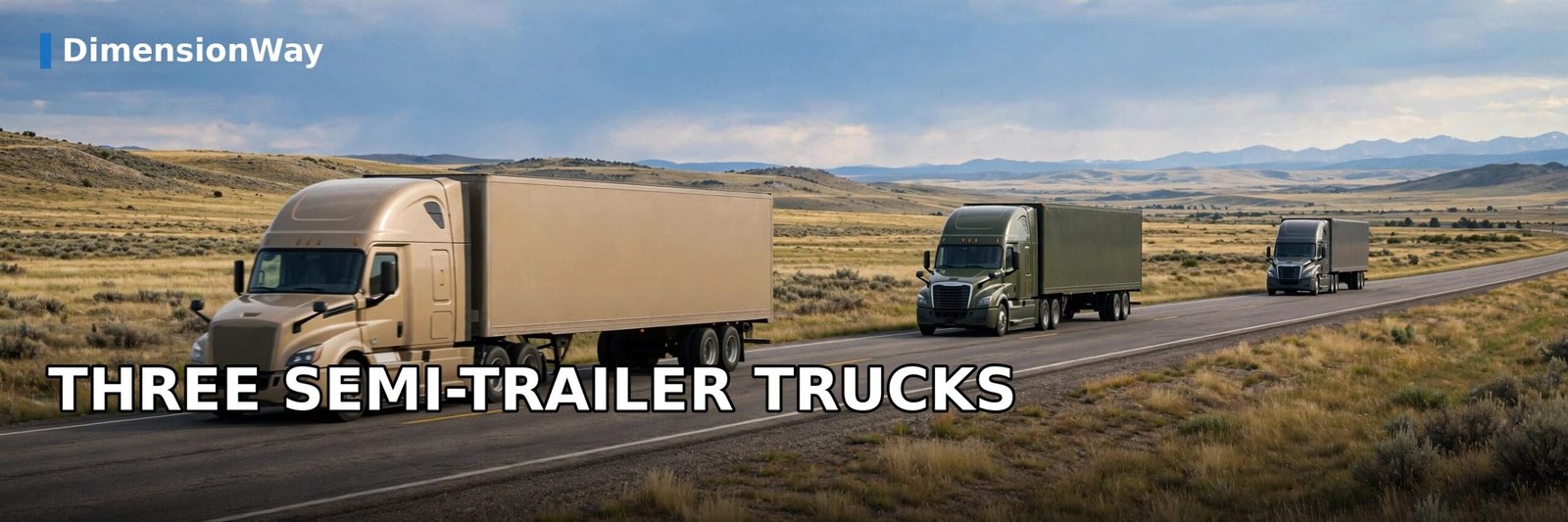
A standard semi-trailer is 53 feet long, and the tractor pulling it adds roughly 20 feet more, for a total rig length of about 70 to 75 feet. Park three of these trucks bumper to bumper and the line stretches approximately 210 to 225 feet, just over our mark.
Highway rest stops are the perfect place to see this. Three big rigs in a row fill a parking lane that looks enormous until you realize it is only about 200 feet.
Truck length is regulated by federal and state law, which is why the 53-foot trailer became the industry standard across the United States. Those regulations make this a surprisingly consistent measuring stick.
Two NBA Basketball Courts
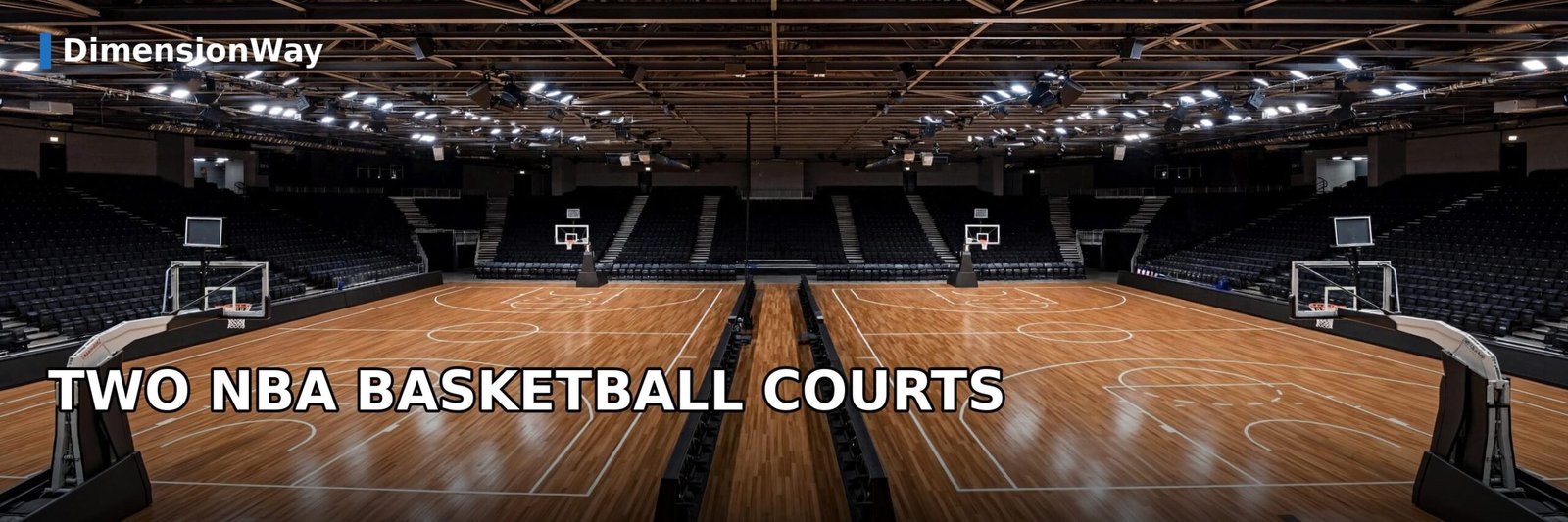
An NBA basketball court is exactly 94 feet long. Two courts placed end to end measure 188 feet, just 12 feet short of 200 feet. Add the width of a free-throw lane and you are essentially there.
School gyms usually hold a single court, so picture two gyms side by side. The distance from one baseline, across both courts, to the far baseline is your 200-foot stretch.
Court dimensions are standardized by the league down to the inch, which makes this one of the most exact comparisons on this list. High school courts are slightly shorter at 84 feet, so two of those give you 168 feet instead.
A 60-Meter Wind Turbine Blade
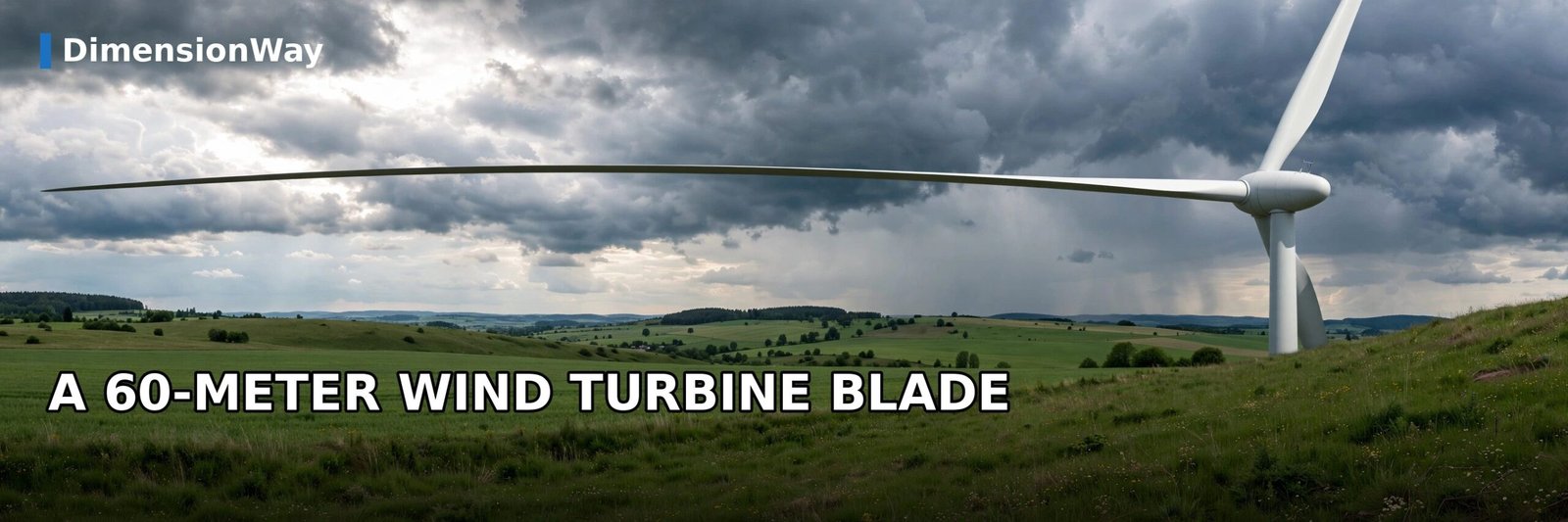
Modern wind turbines keep getting bigger, and a 60-meter blade converts to 196.85 feet, just 3 feet shy of 200 feet. These blades are so long that transporting them requires special trailers, road closures, and escort vehicles.
Seeing one on the highway is unforgettable. The blade extends far beyond the truck carrying it, and highway overpasses have to be checked for clearance along the entire route.
Blade length directly controls how much electricity a turbine can generate, which is why manufacturers keep pushing toward longer designs. Offshore models now use blades well over 300 feet, but the 60-meter onshore blade sits right at our 200-foot mark.
How to Visualize 200 Feet Yourself
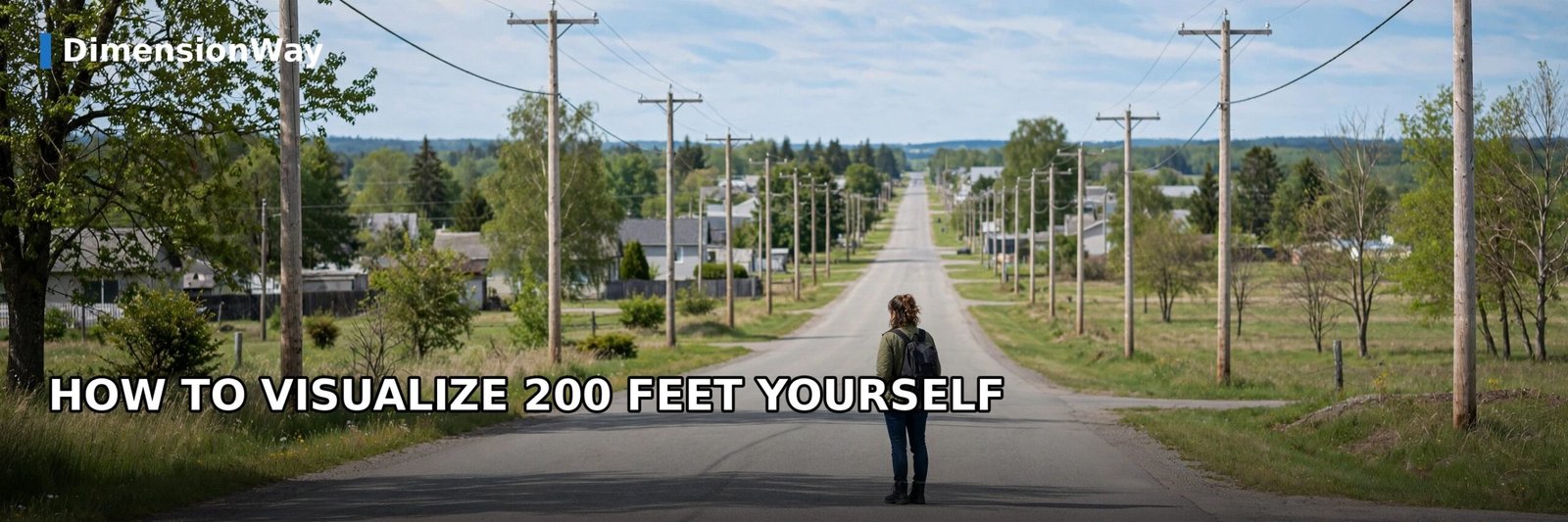
You do not need a football field to learn this distance. Pick a familiar street near your home and count two spans between telephone poles, which is close to 200 feet. Walk it and time yourself. You should land near 45 seconds at a normal pace.
Another easy method: find a parking lot and count parking spaces. A standard space is about 18 feet long, so eleven spaces in a row is roughly 200 feet. Walk the line, look back, and lock that sight picture into memory.
Once you have walked it a few times, you will start recognizing 200-foot stretches automatically, from the length of a short block to the far end of a youth baseball field.
FAQs
How many meters is 200 feet?
200 feet equals exactly 60.96 meters. For quick estimates, most people round it to 61 meters.
How many yards is 200 feet?
200 feet equals 66.67 yards, or two-thirds of the way down a football field from goal line to goal line.
How long does it take to walk 200 feet?
At a normal pace of 3 miles per hour, walking 200 feet takes about 45 seconds. A slow stroll takes around a minute, and a brisk walk takes closer to 35 seconds.
How many steps are in 200 feet?
The average adult step is about 2.5 feet, so 200 feet works out to roughly 80 steps. Taller people with longer strides may need closer to 70.
Is 200 feet longer than a football field?
No. The playing area of a football field is 300 feet long, so 200 feet is two-thirds of the field. Including the end zones, the full field is 360 feet.
Conclusion
Two hundred feet is 60.96 meters, about a 45-second walk, and roughly 80 steps. It is two-thirds of a football field, a Portland city block, five telephone poles, or two blue whales.
The easiest way to remember it is to walk it. Find two spans between telephone poles or eleven parking spaces, pace it out, and look back. Once your eyes learn the distance, you will spot 200-foot stretches everywhere, from Little League fences to rows of parked semi-trucks.
Related Reading
- How Long Is 100 Feet?: half the distance in this guide, with ten everyday comparisons.
- How Far Is 300 Feet?: the full football field distance, one-third longer than 200 feet.
- 50 Feet Long: a quarter of this distance, useful for shorter estimates.
Sources
- NFL Rulebook / Operations: football field dimensions, 360 x 160 feet including end zones, 300 feet goal line to goal line.
- NOAA Fisheries: blue whale size, large adults 80 to 100+ feet.
- Boeing Commercial Airplanes: 777-200 specifications, length 209.1 feet (63.7 m).
- Little League International: official field dimensions, outfield fence approximately 200 feet from home plate.
- NBA Official Rules: court dimensions, 94 by 50 feet.
- Portland Bureau of Transportation / city planning records: downtown blocks 200 feet square.
- U.S. Federal Highway Administration: standard 53-foot semi-trailer length regulations.
- Utility industry standards (e.g., American Wood Protection Association / RUS): standard distribution poles 35 to 40 feet.
- Wind turbine manufacturer specifications: 60-meter blade class (60 m = 196.85 ft).

James Carter is the founder and editor of DimensionWay, where he researches, measures, and verifies real-world dimensions — from everyday objects to world-famous landmarks. Every number published on DimensionWay is cross-checked against manufacturer specifications and official sources, so readers always get accurate, easy-to-visualize comparisons.

1 thought on “How Far Is 200 Feet? A Visual Distance Guide”