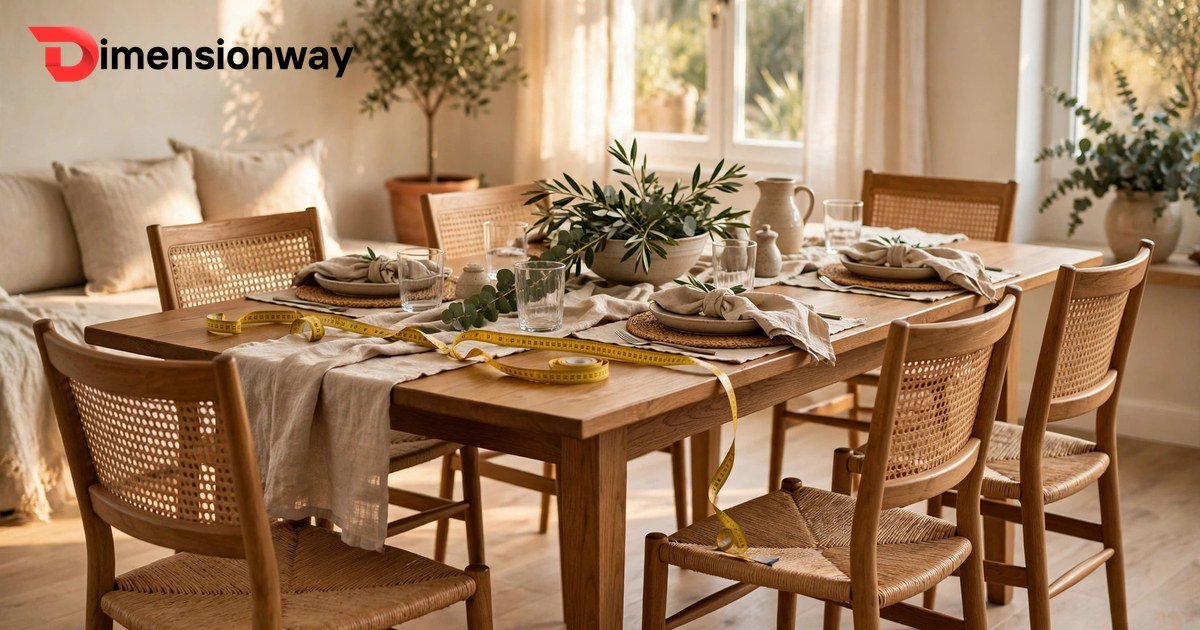
You are standing in a furniture store, looking at a dining table that seats six, and the tag says 72 by 36 inches. You nod like those numbers mean something. Then you get home, stare at your dining room, and realize you have no idea whether it will fit, whether six chairs will actually squeeze around it, or why the round one next to it claimed to seat the same crowd in half the space.
That confusion is normal. Dining tables come in more shapes and seat counts than almost any other furniture, and the numbers on the tag only tell half the story. The other half is clearance: the invisible ring of space around the table that decides whether dinner feels relaxed or cramped.
This guide gives you the exact dimensions for every seat count, the two simple rules that govern all of it, and ten everyday things that make the size click.
What Size Is a Dining Table?
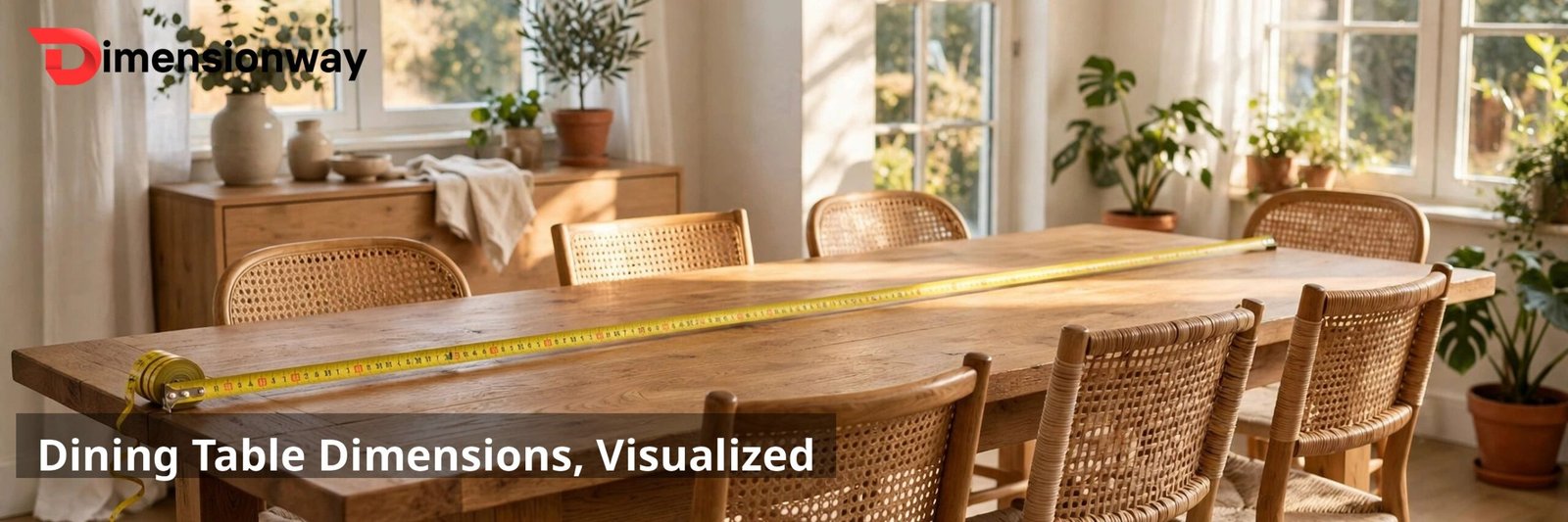
A dining table is 30 inches tall, and a standard 6-seat rectangular table measures 72 inches long by 36 to 40 inches wide (183 by 91 to 102 centimeters).
Here are the numbers that matter most. Standard dining height is 30 inches (76 cm) from floor to tabletop. A 4-seat table runs 48 to 60 inches long, a 6-seat table runs 72 inches long, and an 8-seat table runs 78 to 96 inches long. Widths stay in a narrow band of 36 to 44 inches no matter the seat count, because a table only needs to be as deep as two place settings plus serving space.
Why does it matter? Because the table is only half the purchase. The other half is the room around it. Once you know the standard sizes and the clearance math, you can walk into any store, read any tag, and know instantly whether the table fits your room and your crowd.
Dining Table Dimensions by Seat Count
| Seats | Rectangular (L x W) | Round (diameter) | Square (side) |
|---|---|---|---|
| 2 | 30 x 30 in | 30-36 in | 30-36 in |
| 4 | 48-60 x 36 in | 36-48 in | 36-44 in |
| 6 | 72 x 36-40 in | 48-60 in | 48-54 in |
| 8 | 78-96 x 38-44 in | 60-72 in | 60-72 in |
| 10-12 | 96-120 x 42-48 in | 84-96 in | 72-96 in |
A few patterns worth noticing. Length is what buys seats on a rectangular table, while width barely changes. Every shape converges on the same 30-inch height, because chairs are built for it. And round tables need noticeably more diameter than you would guess: a 6-seat round table at 54 inches across covers far more floor than a 6-seat rectangle, which is the price of having no corners.
Round vs Rectangular vs Square
The shape decision changes the room more than the seat count does. Rectangular tables are the entertainers’ choice: they seat the most people per square foot of floor, they slide against walls, and they extend with leaves. Their weakness is the corners, which eat walking space and bruise hips in tight rooms.
Round tables are the conversation choice. Everyone faces the center, nobody gets stuck at a corner seat, and the footprint hugs square rooms. The trade is efficiency: past 60 inches of diameter, the center becomes a no-man’s-land you cannot reach, which is why big round tables so often come with a lazy Susan.
Square tables are the compromise. A 48-inch square seats six almost as efficiently as a rectangle, and it fits corners and breakfast nooks beautifully. But square tables scale badly: an 8-seat square at 60 inches per side is a vast slab that dominates a room.
| Shape | Best room | Conversation | 6 seats need | Watch out for |
|---|---|---|---|---|
| Rectangular | Long, narrow rooms | Good | 72 x 36 in | Corners in tight spaces |
| Round | Square rooms, nooks | Best | 54 in diameter | Dead center past 60 in |
| Square | Corners, small square rooms | Good | 48 x 48 in | Dominates rooms at 8+ seats |
The Two Numbers That Decide Everything
Forget memorizing charts. Two rules generate every number in them.
Rule one: 24 inches of table edge per diner. Each seated person needs about 24 inches (61 cm) of width for comfortable elbow room. A 72-inch table side divided by 24 gives exactly three diners per side, which is why 72 inches is the canonical 6-seat length: three per side, or two per side plus one at each end. Check any table with this rule and the seat count on the tag will make sense.
Rule two: 36 inches of clearance on every seated side. Chairs need room to pull out, and people need room to walk behind them. The industry standard is 36 inches from the table edge to the nearest wall or furniture. If people regularly walk behind seated diners, stretch that to 48 inches on the traffic side.
Add 36 inches to each side of the table and you get the minimum room:
| Table | Table size | Plus 36-in clearance | Minimum room |
|---|---|---|---|
| 4-seat | 48 x 36 in | 120 x 108 in | 10 x 10 ft |
| 6-seat | 72 x 36 in | 144 x 108 in | 12 x 10 ft |
| 8-seat | 96 x 40 in | 168 x 112 in | 14 x 12 ft |
The math is simple addition: 72 plus 36 plus 36 equals 144 inches, which is 12 feet. Tape this rectangle on your floor before you buy. It takes five minutes and has saved thousands of buyers from the most common furniture regret there is.
10 Things the Size of a Dining Table
A King Bed’s Width
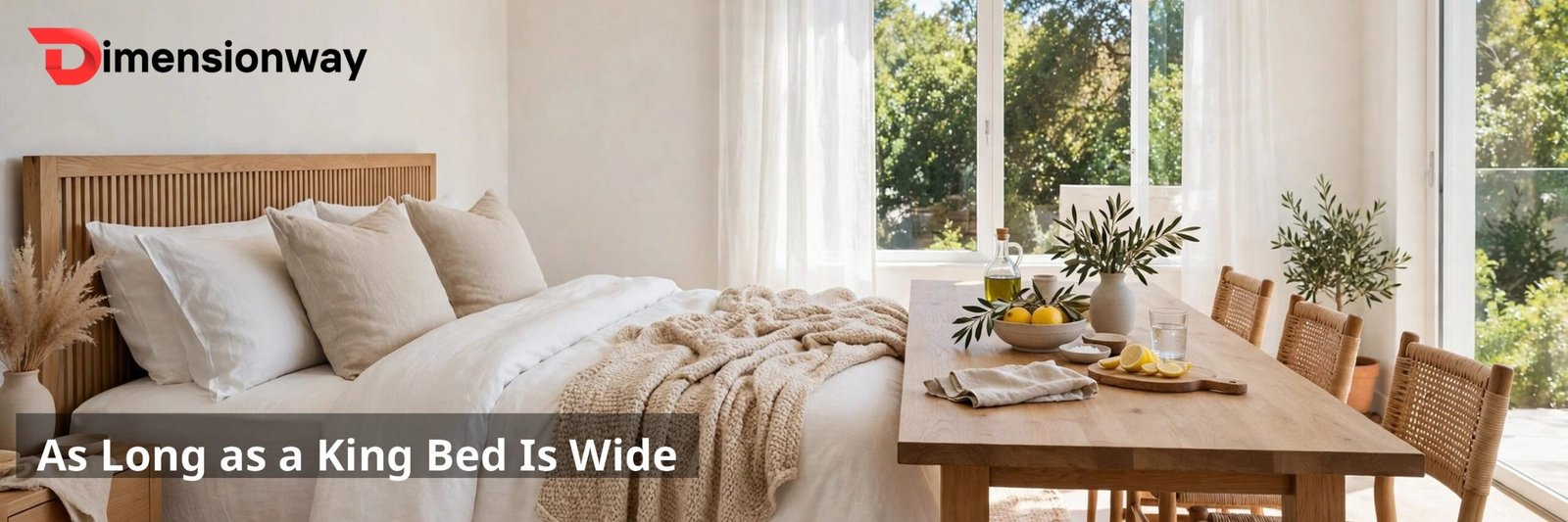
Here is the comparison that surprises everyone. A standard 6-seat dining table is 72 inches long. A king-size bed is 76 inches wide. Lay the table next to the bed and the lengths are within four inches of each other. If you have ever stood next to a king bed, you already know exactly how long a 6-seat dining table is.
Our guide to how big a king size bed is breaks that 76-inch width down further. The two pieces of furniture could hardly be more different in purpose, but they share a footprint language, which is why bedroom veterans instantly grasp dining table sizes.
A Ping-Pong Table (the Bigger Cousin)
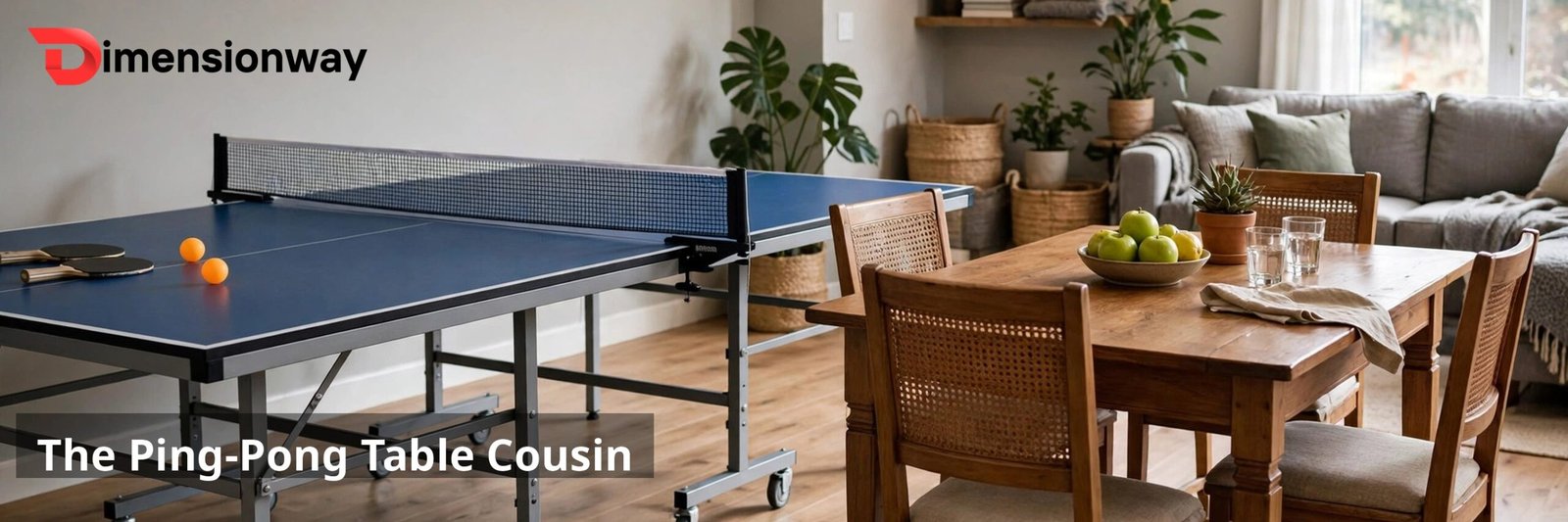
A regulation ping-pong table measures 9 feet by 5 feet, or 108 by 60 inches. A 6-seat dining table at 72 by 36 inches is its smaller cousin: same long-and-lean proportions, about 40 percent of the area. If your home has a game room that fits a ping-pong table with playing space around it, that room would swallow a dining set with room to spare.
The comparison also teaches the clearance lesson. Nobody plays ping-pong with the table shoved against a wall. You need roughly five feet on each end to swing a paddle. Dining needs less, 36 inches, but the principle is identical: the sport, or the meal, happens in the space around the table, not on it.
A 9-Foot Pool Table
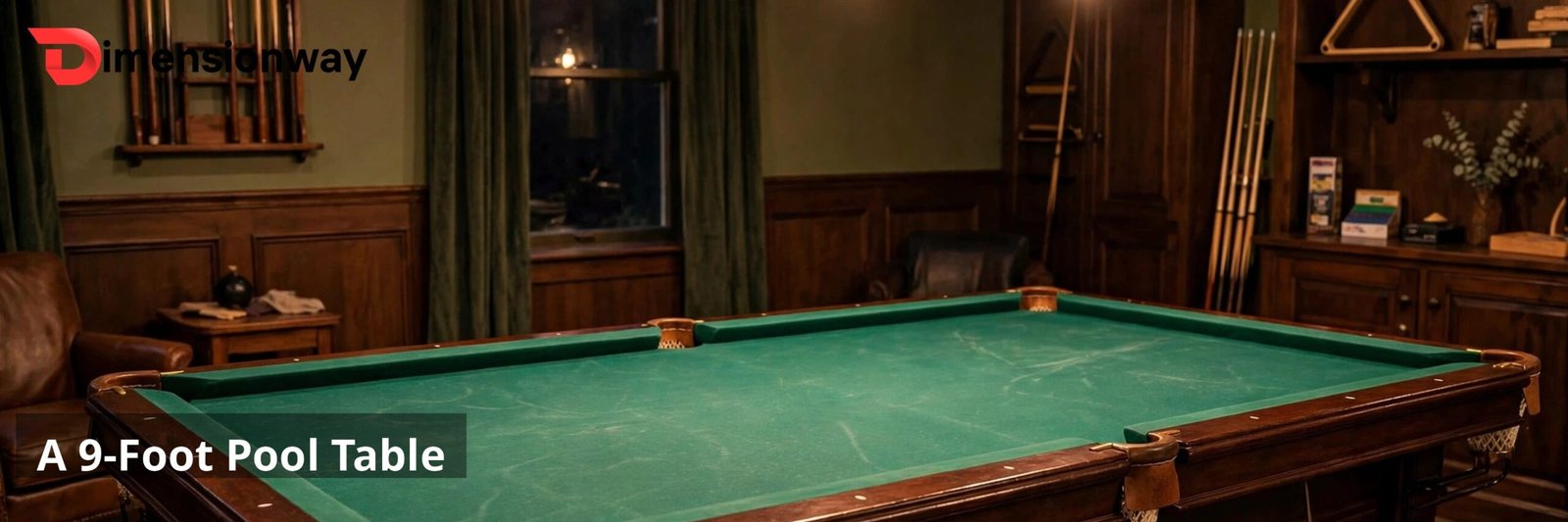
A 9-foot pool table’s playing surface measures 100 by 50 inches, with the rails pushing the overall footprint to roughly 114 by 64 inches. That makes it a full step up from even an 8-seat dining table at 96 by 40 inches. Pool needs the extra girth because the game is played from every side with a long cue.
The useful takeaway is about depth. Dining tables stay narrow, 36 to 44 inches, because food is passed, not played. If a table wider than 44 inches tempts you, picture the pool table: fine for a game room, but at dinner you would be shouting across it.
Two Card Tables, Side by Side
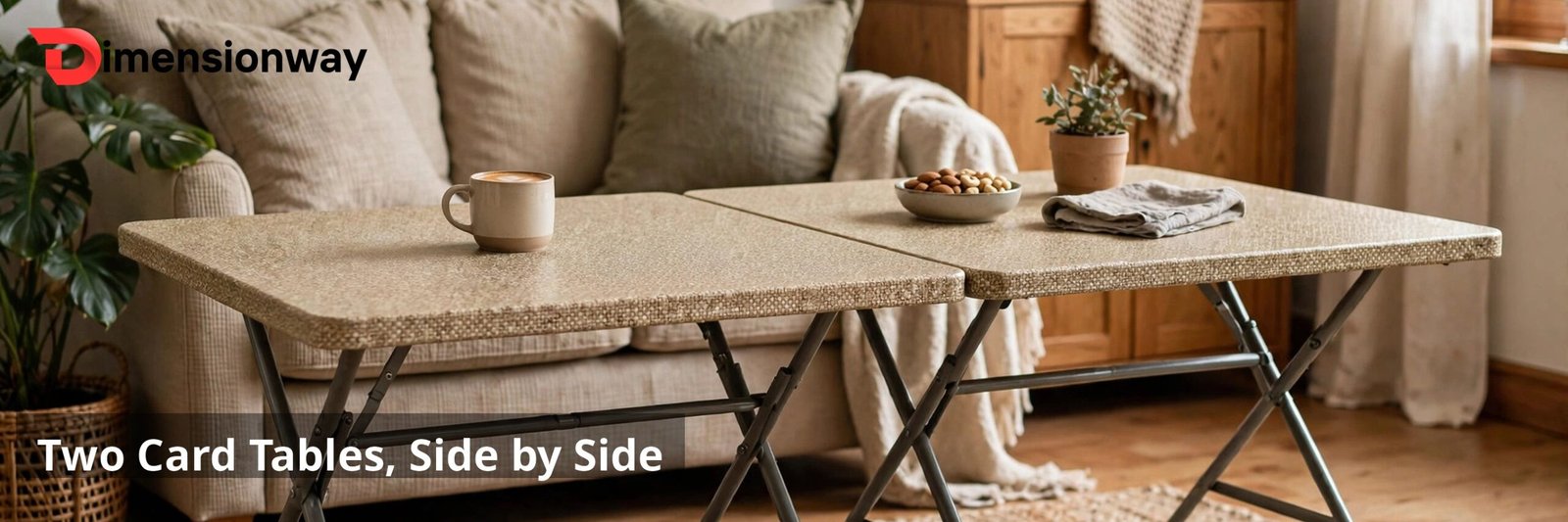
A standard folding card table is about 34 inches square. Push two of them together and you get a 68 by 34 inch surface, which is within a few inches of a 6-seat dining table at 72 by 36. Anyone who has hosted a holiday with rented card tables has already eaten at dining-table scale without knowing it.
This is also the best mental model for extendable tables. A table with leaves is just card tables that live inside your furniture. Closed, it seats four at 48 inches. Opened with two 12-inch leaves, it hits 72 inches and six seats, the same jump as pushing that second card table into place.
A Standard Interior Door
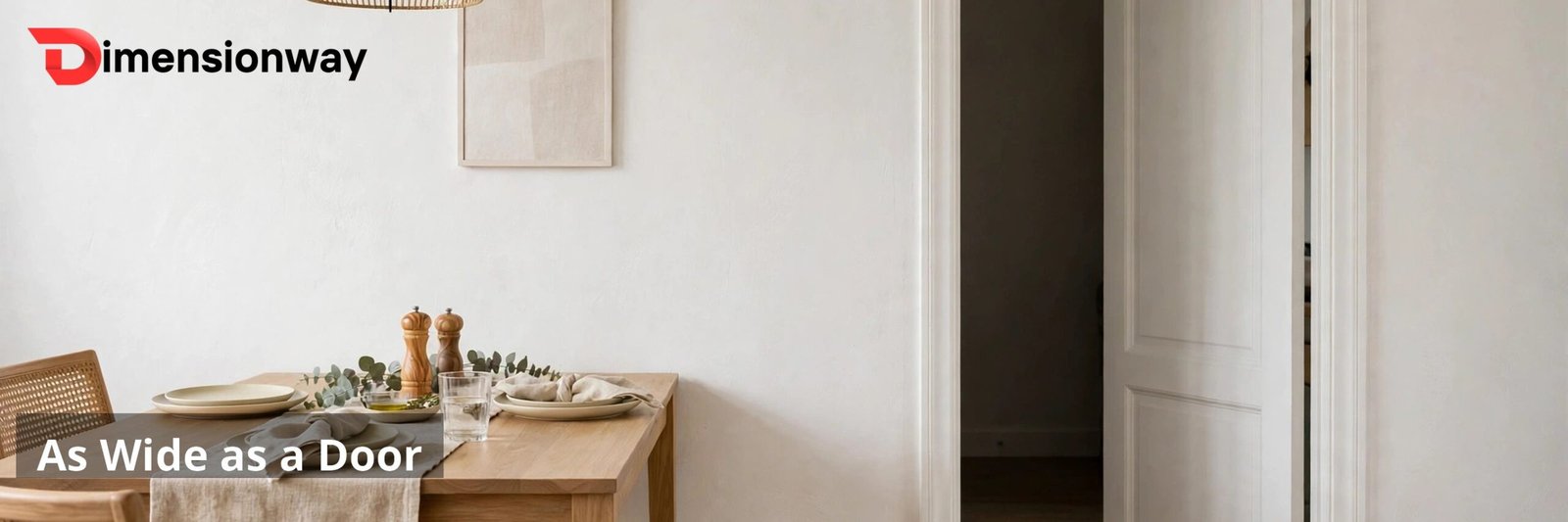
A standard US interior door is 36 inches wide, which is exactly the width of a standard dining table. Stand a door next to your table and the edges line up. The 36-inch width is no coincidence: it is the depth of two place settings back to back, with a little serving space in the middle, and it happens to be the widest common door too.
The door gives you a second trick. Dining tables are 30 inches tall, and a doorknob sits at about 36 inches. So a dining tabletop hits you roughly at mid-thigh, a hand’s breadth below the knob. Walk to any door in your house and you can feel both dimensions without a tape measure.
A Bathtub’s Length
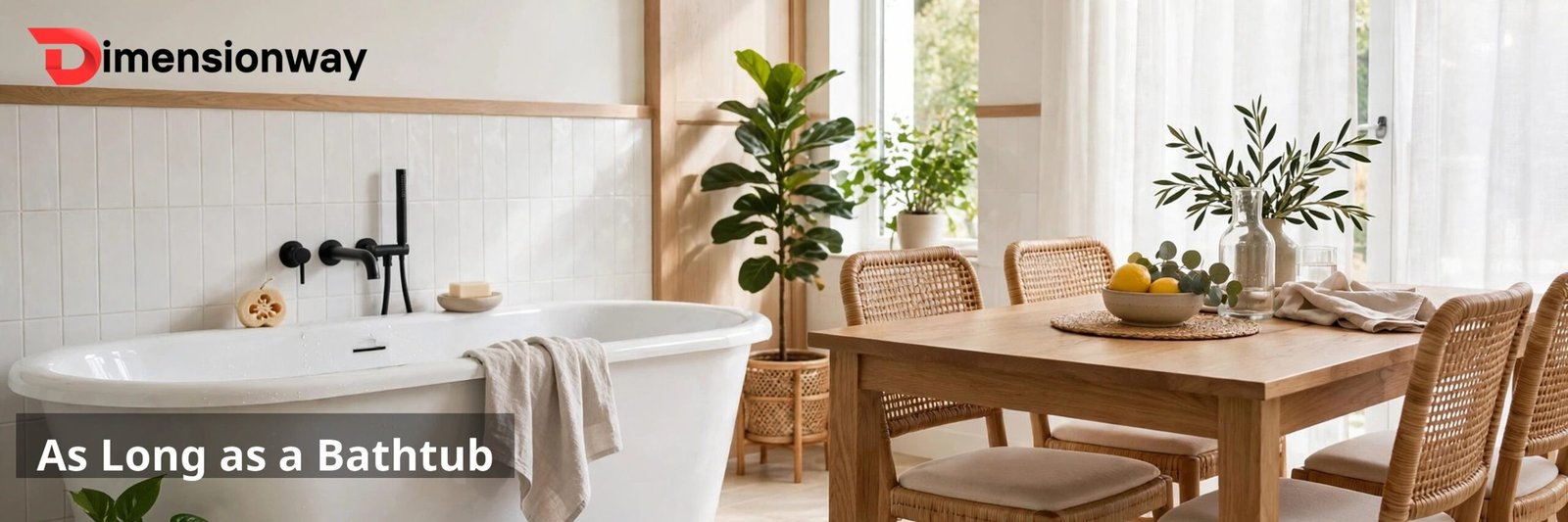
A standard bathtub measures 60 inches long, which is exactly 5 feet. A 4-seat dining table at 48 to 60 inches long is the tub’s twin in length. If you have ever stretched out in a tub and wished it were longer, you understand the difference between a cramped 48-inch four-seater and a comfortable 60-inch one.
The bathtub also demonstrates why width stays fixed while length grows. Tubs come in one standard width, about 30 to 32 inches, because bodies come in one standard width. Dining tables work the same way: people do not get wider when you invite more of them, so tables grow longer, not broader.
A Full-Size Bed’s Width
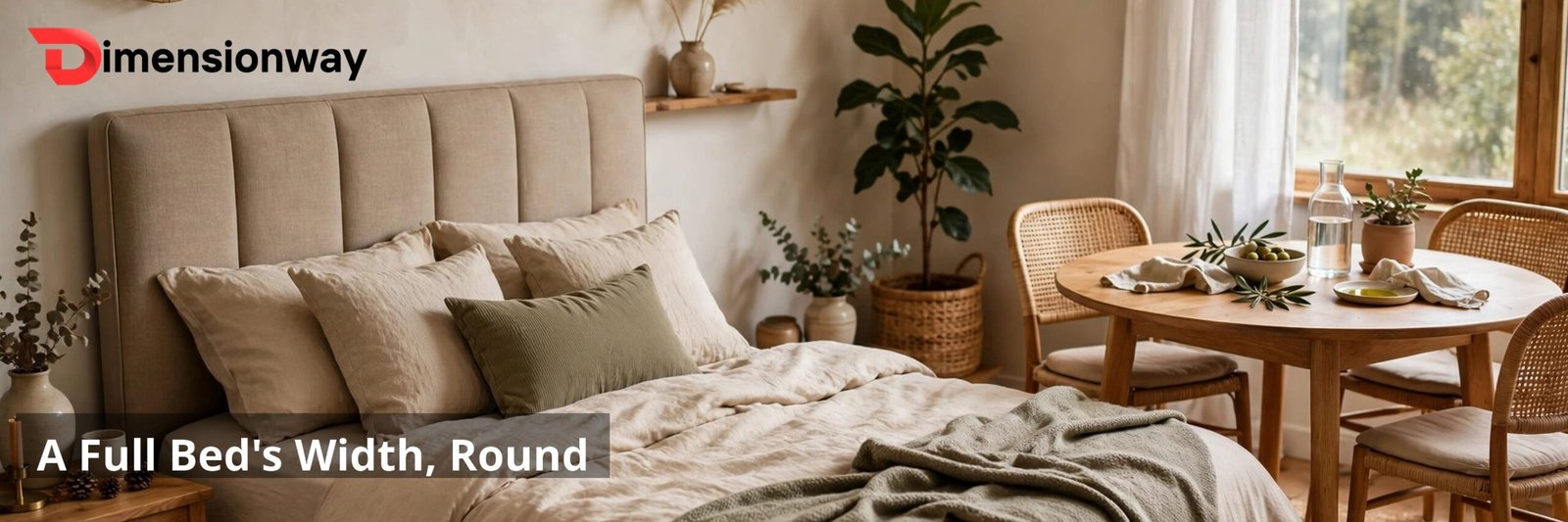
A full-size bed is 54 inches wide. A round 6-seat dining table is 48 to 60 inches in diameter, with 54 inches the sweet spot. Picture the bed’s width as a circle and you are picturing the most popular round dining table in America.
This comparison rescues round tables from their bad reputation for inefficiency. Yes, a 54-inch round covers more floor than a 72 by 36 rectangle. But it seats six people who can all see each other, and it fits in a square corner where a rectangle would block traffic. The full bed proves the size is not exotic. It is bedroom-familiar.
An 8-Foot Folding Table
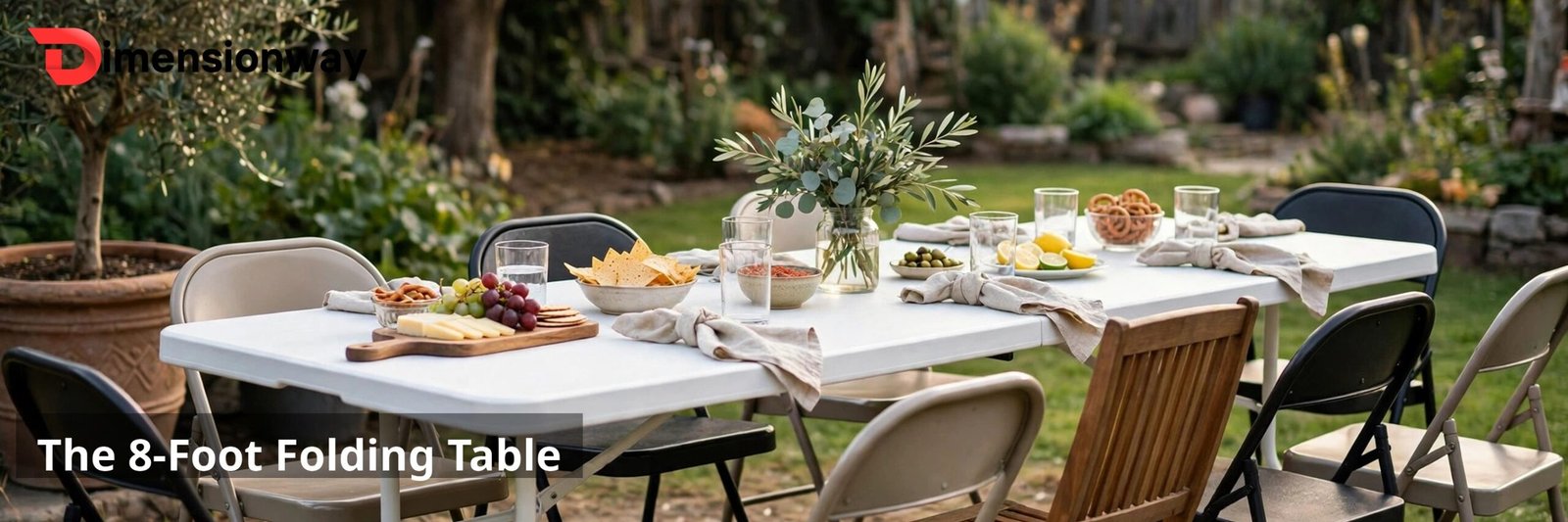
The white plastic folding table at every community event measures 96 by 30 inches. That is 8 feet long, which matches a large 8-seat dining table’s length exactly. The difference is the 30-inch depth versus the dining standard of 36 to 44 inches, and you feel those missing inches immediately: plates crowd, serving dishes go to a side table, elbows negotiate.
So the folding table teaches the width lesson. Length seats people, but width serves the meal. When a dining table tag shows 40 or 42 inches of width instead of 36, that is not vanity sizing. It is the difference between a table that holds dinner and a table that only holds diners.
A 4×8 Sheet of Plywood
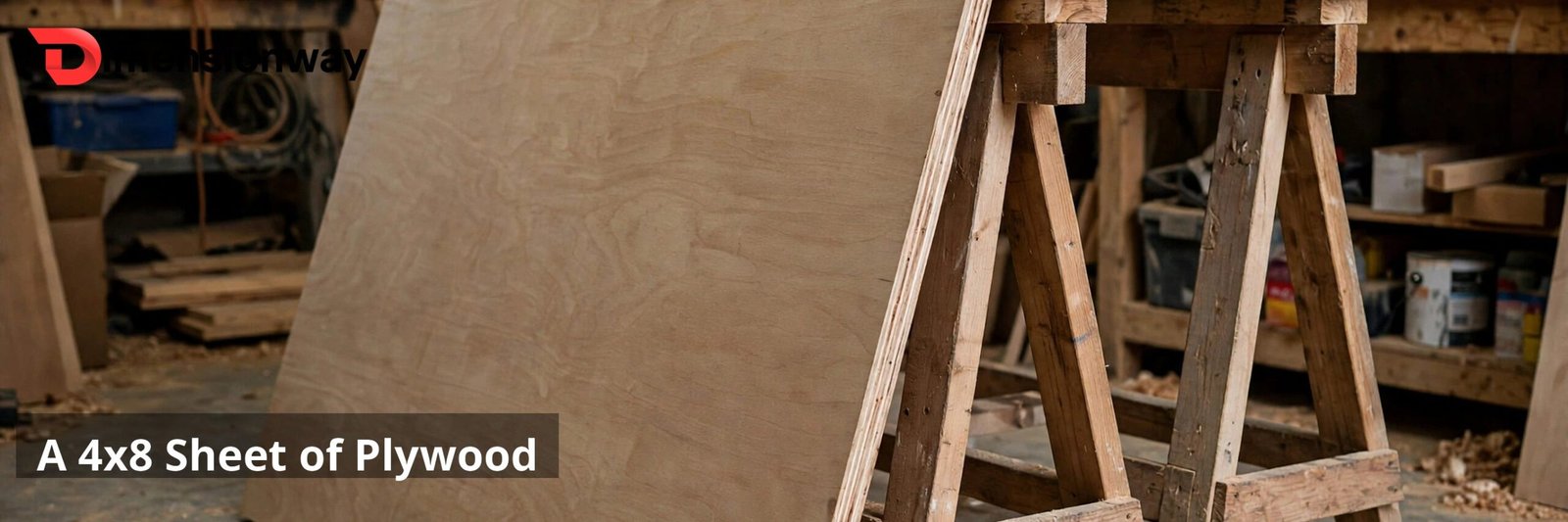
A standard sheet of plywood measures 4 by 8 feet, or 48 by 96 inches. That is almost exactly an 8 to 10 seat dining tabletop: 96 inches long seats eight comfortably, and 48 inches wide is generous serving depth. This is why plywood is the default DIY tabletop. Buy the sheet, add legs, and you have skipped the furniture store entirely.
The plywood sheet is also the handiest measuring device in the comparison set. Lumber is sold in exact 4 by 8 sheets everywhere, so the size is standardized in a way furniture never is. Picture the sheet standing in your dining room and you know instantly whether an 8-seater belongs there.
A Kitchen Counter (the Height Lesson)
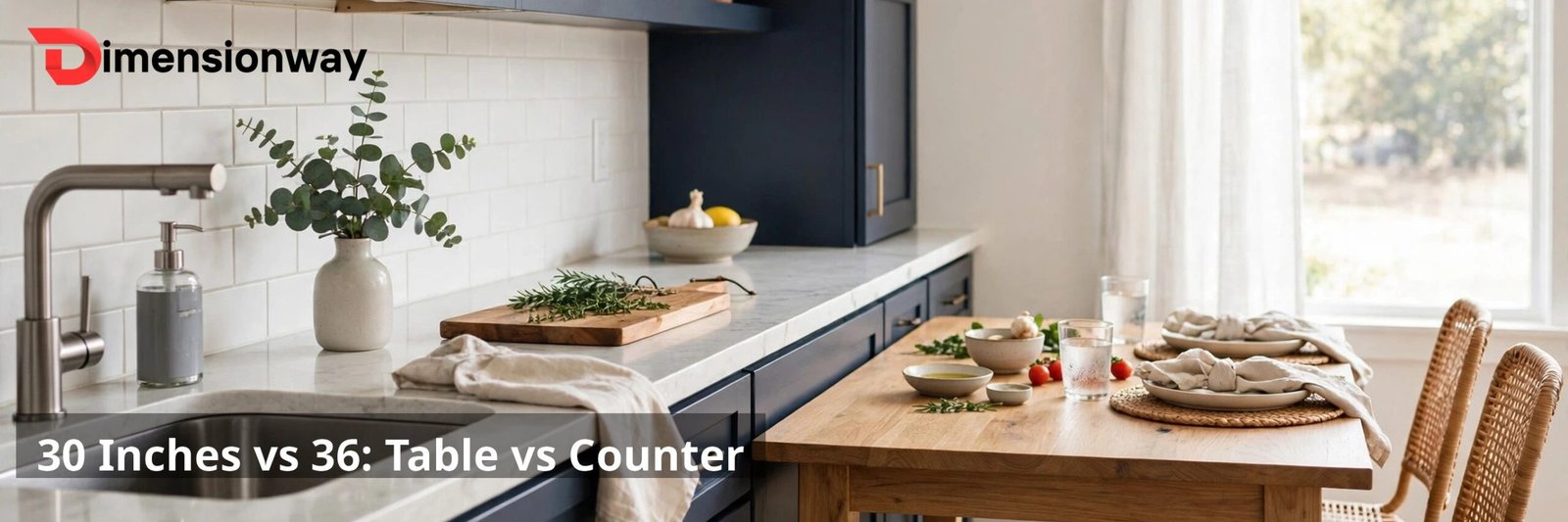
Dining tables stand 30 inches tall. Kitchen counters stand 36 inches tall, exactly 3 feet. That 6-inch gap is the most useful height comparison in the house: if you have ever eaten at a kitchen island and felt perched, you were feeling the difference between counter height and dining height.
Our guide to how long 3 feet is puts that 36-inch counter height in perspective. And the 30-inch table height has its own logic: subtract a standard 18-inch chair seat and you get 12 inches of thigh clearance, the ergonomic sweet spot that chair and table makers settled on decades ago.
How to Picture a Dining Table Without One
Want a faster way to lock in the size? Try these three tricks.
First, use the 24-inch rule. Hold your arms out to your sides at the table. Each diner needs about two feet of edge. Count the diners, multiply by two feet, and you have the table length. Six diners, twelve feet of edge, 72-inch table. It works every time.
Second, use a door. The 36-inch door width is the table width, and the 80-inch door height is close to the 72-inch table length. Walk to any door and you are standing next to a dining table’s two key dimensions.
Third, tape the clearance. Before buying, tape the table’s footprint on your floor, then tape 36 inches out from every side. Live with the tape for a day. If you keep stepping over it, the table is too big for the room, no matter what the tag promises.
FAQs

What is the standard size of a dining table?
A standard dining table is 30 inches tall. The most common size, a 6-seat rectangular table, measures 72 inches long by 36 to 40 inches wide (183 by 91 to 102 cm). A 4-seat table runs 48 to 60 inches long, and an 8-seat table runs 78 to 96 inches long.
What size dining table seats 6?
A rectangular table 72 inches long by 36 to 40 inches wide seats six comfortably: two or three per long side plus one at each end. A round table needs a 48 to 60 inch diameter to seat six, with 54 inches the sweet spot. A square table seats six at 48 inches per side.
What size dining table seats 8?
A rectangular table 78 to 96 inches long by 38 to 44 inches wide seats eight: three per long side plus one at each end. A round table needs a 60 to 72 inch diameter for eight. Plan on a room at least 14 by 12 feet so chairs have clearance on all sides.
What is the standard dining table height?
Standard dining height is 30 inches (76 cm) from floor to tabletop, with most tables falling between 28 and 30 inches. Counter-height tables are 36 inches tall, and bar-height tables are 42 inches. Standard dining chairs have 18-inch seats, which leaves 12 inches of thigh clearance under a 30-inch table.
How much space does each person need at a dining table?
Plan on 24 inches (61 cm) of table edge per person for comfortable elbow room. This is the rule behind every seat count: a 72-inch table side divided by 24 inches gives three diners per side. For formal dinners with more elbow room, allow 30 inches per person.
How much clearance do you need around a dining table?
Leave 36 inches between the table edge and the nearest wall or furniture on every side with chairs. This gives seated diners room to push back and stand. If people walk behind seated guests during meals, increase clearance to 48 inches on the traffic side.
Will a 72-inch table fit in a 10×12 foot room?
Barely, and only in one orientation. The math: 72 inches of table plus 36 inches of clearance on each end equals 144 inches, exactly 12 feet, leaving zero walkway at the ends. On the sides, 36 plus 36 plus 36 equals 108 inches, or 9 feet, which fits the 10-foot width with a foot to spare. A 60-inch table or an extendable would be the safer buy.
Round vs rectangular: which seats more people?
Rectangular tables seat more people per square foot of floor. A 72 by 36 inch rectangle seats six in 18 square feet of table, while a 54-inch round needs about 16 square feet of table but more floor around it. Choose round for conversation and square rooms, rectangular for maximum seating and narrow rooms.
What size dining room do I need for a 6-seat table?
A 6-seat table at 72 by 36 inches needs a room at least 12 by 10 feet: 72 inches of table plus 36 inches of clearance on each end makes 12 feet, and 36 inches of table plus 36 inches on each side makes 9 feet, rounded up to 10 for comfort. Our guide to what 1000 square feet looks like shows how dining rooms fit into whole-home layouts.
What is the difference between standard and counter height dining tables?
A standard dining table is 30 inches tall and pairs with 18-inch seat chairs. A counter-height table is 36 inches tall, exactly 3 feet, and pairs with 24-inch seat stools. Counter height suits open kitchens and casual perching; standard height suits formal dining rooms and long comfortable meals.
Conclusion
A dining table is 30 inches tall, 72 inches long for six seats, and 36 to 44 inches wide almost regardless of seat count. It is as long as a king bed is wide, as wide as a door, as long as a bathtub for four seats, and a 4 by 8 sheet of plywood for eight. Each diner needs 24 inches of edge, and the table needs 36 inches of clearance on every seated side.
Pick the two or three comparisons that clicked for you and keep them. The next time you stand in a furniture store staring at a tag, you will not need to guess. You will already know exactly what size that dining table is.
Related Reading
- How Big Is a King Size Bed? 10 Things That Size, Visualized: the 76-inch bed width is a dining table’s length in disguise.
- How Long Is 3 Feet? 10 Everyday Comparisons: the 36-inch counter height is exactly 3 feet.
- How Tall Is 60 Feet? 6-Story Comparisons: tape-measure thinking at every scale.
- What Does 1000 Square Feet Look Like? (Rooms and Apartments): plan the dining room around the table.
Sources
- Hernest
- Flowyline Design
- The Design Confidential
- Wakefit
- Lumber2Love
- Coohom

James Carter is the founder and editor of DimensionWay, where he researches, measures, and verifies real-world dimensions, from everyday objects to world-famous landmarks. Every number published on DimensionWay is cross-checked against manufacturer specifications and official sources, so readers always get accurate, easy-to-visualize comparisons.
