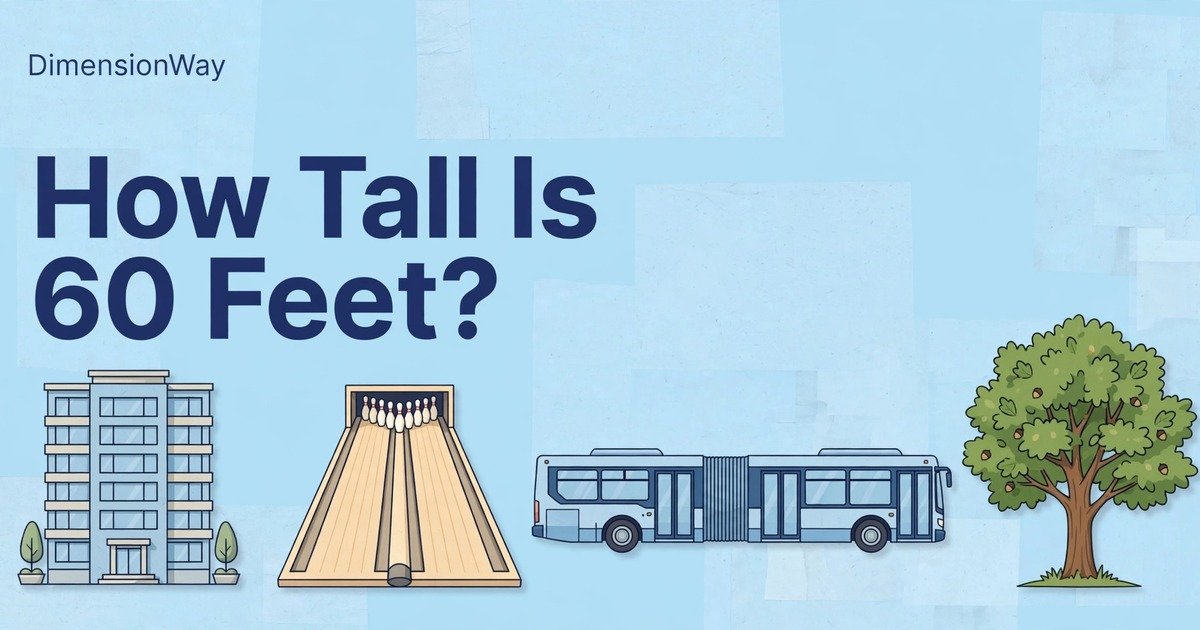
Sixty feet shows up in places you would never expect. It is the length of the bowling lane under your ball, the height of the office building you walk past every morning, and the full length of the city bus squeezing through downtown traffic.
Most people hear “60 feet” and picture something vague and tall. That is because the number sits between the human scale and the skyscraper scale. It is too big to measure with your body and too small to need a landmark.
This guide fixes that. Ten everyday objects, exact conversions, and a few memory tricks that make 60 feet stick for good.
How Tall Is 60 Feet?
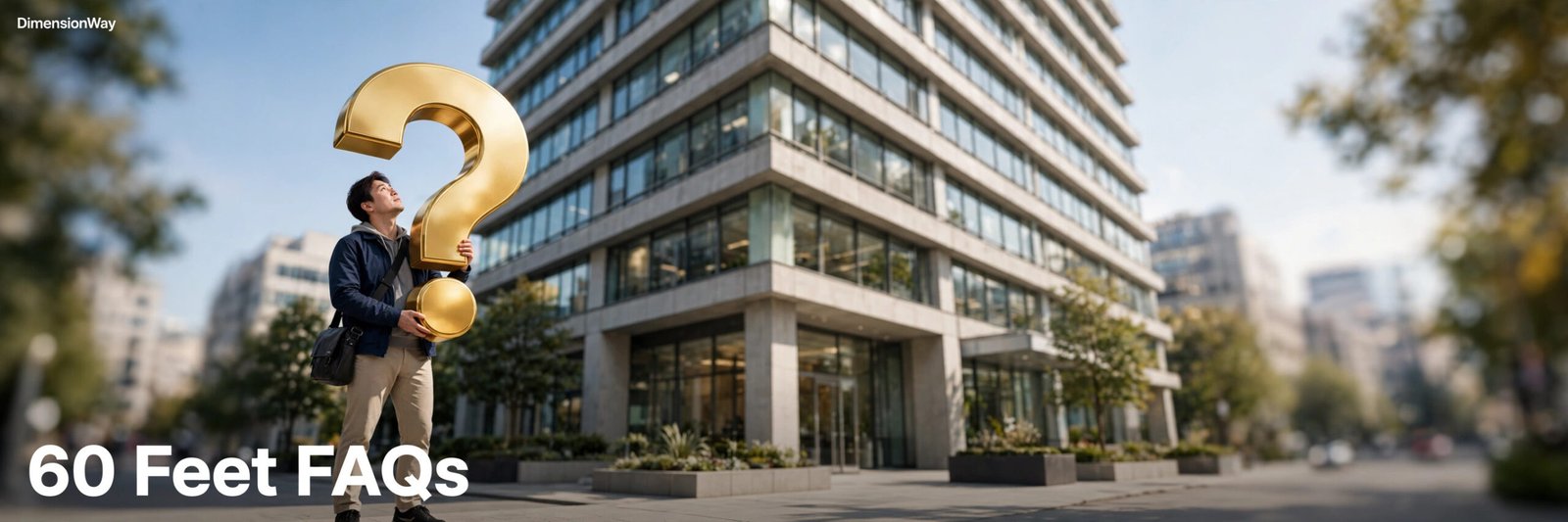
60 feet is the height of a 6-story office building, the length of a regulation bowling lane, or a standard articulated city bus. It equals 720 inches or 18.288 meters, standing about three times the height of a 2-story house.
Here are the exact numbers. Sixty feet equals 720 inches, 1,828.8 centimeters, 18.288 meters, and exactly 20 yards. In miles it is about 0.011, so it fits into a single mile roughly 88 times.
Why does it matter? Because 60 feet is the height where buildings start to feel big. It is the standard six-story block that fills downtowns everywhere, so once you can picture it, you can read the height of almost any mid-size building at a glance.
60 Feet Conversion Tables

60 Feet to Inches
| Feet | Inches |
|---|---|
| 50 | 600 |
| 55 | 660 |
| 60 | 720 |
| 65 | 780 |
| 70 | 840 |
60 Feet to Meters
| Feet | Meters |
|---|---|
| 50 | 15.24 |
| 55 | 16.76 |
| 60 | 18.29 |
| 65 | 19.81 |
| 70 | 21.34 |
60 Feet in Building Stories
| Building type | Feet per floor | Stories in 60 feet |
|---|---|---|
| Office tower | 10 | 6 |
| Apartment building | 11 | about 5.5 |
| Luxury condo | 12 | 5 |
| Historic loft | 13 | about 4.5 |
| Big-box retail | 14 | about 4 |
10 Things That Stand 60 Feet Tall
A 6-Story Office Building

A standard commercial floor measures about 10 feet from one finished floor to the next. Multiply by six stories and you land exactly on 60 feet. The mid-rise office blocks that fill downtowns are living 60-foot rulers.
Stand across the street and count the rows of windows. Six rows of glass above the sidewalk is a sight you can find in almost every city, which makes this the most repeatable reference on the list. If the building looks a little shorter or taller, you are still within a story of 60 feet.
This is also the building where the height stops feeling human. Our guide to how far 300 feet is starts at five times this height, but 60 feet is where most people first crane their necks.
A Regulation Bowling Lane
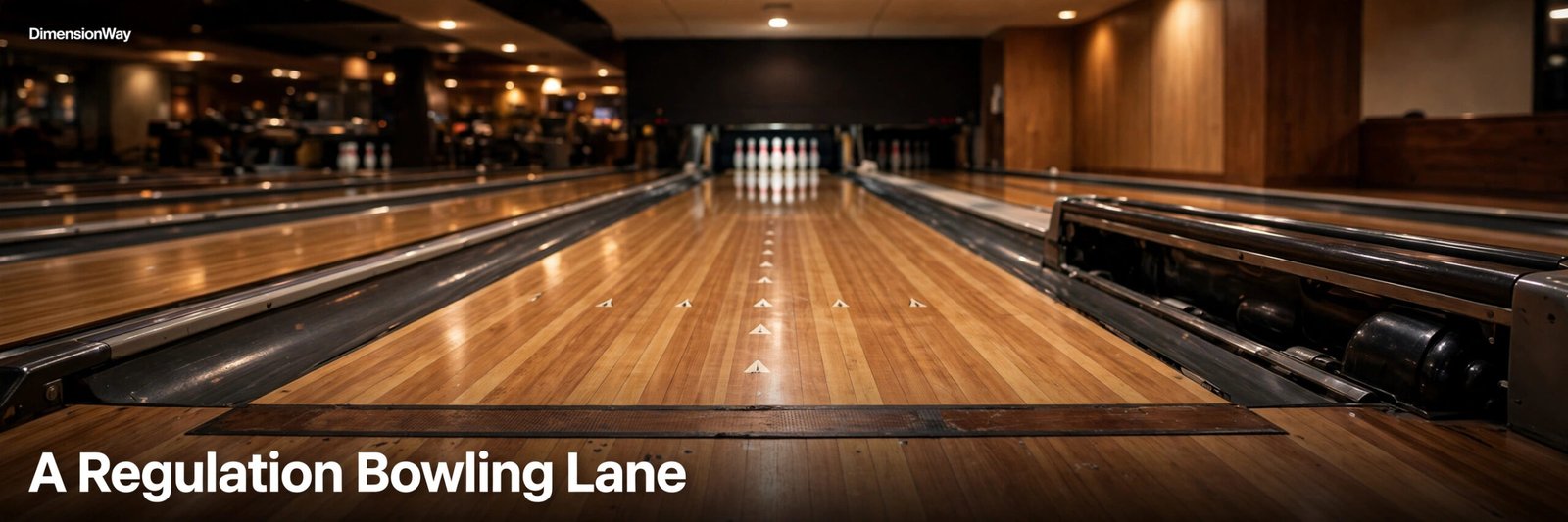
A tenpin bowling lane measures exactly 60 feet from the foul line to the center of the headpin, standardized by the United States Bowling Congress. Every lane you have ever bowled on is a 60-foot measuring strip.
Stand at the foul line and the pins look small for a reason. Sixty feet is more than seventeen times the lane’s 41.5-inch width, and the foreshortening tricks your eyes into thinking the pins are closer than they are. That optical illusion is why spare shooting feels harder than it looks.
The approach behind you adds another 15 feet, so the full walk from the back of the approach to the pins runs 75 feet. But the lane itself, the part that counts, is a clean 60.
A 60-Foot Articulated Bus
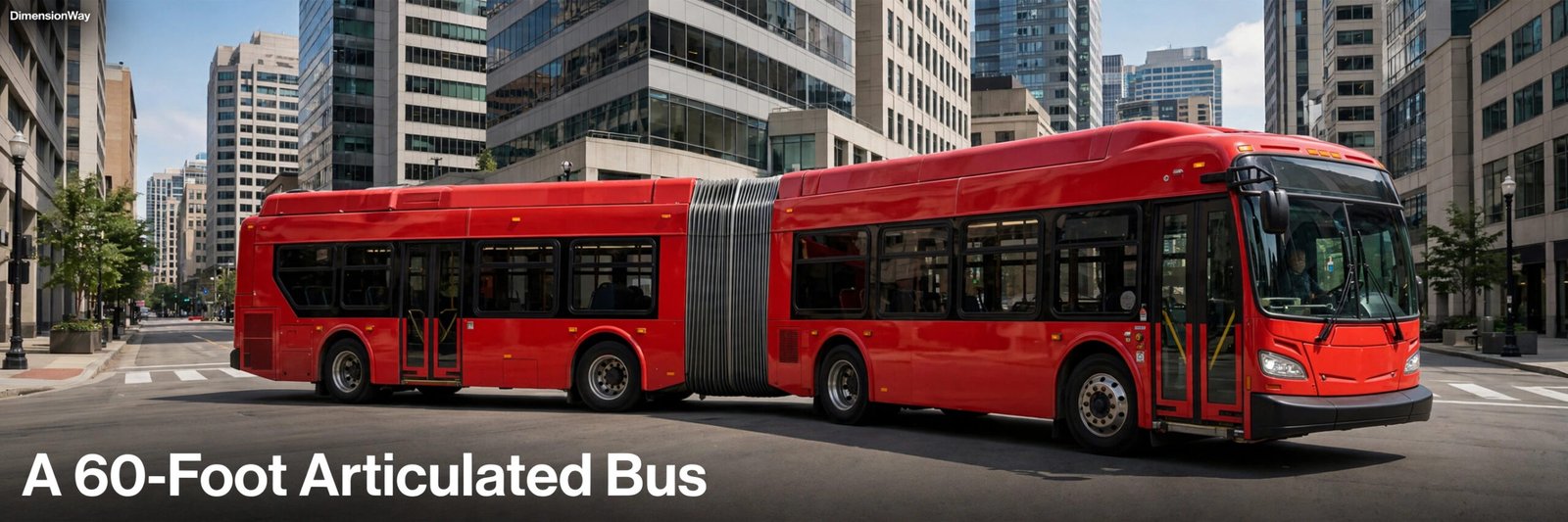
The bendy bus with the accordion joint in the middle is typically 60 feet long. Transit agencies buy them in this standard length because it carries about 50 percent more riders than a regular 40-foot bus while still turning city corners.
Watch one pull away from a stop and the two sections pivot like a train with rubber wheels. The joint sits a little behind the middle, and the whole vehicle threads through intersections that look too tight for it.
Next time you wait at a busy stop, picture the bus laid on its end. That 60-foot length stood upright is the building in the first example, which shows how one number wears two very different costumes.
A Volleyball Court (One Foot Shy)
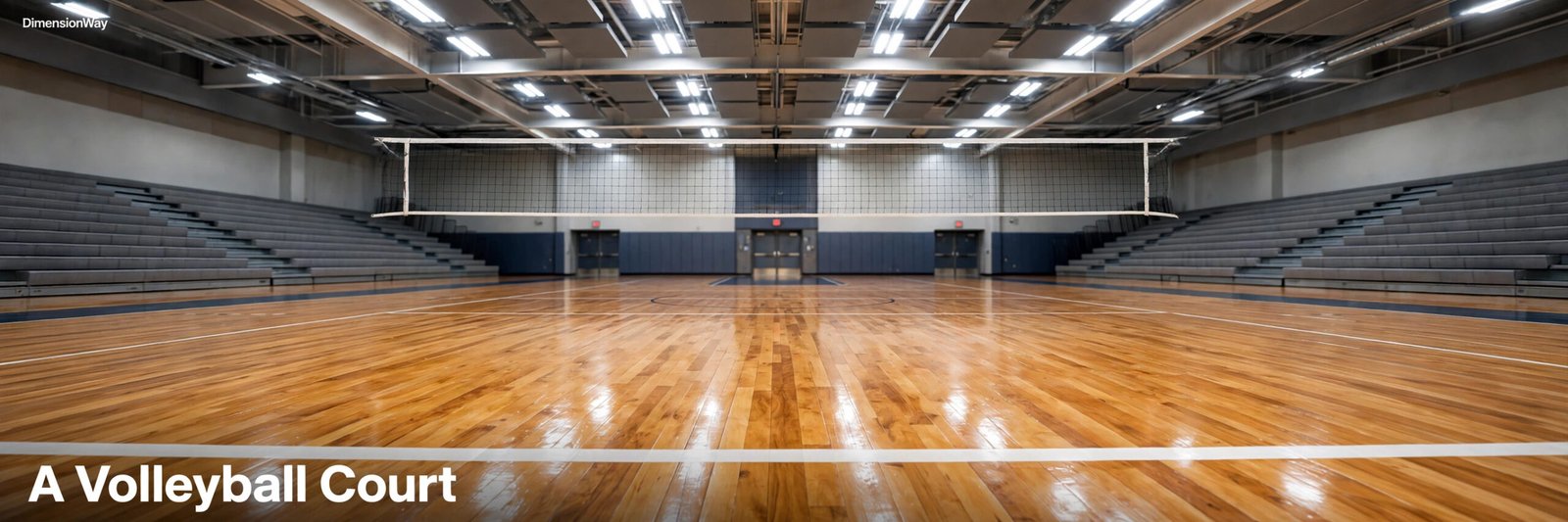
A regulation indoor volleyball court measures 18 meters long, which converts to 59.06 feet. That is one foot short of our mark, close enough that players have been walking a near-60-foot court for over a century.
The court is split into two perfect 9-meter squares by the center line, and the attack line sits 3 meters from the net on each side. Every dimension was chosen for the game, not for round numbers, yet it landed almost exactly on 60 feet.
If you have ever played, you already know this distance in your legs. Add one long step to the full court and you have walked 60 feet.
Both End Zones of a Football Field
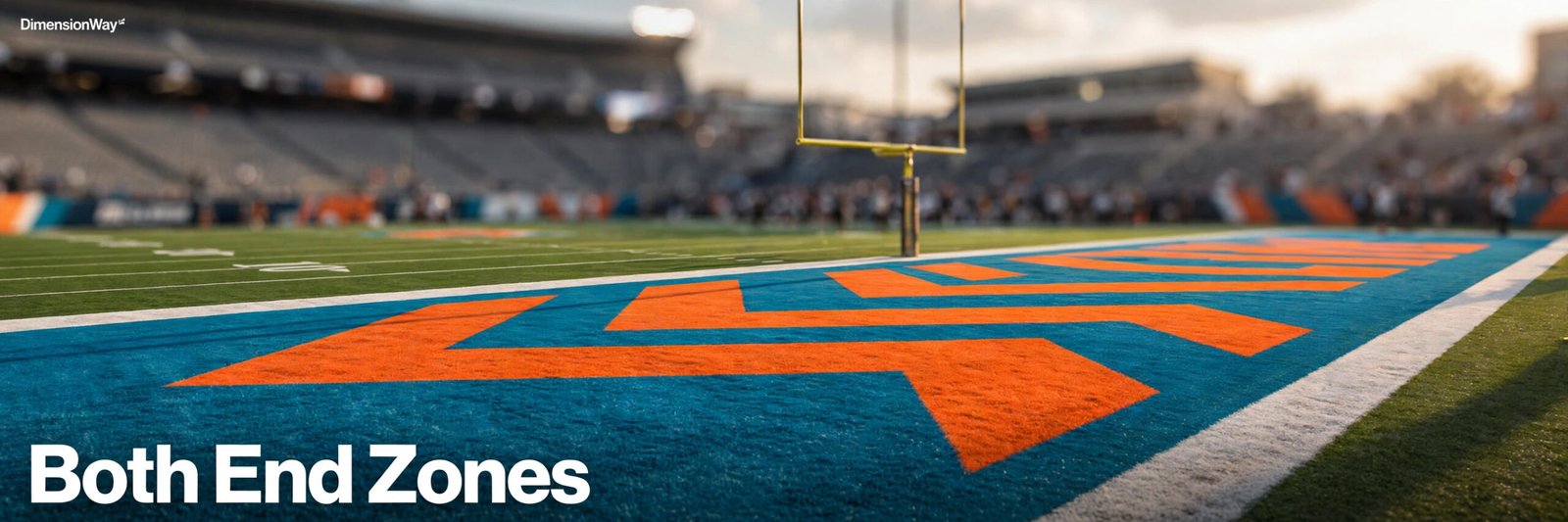
Each end zone on an American football field measures 10 yards deep, and two of them back to back give you 20 yards, which is exactly 60 feet. It is the part of the field most fans know best.
Picture the goal line, then the back of the end zone thirty feet behind it, then another thirty feet of the second end zone beyond that. Walk it and the clock reads about 14 seconds at a normal pace.
Our companion guide to how long 3 feet is breaks down the yard into smaller pieces. Twenty of those yards stacked end to end is the number on this page.
A Mature Oak or Maple Tree
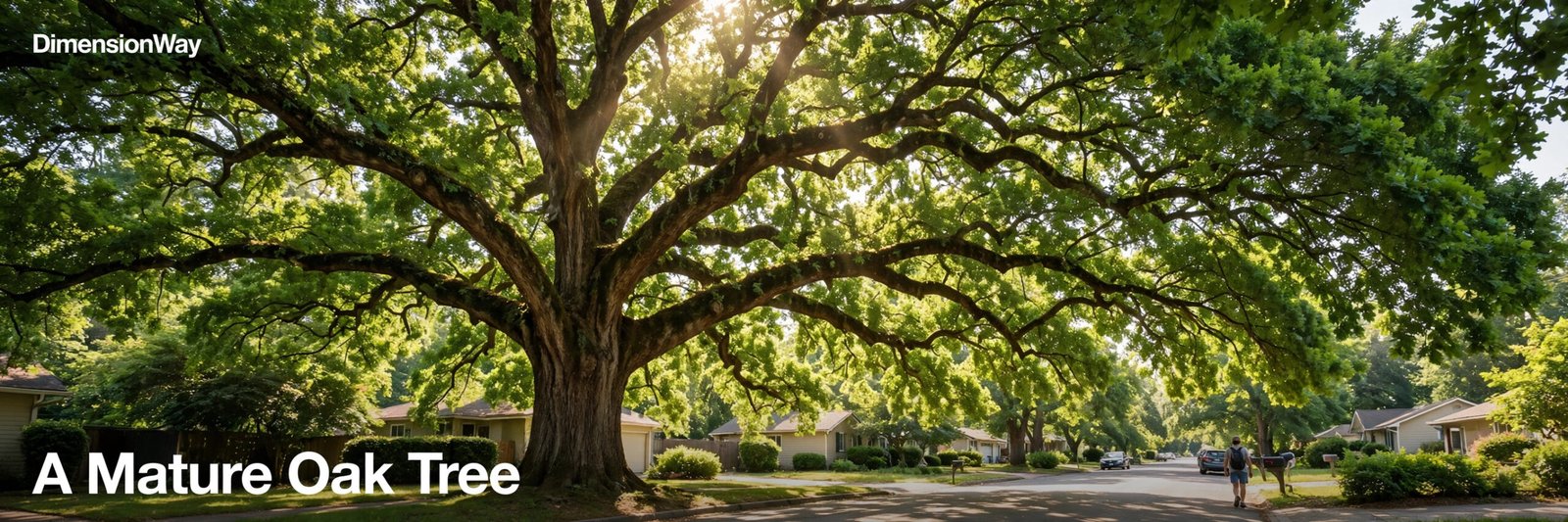
A northern red oak typically reaches 60 to 80 feet at maturity, and red maples top out right around 60 feet. The big shade trees in older neighborhoods are 60-foot towers wearing leaves.
Stand under one in summer and the canopy swallows the sky. The trunk alone can run 40 feet before the first big branches, and the crown spreads 50 to 70 feet wide. It took that tree decades to reach our number.
This is the most organic 60-foot reference on the list. No engineer designed it, no committee voted on it. The tree just grew until sixty feet looked right.
Six Basketball Hoops, Stacked
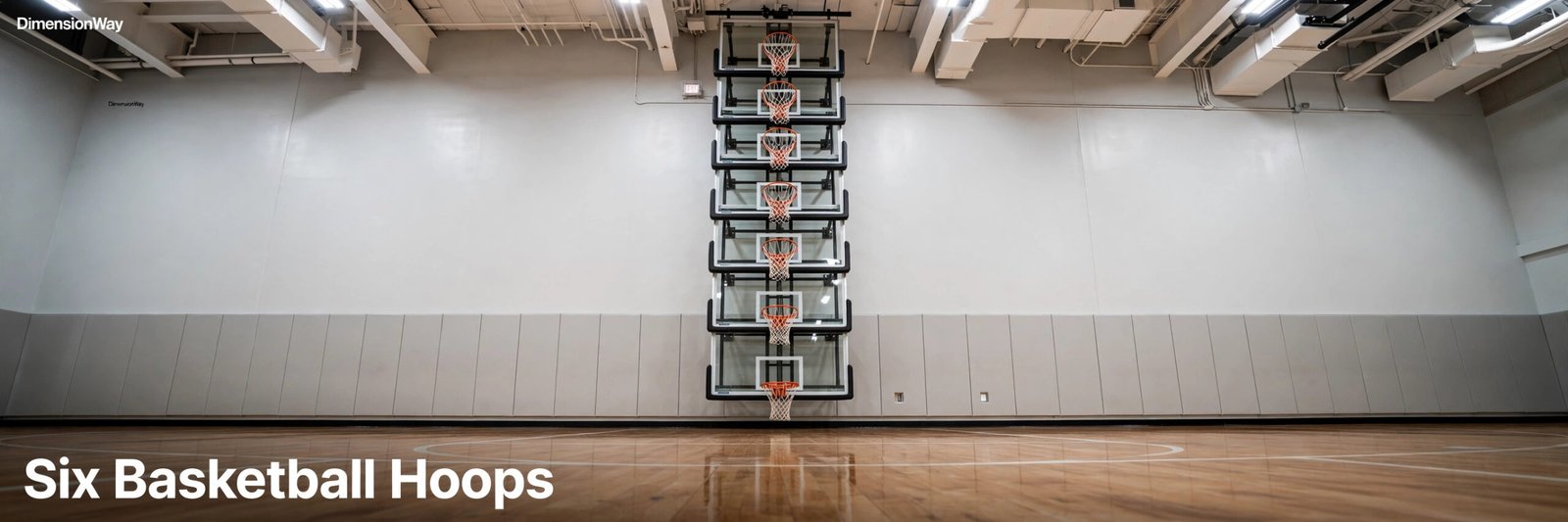
A regulation basketball hoop sits 10 feet above the court. Stack six of them and the top rim floats exactly 60 feet in the air.
It sounds like a playground trick, but it is a useful ruler. Every gym you have ever entered has that 10-foot rim, so six rims is a measurement you carry everywhere.
Players know the number instinctively. A 60-foot shot is a full-court heave from well behind the opposite basket, and only a handful of players in history have made one.
Nine Standard Interior Doors, Stacked
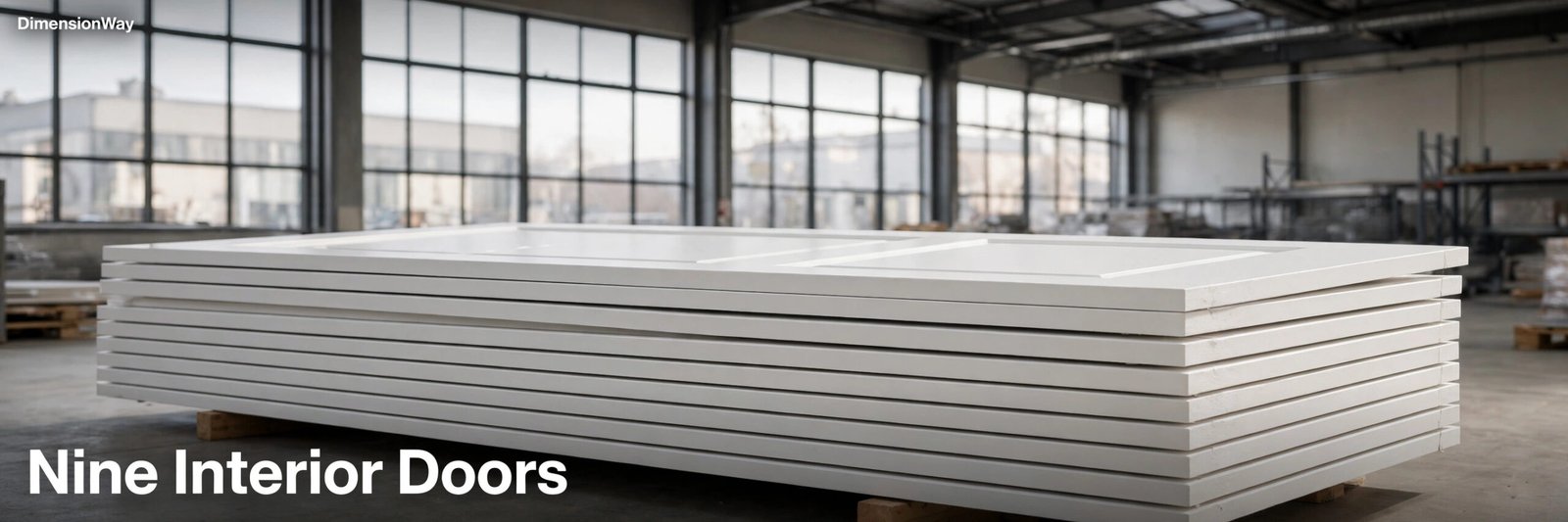
The bedroom door in your hallway is almost certainly 80 inches tall, the US standard. Stack nine of them and you get 720 inches, which is exactly 60 feet.
It is a strange image, nine white doors piled like lumber, but the math is perfect. Each door contributes 6 feet 8 inches, and nine of them land on the number without a fraction left over.
Builders picked 80 inches so tall people pass through without ducking. Nine of those comfortable clearances, one on top of another, is a 6-story building in disguise.
Ten 6-Foot Adults, Stacked

Line up ten adults who each stand 6 feet tall, head to toe, and the top of the pile reaches exactly 60 feet. It is the human ruler for this height.
The image works because 6 feet is a height everyone knows. It is the tall friend, the doorway clearance, the basketball player. Ten of them is a crowd standing on shoulders.
Three inches above the average American man, 6 feet is the line people call tall. Ten tall people is a 6-story building made of humans.
A 60-Foot Yacht

Yacht builders sell boats in standard length classes, and 60 feet is one of the most popular. A 60-foot motor yacht is big enough for a flybridge, three cabins, and a crew, yet small enough for an owner to run without a captain’s license in many places.
Walk the dock and these boats dominate the marina. At 60 feet the hull needs about 18 feet of beam to stay stable, so the whole package is a floating 6-story footprint.
It is the luxury entry on this list. Everything else here is free to look at, but the yacht reminds you that 60 feet is also a price bracket.
How to Picture 60 Feet in Everyday Life
Want a faster way to lock in 60 feet? Try these three tricks.
First, count six stories. Any downtown block with about six rows of windows is a 60-foot ruler you can revisit anytime. You can also compare any two heights side by side with our free Height Comparator tool.
Second, think bowling. You have stood at a foul line and stared down 60 feet of lane. That sightline is burned into your memory from every birthday party and league night.
Third, use twenty yards. If you know a football field, you know that 20 yards is a first down plus ten. Sixty feet is the most common chunk of a football game.
FAQs
How many meters is 60 feet?
Exactly 18.288 meters. Multiply 60 by 0.3048 and you get 18.288, which most people round to about 18.3 meters.
How many inches are in 60 feet?
720 inches. Each foot holds 12 inches, so 60 times 12 gives you 720.
How many yards is 60 feet?
Exactly 20 yards. Three feet make a yard, so 60 divided by 3 gives you a clean 20.
How many stories is 60 feet?
About six stories in a commercial building at 10 feet per floor. In a residential building at 11 feet per floor, it works out to about five and a half stories.
Is a bowling lane really 60 feet long?
Yes. A regulation tenpin lane measures 60 feet from the foul line to the center of the headpin, standardized by the United States Bowling Congress.
How many 6-foot people stacked equal 60 feet?
Exactly ten. Stack ten 6-foot adults head to toe and the top of the pile reaches the 60-foot line.
How tall is 60 feet compared to a 2-story house?
About three times as tall. A typical 2-story house runs 20 to 25 feet high, so three of them stacked land right around 60 feet. Our guide to how tall a 2-story house is breaks that smaller number down in detail.
What is 60 feet in centimeters?
1,828.8 centimeters. Multiply 60 by 30.48 and you get 1,828.8, usually rounded to about 1,829 cm.
How many standard doors stacked equal 60 feet?
Nine. A standard US interior door is 80 inches tall, and nine of them stack to exactly 720 inches, which is 60 feet.
Is 60 feet taller than a 5-story building?
Yes. At the standard 10 feet per commercial floor, five stories reach 50 feet, so 60 feet stands a full story taller.
Conclusion
Sixty feet is 720 inches, 18.288 meters, and exactly 20 yards. It is a 6-story office building, a regulation bowling lane, and a bendy city bus. It is six basketball hoops, nine doors, and ten tall adults stacked end to end.
Pick the two or three comparisons that clicked for you and keep them. The next time you look up at a mid-rise block, stand at a foul line, or board a long bus, you will not need to guess. You will already know what 60 feet looks like.
Related Reading
- How Far Is 300 Feet? 13 Things That Long, Visualized: five times our number, from goal line to goal line.
- How Long Is 50 Feet? 10 Real-World Examples: step down a little and see what fifty feet looks like.
- How Long Is 3 Feet? 10 Everyday Comparisons: the humble yard, twenty of which make our sixty feet.
Sources
- United States Bowling Congress
- Wikipedia
- NJ Transit and CPTDB Wiki
- FIVB
- NFL
- Cornell Urban Horticulture and municipal tree lists
- NBA
- CDC

James Carter is the founder and editor of DimensionWay, where he researches, measures, and verifies real-world dimensions, from everyday objects to world-famous landmarks. Every number published on DimensionWay is cross-checked against manufacturer specifications and official sources, so readers always get accurate, easy-to-visualize comparisons.

1 thought on “How Tall Is 60 Feet? 6-Story Comparisons”