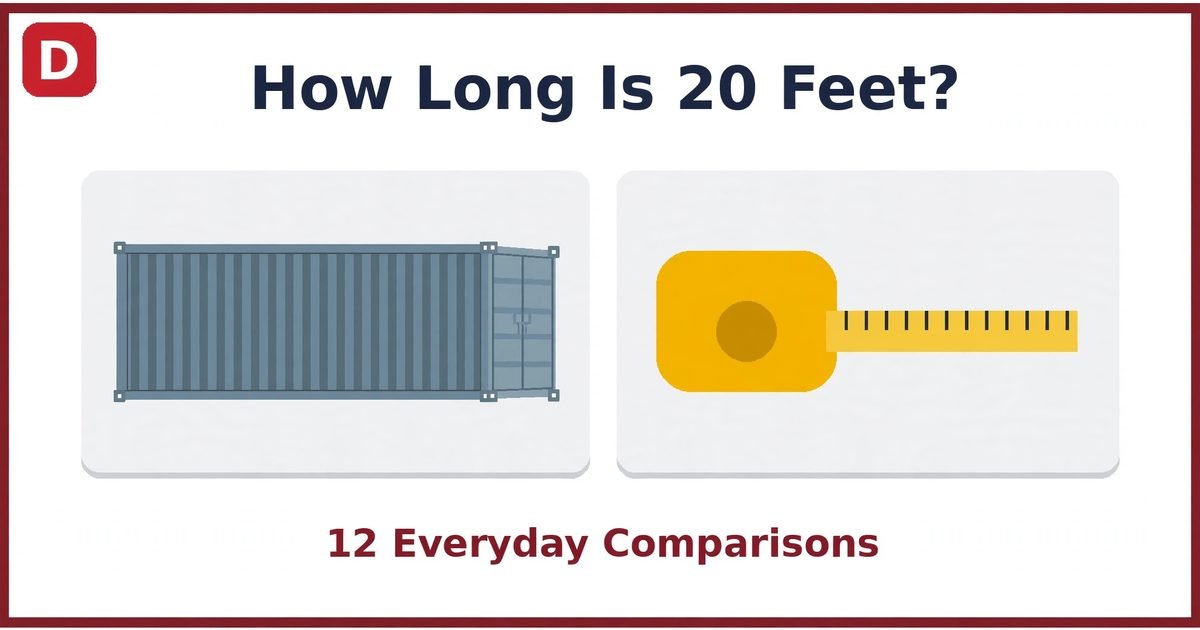
Picture this: a contractor tells you the new room will be 20 feet long, and you nod like you can see it. Inside, you are doing quick math against your sofa, your car, and your best guess of a basketball hoop. Twenty feet is one of those distances that shows up everywhere, in garage plans, parking rules, moving trucks, and sports courts, yet most of us cannot picture it on demand. So how long is 20 feet in terms you can actually see? It is 240 inches, or about 6.1 meters, which is roughly the height of a two-story house or the width of a racquetball court. This guide gives you exact conversions plus 12 everyday things that measure 20 feet, so the next time someone says the number, you will see it instantly.
How Long Is 20 Feet?
Twenty feet is a building-scale distance. It is longer than any car you will park in a driveway, taller than a single story of your house, and exactly the length of the shipping container that carries goods across the ocean.
The exact numbers: 20 feet equals 240 inches, 609.6 centimeters, 6.096 meters, and 6.67 yards, which is 6 and two-thirds yards. For quick estimates, most people round it to about 6 meters. Walk it at a normal pace and you will cover it in roughly 8 steps.
One thing competitors rarely explain: 20 feet is not always a length. It can be a width, like the width of a pickleball court, or a height, like the height of a two-story house. Paying attention to which dimension you are picturing is what turns a vague number into a useful measurement.
20 Feet Conversion Tables
20 Feet to Inches
| Feet | Inches |
|---|---|
| 12 | 144 |
| 16 | 192 |
| 20 | 240 |
| 24 | 288 |
| 28 | 336 |
20 Feet to Meters
| Feet | Meters |
|---|---|
| 12 | 3.66 |
| 16 | 4.88 |
| 20 | 6.10 |
| 24 | 7.32 |
| 28 | 8.53 |
20 Feet to Centimeters
| Feet | Centimeters |
|---|---|
| 12 | 365.76 |
| 16 | 487.68 |
| 20 | 609.60 |
| 24 | 731.52 |
| 28 | 853.44 |
12 Things That Measure 20 Feet
A Standard Shipping Container

The shipping industry literally named a unit after this distance. A TEU, or twenty-foot equivalent unit, is the standard box the global freight system is built on, and it measures exactly 20 feet long, 8 feet wide, and 8.5 feet tall under ISO standards. When a port reports handling millions of TEUs a year, each one is this box.
Stand next to one and its length is the first thing you feel. It runs about four adult body lengths, and its corrugated steel walls make the full 20 feet easy to trace with your eyes. The doors sit at one short end, so you see the entire length from the side.
One useful detail: the 20 feet is the external measurement. The interior runs about 19.4 feet because the walls and corner posts take up space. That distinction matters if you are converting one into a tiny home or storage unit and planning around the inside.
A Racquetball Court
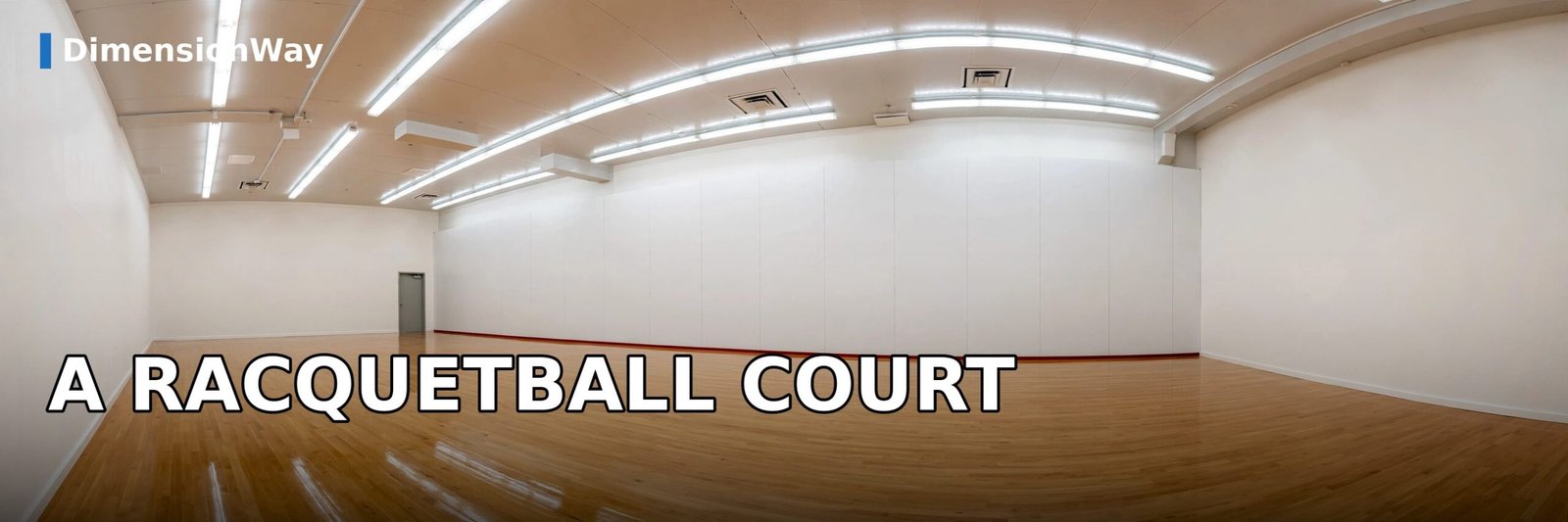
Here is the rare example where 20 feet shows up twice in the same object. Under USA Racquetball’s official rules, a standard court is 20 feet wide, 40 feet long, and 20 feet high. The walls you smash the ball against rise exactly 20 feet above the floor.
Stand on the service line and look up: the ceiling is 20 feet over your head, the same as the wall-to-wall width. That symmetry is deliberate. It keeps the ball’s rebound angles consistent, so players in every club in the country compete in the same box.
If you have ever played or watched a match, you already have a 20-foot reference stored in your memory. The next time someone says 20 feet, picture the court and decide whether you are picturing its width or its height.
A Pickleball Court (Width)

Pickleball is one of the fastest growing sports in the country, and its court gives you another exact 20-foot width. Under USA Pickleball’s official rulebook, a regulation court is 20 feet wide and 44 feet long, the same for singles and doubles.
Stand at the baseline and look across: the two sidelines are 20 feet apart. The non-volley zone, the kitchen, stretches the full 20-foot width too, with its line sitting 7 feet from the net on each side. Because the dimensions never change between singles and doubles, every court you step onto is the same 20 feet wide.
Here is a neat connection to the previous example: a pickleball court has exactly the footprint of a doubles badminton court, which is why gyms often tape pickleball lines over badminton lines. The 20-foot width is the shared DNA.
A Badminton Court, Doubles (Width)
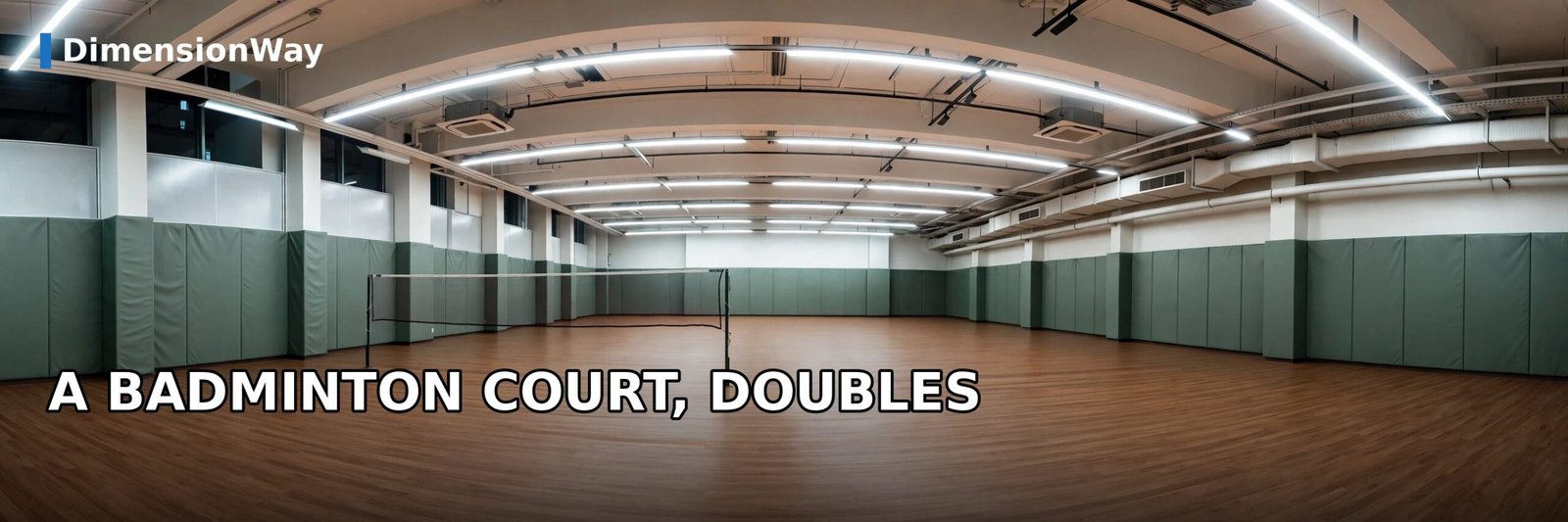
The Badminton World Federation sets the doubles court at 20 feet wide, or 6.1 meters. The singles court narrows to 17 feet, but the doubles sidelines sit exactly 20 feet apart, and the court runs 44 feet long, matching pickleball’s footprint.
Watch a doubles rally and the players defend a 20-foot-wide strip of floor. The width forces constant lateral movement, which is why doubles badminton feels faster than singles even though the court is the same length. Every smash, drop, and drive plays within those 20 feet.
This is a good example of width versus length. The court’s 20-foot dimension is its width, while its length is 44 feet. Saying “the court is 20 feet” means nothing until you say which way you are measuring.
A Double-Wide Manufactured Home (Width)
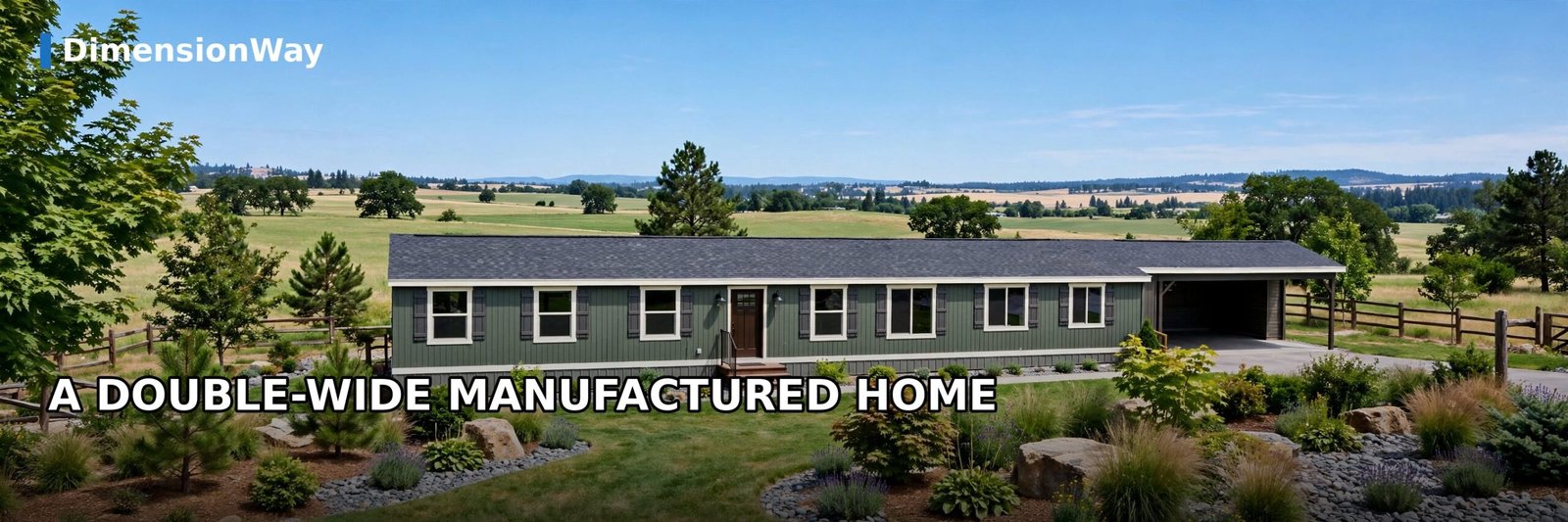
A double-wide manufactured home starts at 20 feet wide by definition. Under housing standards, double-wide units are built in two sections in a factory, trucked to the site, and joined together, with the finished home measuring 20 feet or more across. Single-wide homes top out at 18 feet, so 20 feet is the line between the two categories.
Stand in front of one and the width reads clearly: two full rooms side by side, with a hallway or living space running the length. A typical small double-wide pairs its 20-foot width with about 50 feet of length, giving roughly 1,000 square feet of living space.
If you are shopping for a manufactured home or planning a lot, the 20-foot minimum is the number that decides your foundation, your setbacks, and your delivery route. Each half travels separately and must fit down the road.
A Ford F-150 SuperCrew
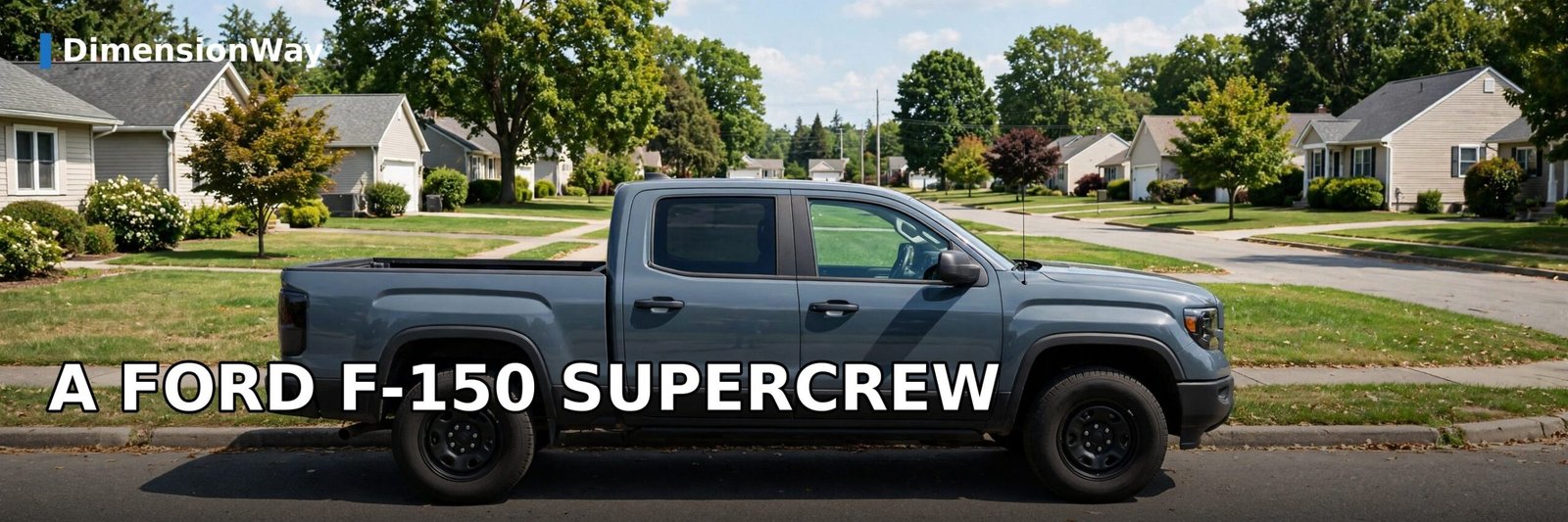
America’s best-selling truck is nearly a 20-foot reference on wheels. A Ford F-150 SuperCrew with the 5.5-foot bed measures 231.7 inches long overall, which works out to about 19.3 feet. Park one in your driveway and you are looking at a vehicle that falls just 8 inches short of 20 feet.
That missing 8 inches is a useful margin. If a parking space, garage bay, or trailer bed is listed at 20 feet, this truck fits with a little room to spare. Dealers and spec sheets list the 231.7-inch figure for the short-bed crew cab, while longer beds stretch further.
The takeaway for visualization: picture the biggest pickup on your street, the full crew cab with four real doors, and you are picturing just under 20 feet. Add one long stride and you are there.
A Female Great White Shark

The largest reliably documented great white shark, a female researchers named Deep Blue, is estimated at about 20 feet long, or 6.1 meters. Females grow larger than males, and Deep Blue, filmed off Guadalupe Island in Mexico, represents the upper edge of what the species reaches.
Twenty feet of shark is hard to picture until you anchor it. It is longer than the F-150 in the previous example, and roughly the length of the shipping container’s bigger 40-foot sibling cut in half. A shark this size weighs over 4,000 pounds, more than a full-size pickup truck.
Most great whites you hear about are far smaller, typically 11 to 16 feet. Deep Blue is the exception that defines the scale’s top end, which is exactly why she makes the list: she shows you what the absolute maximum of 20 feet looks like in the ocean.
A Tall Male Giraffe

A giraffe is the only land animal that can stand eye to eye with 20 feet. Large adult males, called bulls, commonly exceed 18 feet, and the tallest reliably recorded, a Masai giraffe named George, stood 5.8 meters, about 19 feet. Exceptional bulls push right up against the 20-foot mark.
Picture it as a height, not a length. A bull giraffe’s head clears a two-story house’s eaves, and its legs alone run about 6 feet, as tall as an adult man. Newborn calves already stand 6 feet at birth, according to the Giraffe Conservation Foundation, so the species starts where most animals finish.
When you picture 20 feet vertically, the giraffe is your living ruler. If a structure reaches as high as a big bull giraffe’s head, it is about 20 feet tall.
A Two-Story House
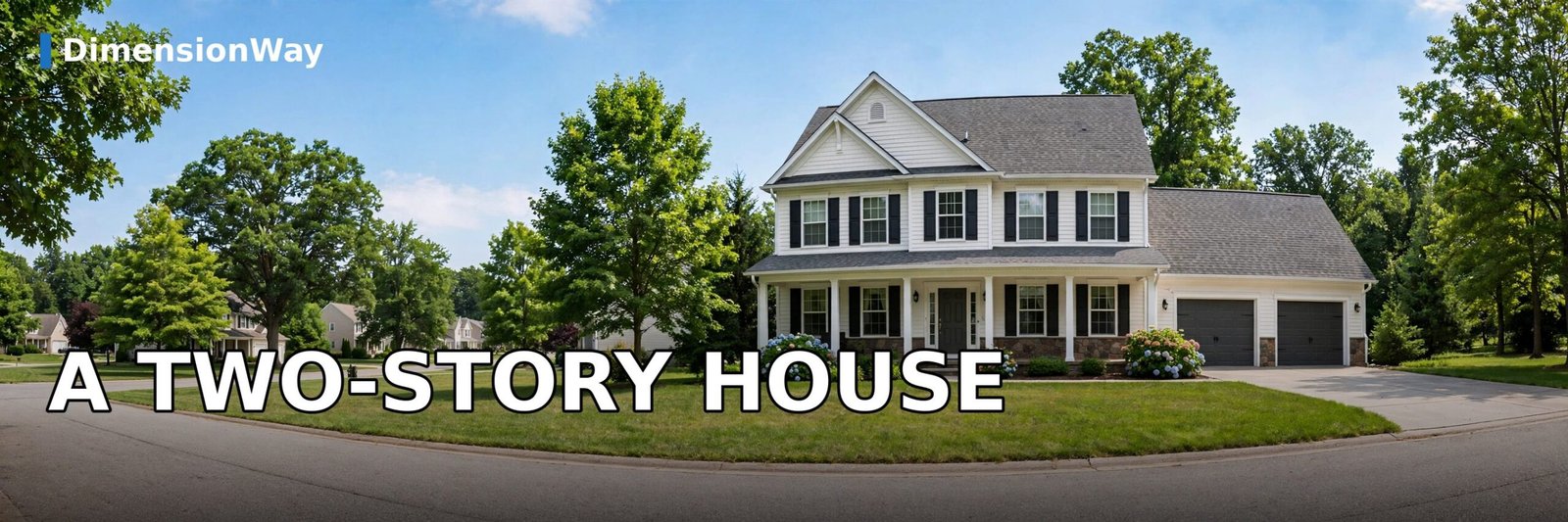
This is the 20-foot reference hiding on your street. A typical two-story house with standard 8-foot ceilings stands about 20 to 22 feet tall from the ground to the roof peak. The math is simple: 8 feet of first floor, a foot or so of floor structure, 8 feet of second floor, and a few feet of roof.
That makes the two-story house the most practical vertical anchor for 20 feet. Everyone has stood in front of one. Look at the eaves, roughly where the second-floor walls meet the roof, and you are looking at about 16 to 18 feet. The roof peak adds the rest.
Builders think in this number constantly. It decides ladder sizes, with a 20-foot extension ladder being the standard choice for reaching a two-story roofline, and it sits under many local height limits for residential construction.
A Werner 20-Foot Extension Ladder
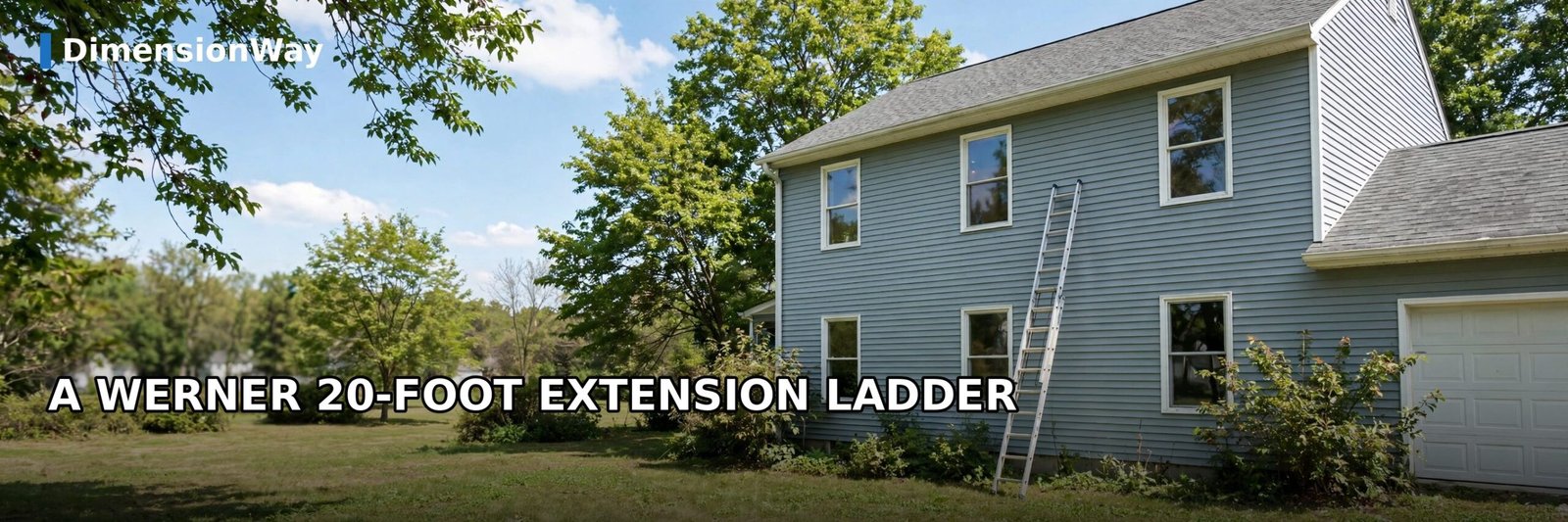
The 20-foot aluminum extension ladder is the workhorse of American rooftops. Werner’s popular D1220-2 model, for example, is sold as a 20-foot ladder: two 10-foot aluminum sections that slide apart, with a maximum reach of about 19 feet when set at the proper climbing angle.
Lean one against your house and it lands right at the eaves of a two-story home, which is no coincidence. The ladder and the house were designed around each other. Painters, roofers, and holiday-light installers all reach for this size first.
Note the honest labeling. A 20-foot extension ladder does not give you 20 feet of working height; the climbing angle and the overlap between sections cost you a foot or so. The 20 feet refers to the sections’ combined length, which is the measurement that matters when you are buying or transporting it.
A Two-Car Garage
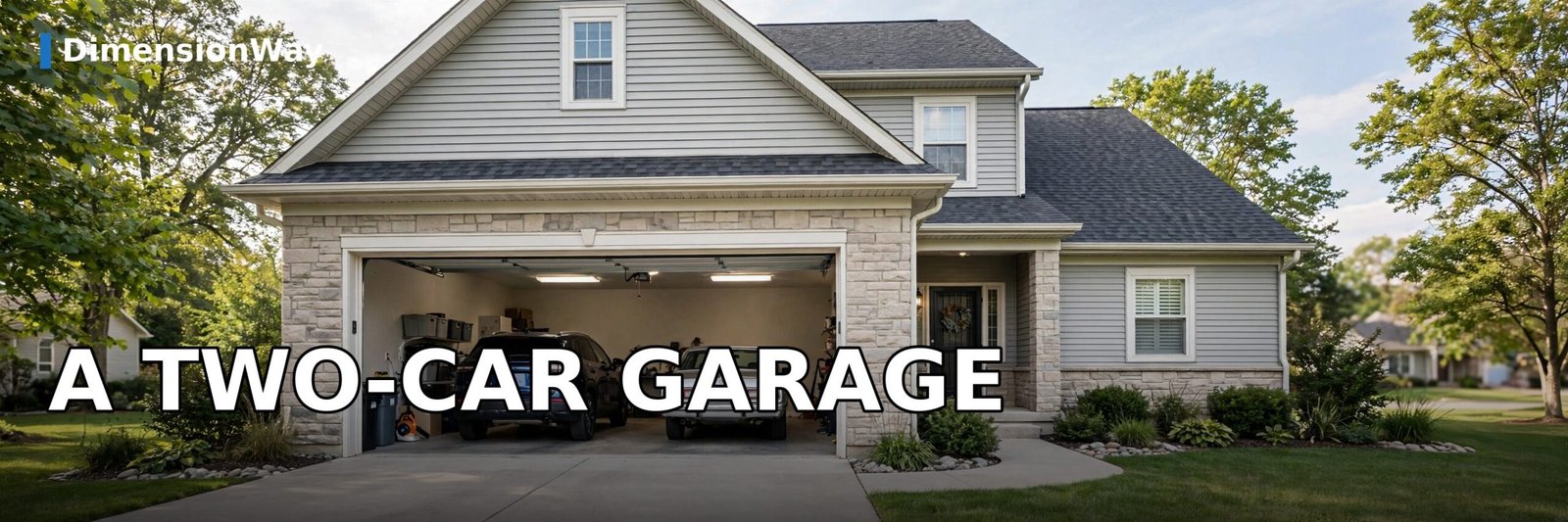
The minimum standard for a two-car garage is 20 feet by 20 feet. That is 20 feet of width for two cars side by side, and 20 feet of depth from the door to the back wall. Larger garages run 20 by 22 or 24 by 24, but 20 by 20 is the baseline every builder quotes.
Stand inside one and the depth tells the story. Two sedans at about 15 feet each leave roughly 5 feet of walking and storage space at the front, which is why the 20-foot depth feels snug but workable. Width-wise, the 20 feet splits into two 10-foot bays, giving each car room for its doors to open.
If you are planning a garage, a workshop, or a parking pad, 20 by 20 is the number to memorize. It is the smallest square that comfortably holds two cars, and every foot you add beyond it buys storage or elbow room.
Three King-Size Mattresses, End to End
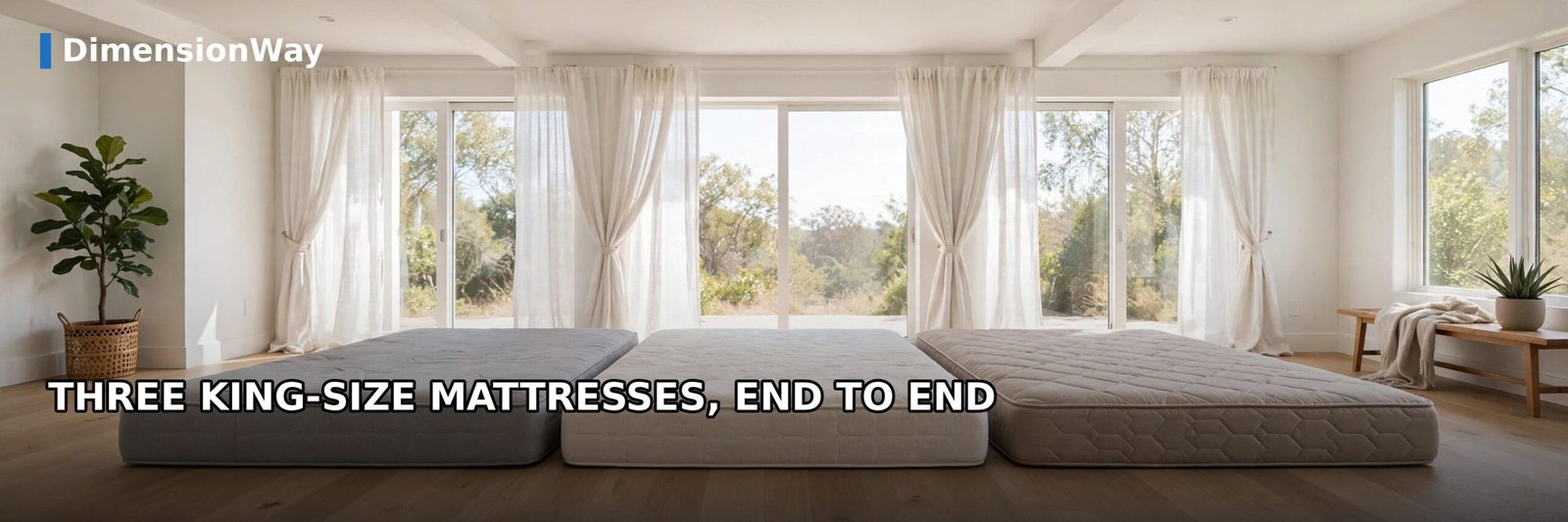
This one is pure math you can do on your bedroom floor. A standard US king-size mattress measures 76 inches wide by 80 inches long. Lay three of them end to end and you get 240 inches, which is exactly 20 feet. No rounding, no approximation.
It is also a surprisingly useful estimating trick. Most people have slept on or at least seen a king-size bed, so its 80-inch length, or 6 feet 8 inches, is a familiar unit. Three bed-lengths in a row is 20 feet, and you can picture it in any hallway, driveway, or room.
Try it the next time you are in a furniture store. Walk the length of three king mattresses laid out on the showroom floor and you will have walked exactly 20 feet, with your own steps confirming the math.
How to Visualize 20 Feet Yourself
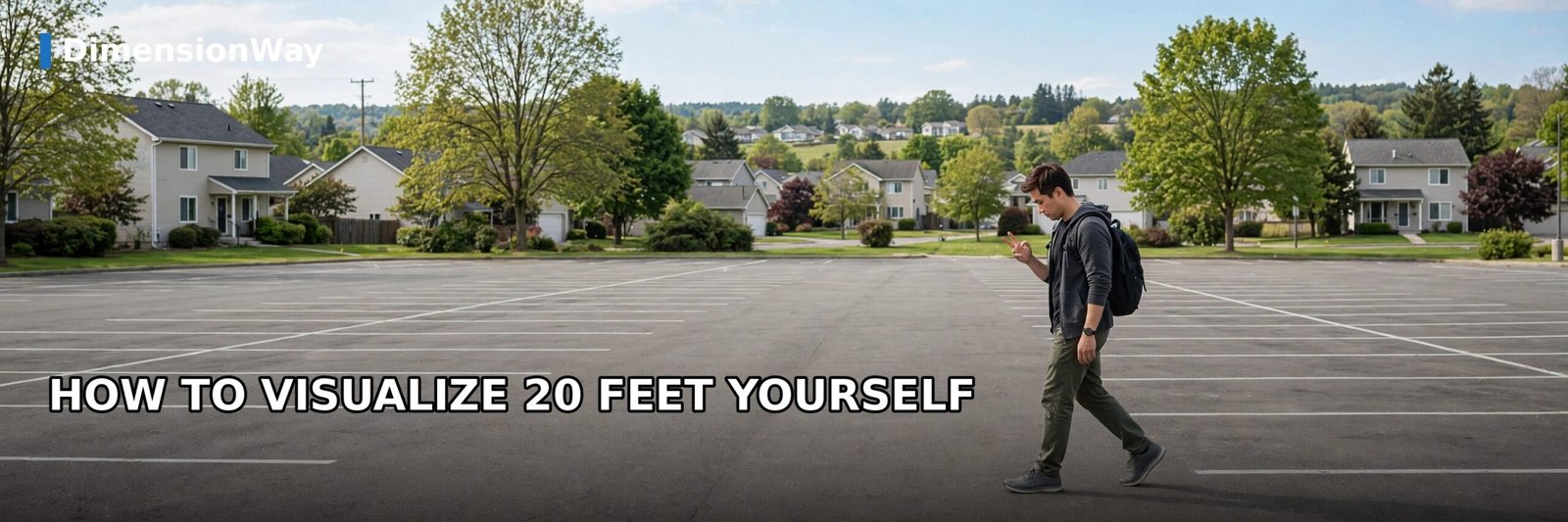
You now have a full toolkit. Start with your body: walk 8 normal steps at about 2.5 feet each and you have covered 20 feet. For a vertical picture, stand in front of a two-story house or think of a tall giraffe. For a horizontal one, picture a shipping container, a racquetball court’s width, or three king mattresses in a row.
Combine references to check yourself. If a room is listed at 20 feet long, ask whether a shipping container would fit inside it. If a ceiling is listed at 20 feet high, ask whether a giraffe could stand under it. Crossing a length reference with a height reference keeps you honest.
For trickier estimates, DimensionWay’s Distance Visualizer lets you compare measurements against familiar objects on screen, and the Walk-Time Calculator converts any distance into walking time. At a normal pace, 20 feet takes about 4 to 5 seconds to walk.
FAQs
How many inches is 20 feet?
20 feet equals exactly 240 inches. Multiply any foot measurement by 12 to convert it to inches.
How many meters is 20 feet?
20 feet equals 6.096 meters. For quick estimates, most people round it to about 6.1 meters.
How many yards is 20 feet?
20 feet equals 6.67 yards, or 6 and two-thirds yards. A yard is 3 feet, so divide by 3.
How many steps are in 20 feet?
The average adult step is about 2.5 feet, so 20 feet works out to roughly 8 steps. Count eight normal strides and you have covered it.
How long does it take to walk 20 feet?
At a normal walking pace of 3 miles per hour, you cover about 4.4 feet per second, so 20 feet takes roughly 4 to 5 seconds.
Is a 20-foot shipping container exactly 20 feet long?
Externally, yes. The 20-foot length is the outside measurement under ISO standards. The interior is about 19.4 feet because the walls and corner posts take up space.
Is 20 feet longer than a car?
Yes, longer than most. A typical sedan is about 15 feet long, so 20 feet beats it by a third. A crew-cab pickup like the Ford F-150 runs about 19.3 feet, just under the mark.
What is about 20 feet tall?
A two-story house, a large male giraffe, and a racquetball court’s ceiling are all about 20 feet tall. A 20-foot extension ladder is built to reach exactly that height.
How wide is a racquetball court?
A standard racquetball court is 20 feet wide under USA Racquetball’s official rules. It is also 20 feet high and 40 feet long.
How many king-size mattresses laid end to end make 20 feet?
Three. Each standard US king mattress is 80 inches long, and 3 times 80 inches is 240 inches, which is exactly 20 feet.
Conclusion
So how long is 20 feet? It is 240 inches, 6.096 meters, the length of a shipping container, the width of a racquetball court, and the height of a two-story house. Picture three king mattresses in a row, walk 8 steps, or stand next to a full-size pickup truck, and you have it. The next time a floor plan, a rental listing, or a friend mentions 20 feet, you will not need a tape measure to understand it. Once your eyes learn the distance, you will spot 20-foot stretches everywhere, from sports courts to your own street.
Related Reading
- How Long Is 10 Feet?: half this distance, with everyday comparisons.
- How Far Is 200 Feet?: ten times this distance, with ten everyday comparisons.
- How Long Is 100 Feet?: five times this distance, with ten everyday comparisons.
Sources
- ISO 668 shipping container standards: 20-foot container dimensions, 20 x 8 x 8.5 feet external.
- USA Racquetball Official Rules: standard court 20 feet wide, 40 feet long, 20 feet high.
- USA Pickleball Official Rulebook (Rule 2.A.1): regulation court 20 feet wide by 44 feet long.
- Badminton World Federation (BWF) court specifications: doubles court 20 feet (6.1 meters) wide.
- US Department of Housing and Urban Development (HUD) manufactured housing standards: double-wide units 20 feet or more in width.
- Kelley Blue Book: 2025 Ford F-150 SuperCrew 5.5 ft box, 231.7 inches overall length.
- Marine research documentation: Deep Blue, female great white shark estimated at 6.1 meters (20 feet).
- Giraffe Conservation Foundation and Tsavo Trust: adult male giraffes exceeding 18 feet; tallest recorded at 5.8 meters (about 19 feet).
- Residential construction references: typical two-story house height 20 to 22 feet with standard 8-foot ceilings.
- Werner ladder specifications: D1220-2 aluminum extension ladder, 20-foot size, two 10-foot sections.
- Garage building guides: minimum standard two-car garage 20 x 20 feet.
- Standard US mattress sizes: king mattress 76 x 80 inches.

James Carter is the founder and editor of DimensionWay, where he researches, measures, and verifies real-world dimensions — from everyday objects to world-famous landmarks. Every number published on DimensionWay is cross-checked against manufacturer specifications and official sources, so readers always get accurate, easy-to-visualize comparisons.
