Picture this: you are rearranging your living room, and a friend says the new sofa needs a 10-foot wall. You nod, then realize you have no idea what 10 feet actually looks like. Is it the length of your car? Taller than your ceiling? Most of us run into measurements like this when shopping for furniture, planning a party, or hanging decorations, and we just guess. So how long is 10 feet in terms you can actually picture? It is 120 inches, or just over 3 meters, which puts it right around the height of a basketball hoop. Once you connect the number to objects you already know, estimating it becomes second nature. This guide gives you exact conversions plus 10 everyday things that measure about 10 feet, so you will never have to guess again.
How Long Is 10 Feet?
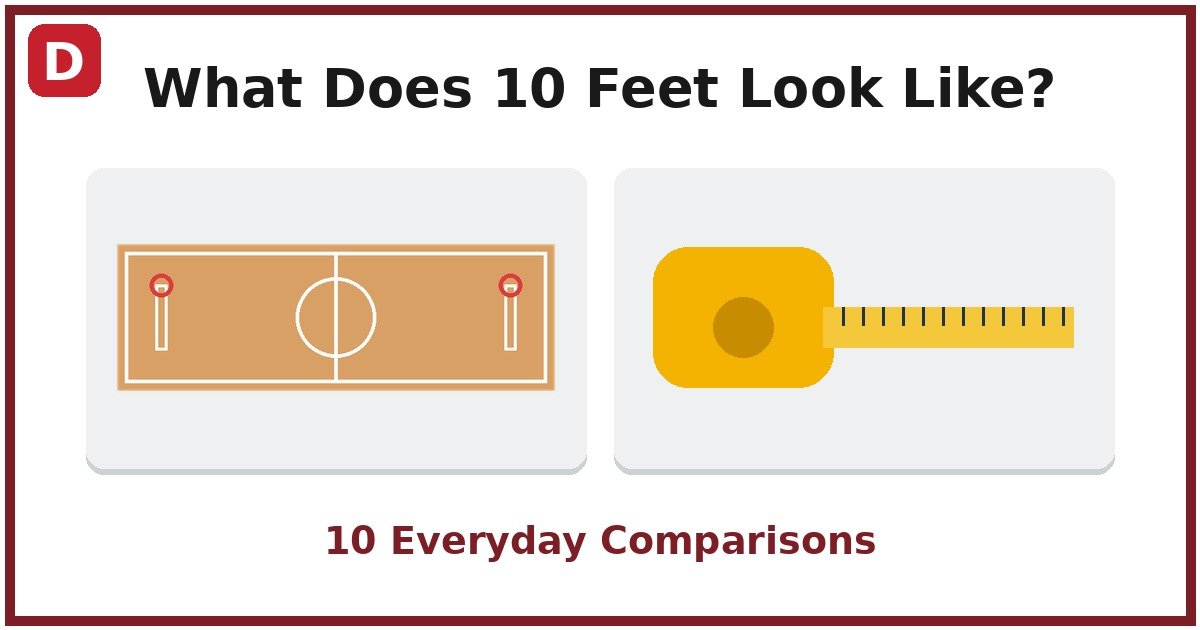
Ten feet is a short, room-scale distance you deal with all the time. It is taller than most ceilings, longer than most sofas, and exactly the height of a basketball rim.
The exact numbers: 10 feet equals 120 inches, 304.8 centimeters, 3.048 meters, and 3.33 yards. In metric terms, it is just over 3 meters, which helps if you think in meters.
Knowing this distance pays off when you shop for furniture, hang curtains, or plan a layout. A quick mental anchor: if you can picture a basketball hoop, you can picture 10 feet.
10 Feet Conversion Tables
10 Feet to Inches
Feet
Inches
6
72
8
96
10
120
12
144
14
168
10 Feet to Meters
Feet
Meters
6
1.83
8
2.44
10
3.05
12
3.66
14
4.27
10 Feet to Centimeters
Feet
Centimeters
6
182.88
8
243.84
10
304.80
12
365.76
14
426.72
10 Real-Life Examples
A Basketball Hoop Rim
In basketball, one number has never changed since the game was invented. The rim sits exactly 10 feet above the court, a rule written into every official rulebook from the NBA down to youth leagues. No rounding, no approximations: 10 feet, or 120 inches, or 3.048 meters.
This is probably the easiest 10-foot reference you already own. Next time you pass a park court or a driveway hoop, stop and look up. That height, which feels just out of reach for most adults, is your built-in measuring stick. An average adult man can reach about 8 feet standing flat-footed, so the rim floats a full 2 feet beyond his fingertips.
The height dates back to 1891, when James Naismith nailed a peach basket to a gym balcony railing that happened to be 10 feet off the floor. Nobody has seen a reason to change it since.
A Recreational Kayak
Walk into any sporting goods store and look at the beginner kayaks lined up along the wall. Most recreational models run about 10 feet long, with popular sizes ranging from 9.5 to 10.5 feet. Manufacturers land on this length because it balances stability for new paddlers with easy handling on calm water.
Picture one strapped to the roof of a sedan: it overhangs the front and back by a foot or two, and it just fits diagonally across a standard garage. If you have ever carried one with a friend, one person at each end, you have held 10 feet between you.
Shorter kayaks turn faster but wander off course, which is why whitewater boats are stubby and touring kayaks stretch past 14 feet. The 10-foot recreational kayak sits in the sweet spot for lakes and slow rivers, which is why it outsells every other size.
A Ping Pong Table
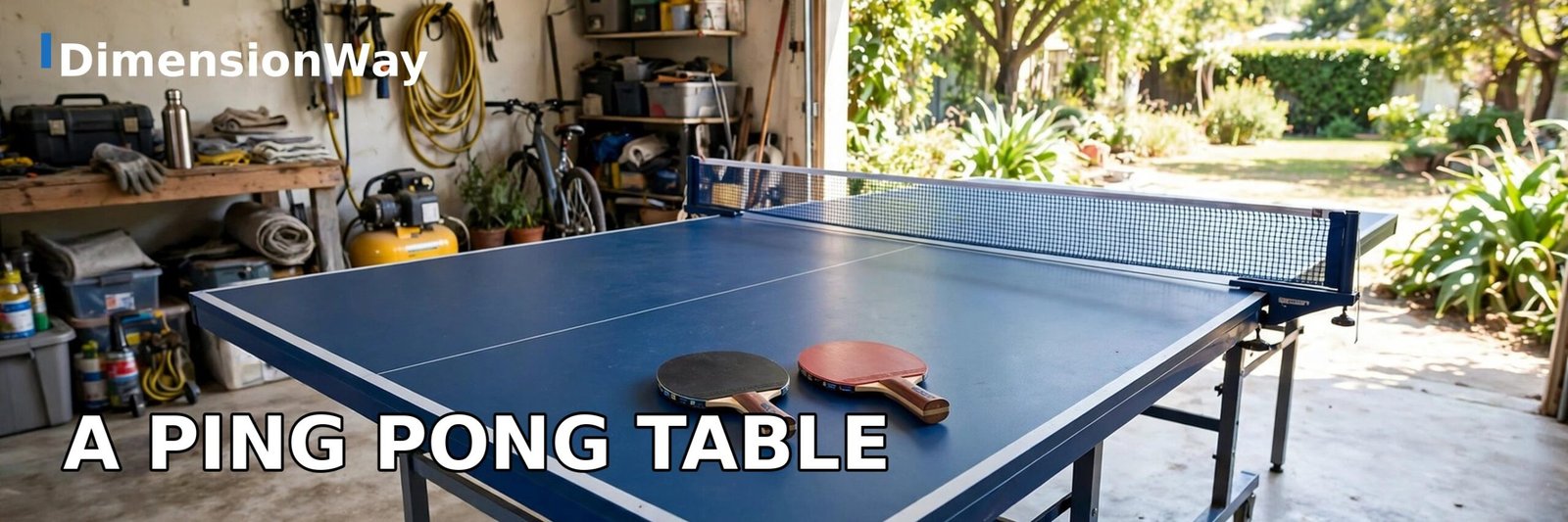
Tournament table tennis is played on a table that measures 2.74 meters long. Convert that and you get 8.99 feet, so a regulation table lands about a foot shy of 10 feet. Close enough that most people would call it 10 feet at a glance.
Think of the table in a friend’s garage or office game room. It dominates the space, and you need several feet of clearance on every side to play properly. When you stand at one end, the far edge feels like a solid 10-foot stretch.
Before buying one, measure your room: players need roughly 19 feet of total length for comfortable rallies. The table itself is also 5 feet wide and 2.5 feet high with a 6-inch net, all fixed by the same international rules.
A Large Christmas Tree
Every December, living rooms across the country fill with artificial trees sold in standard heights: 7.5, 9, 10, and 12 feet. A 10-foot tree is the statement size, the one that needs a vaulted ceiling or a great room. It stands about 3 meters tall.
Imagine dragging the boxed tree in from the garage and watching it nearly brush the ceiling as it goes up. Decorating the top requires a step ladder, and the star or angel on top adds another foot you probably forgot to count.
Measure your ceiling before you buy, and remember the stand adds 6 inches or more. Most standard ceilings are 8 or 9 feet, which is why the 7.5-foot tree is the best seller and the 10-footer is a commitment.
An Adult American Alligator
Few animals make 10 feet feel as intimidating as an American alligator. Large adult males commonly reach 11 to 13 feet, so a big gator stretches just past the 10-foot mark. Females are smaller, usually 8 to 10 feet.
Picture one hauled out on a riverbank in Florida or Louisiana: longer than your car is wide, with its tail alone accounting for nearly half its length. Wildlife officers use total length to estimate an alligator’s age and weight.
The largest verified wild alligator measured over 19 feet, taken in Louisiana. Alligators keep growing throughout their lives, so a 10-footer is a mature adult that has survived decades in the wild.
A U-Haul 10-Foot Box Truck
The smallest truck U-Haul rents is called the 10-foot truck, and the name is honest: the cargo box itself measures 10 feet long inside, with about 6 feet of width and height. It is built for studio apartments and dorm rooms.
If you have ever loaded one with a mattress, a couch, and a dozen boxes, you know the space disappears fast. Ten feet sounds roomy until the furniture goes in. The low deck makes loading easy, which is the real selling point.
One detail first-time renters miss: the whole truck is about 19 feet long, nose to tail. The “10 feet” on the side refers only to the box. Budget the full length when you pick a parking spot.
A 10-Foot Step Ladder
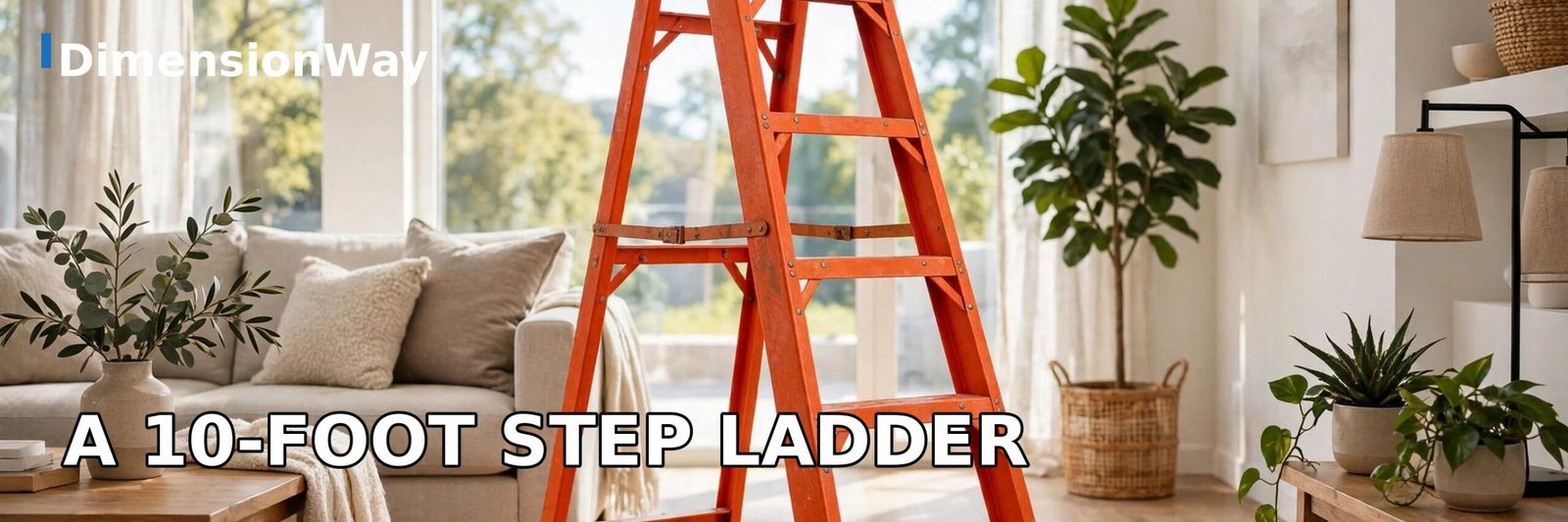
Painters, electricians, and holiday decorators all know the 10-foot step ladder. Opened up, it stands 10 feet tall, which puts its top cap just above a standard first-floor ceiling line. Fiberglass models are the job-site standard because they do not conduct electricity.
Set one up in your living room and it towers over the furniture. You will do most of your work standing on the fourth or fifth rung down, which still puts your hands well above 10 feet. That is why this size handles gutters, high shelves, and second-story trim.
Never stand on the top cap or the top rung: ladder makers print that warning on every rail. With your reach added, a 10-foot ladder lets you work safely at about 13 to 14 feet, which covers most single-story jobs.
Two Full-Size Refrigerators, Stacked
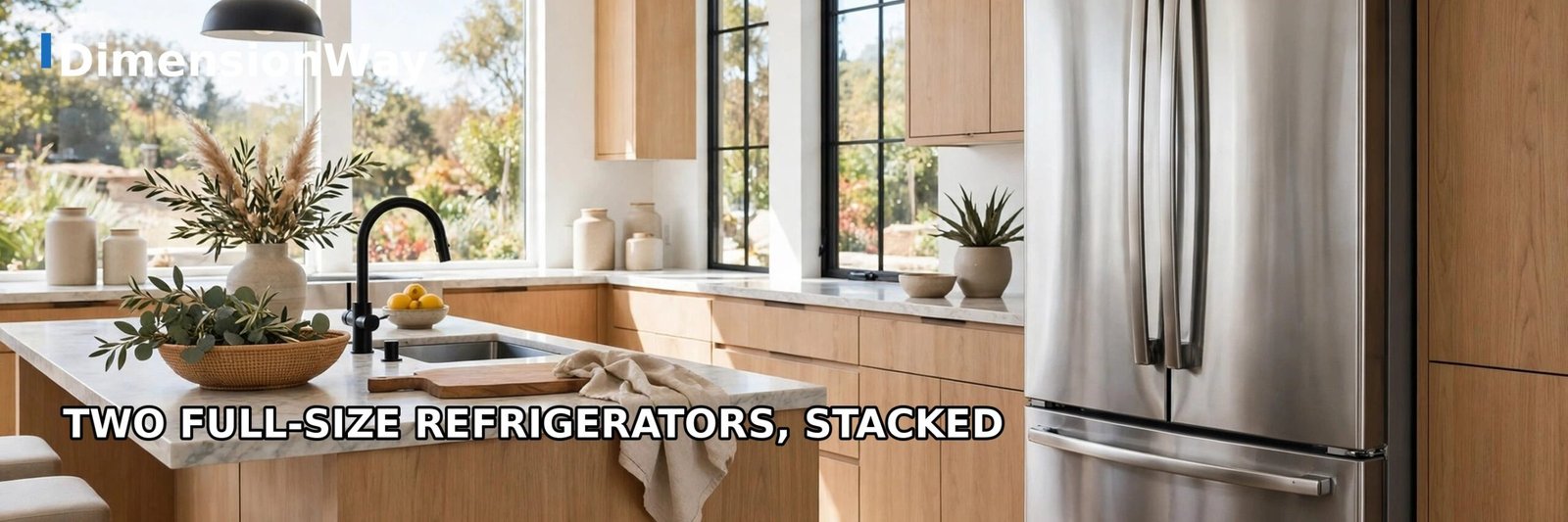
Open your kitchen and look at your refrigerator. A standard full-size model stands about 68 inches tall, or roughly 5 feet 8 inches. Stack two of them and you get about 11 feet 4 inches, a little over 10 feet.
Nobody actually stacks refrigerators, but the image works: picture two of those big stainless boxes, one on top of the other, filling a wall of your kitchen from floor to far above the ceiling. Your ceiling is probably 8 or 9 feet, so the stack would poke straight through it.
Delivery crews think in these dimensions every day. A fridge that tall barely fits through a standard 80-inch doorway, which is why they measure your halls before moving day. Counter-depth models run a few inches shorter but tell the same story.
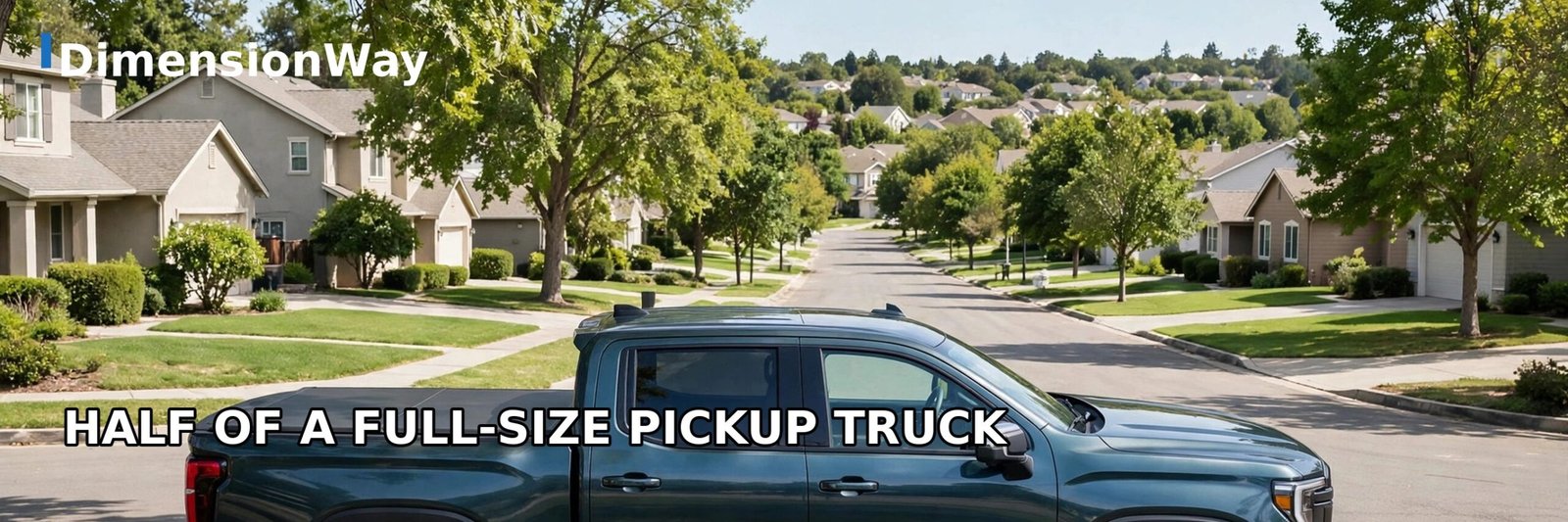
Half of a Full-Size Pickup Truck
Park a full-size pickup truck and pace it off: a crew-cab model like the Ford F-150 runs about 19 to 20 feet long depending on the bed. Half of that truck, front bumper to midpoint, is about 10 feet.
Stand at the front grille and walk to the middle of the bed. That stretch covers the entire cab plus some, which shows how much of a pickup’s length goes to passenger space. It is a handy reference because trucks are everywhere.
The math gets even neater with the bed alone. An 8-foot bed with the tailgate down adds roughly 2 more feet, landing right at 10 feet. Contractors hauling lumber know this measurement by heart.
A Standard Parking Space (Width)
Pull into any parking lot and you are sitting inside a 10-foot reference. A standard US parking stall is 8.5 to 9 feet wide, which puts it just under 10 feet. Compact-car stalls run narrower, and accessible stalls run wider.
Next time you park, look at the white lines on both sides. The gap between them, which fits your car with just enough room to open the doors, is your 9-foot width. Add a foot in your head and you have 10 feet.
Those dimensions come from decades of traffic engineering, sized around the average car width plus door-swing room. Parking garages often paint their stalls a touch narrower to squeeze in more cars, so open street lots are the truer reference.
How to Visualize 10 Feet Yourself
Try these the next time you need 10 feet. First, remember the basketball hoop: if you have ever stood under one, you already know the height. Second, lie down: two average adults lying head to toe stretch about 11 feet, so shave a little off and you are there. Third, count four normal walking steps at about 2.5 feet each. Fourth, look at your ceiling: most are 8 or 9 feet, so picture a foot or two above it. Walk any of these once and the distance sticks.
FAQs
How many inches is 10 feet?
10 feet equals exactly 120 inches. Multiply any foot measurement by 12 to get inches.
How many meters is 10 feet?
10 feet equals 3.048 meters. For quick estimates, most people round it to about 3 meters.
How many yards is 10 feet?
10 feet equals 3.33 yards, or 3 yards and 1 foot. A yard is 3 feet.
How many steps are in 10 feet?
The average adult step is about 2.5 feet, so 10 feet works out to roughly 4 steps. Count four normal strides and you have covered it.
How long does it take to walk 10 feet?
At a normal pace of 3 miles per hour, you cover 10 feet in about 2 to 3 seconds. It is barely enough time to take four steps.
Is a basketball hoop really 10 feet high?
Yes. The rim sits exactly 10 feet above the court in the NBA, college, high school, and international play. The height has not changed since James Naismith invented the game in 1891.
Is 10 feet longer than a car?
No. A typical sedan is about 15 feet long, and an SUV runs 16 to 18 feet. Ten feet is roughly two-thirds of a car’s length.
What is about 10 feet tall?
A basketball hoop, a 10-foot step ladder, and a large Christmas tree are all about 10 feet tall. A standard room ceiling is 8 to 9 feet, so 10 feet stands a little taller than that.
Is a parking space 10 feet wide?
Close. A standard US parking stall is 8.5 to 9 feet wide, just under 10 feet. Compact stalls run narrower, and accessible stalls run wider.
Conclusion
So how long is 10 feet? It is 120 inches, 3.048 meters, and exactly the height of a basketball rim. Picture a recreational kayak, half a pickup truck, or a 10-foot step ladder, and you have it. The next time a furniture listing, a project plan, or a friend mentions 10 feet, you will not need a tape measure to understand it. Walk it, look up at a hoop, or count four steps. Once your eyes learn the distance, you will spot 10-foot stretches everywhere.
Related Reading
How Long Is 3 Feet?: about a third of this distance, with everyday comparisons.
50 Feet Long: five times this distance, useful for longer estimates.
James Carter is the founder and editor of DimensionWay, where he researches, measures, and verifies real-world dimensions — from everyday objects to world-famous landmarks. Every number published on DimensionWay is cross-checked against manufacturer specifications and official sources, so readers always get accurate, easy-to-visualize comparisons.
2 thoughts on “What Does 10 Feet Look Like? 10 Everyday Comparisons”










2 thoughts on “What Does 10 Feet Look Like? 10 Everyday Comparisons”