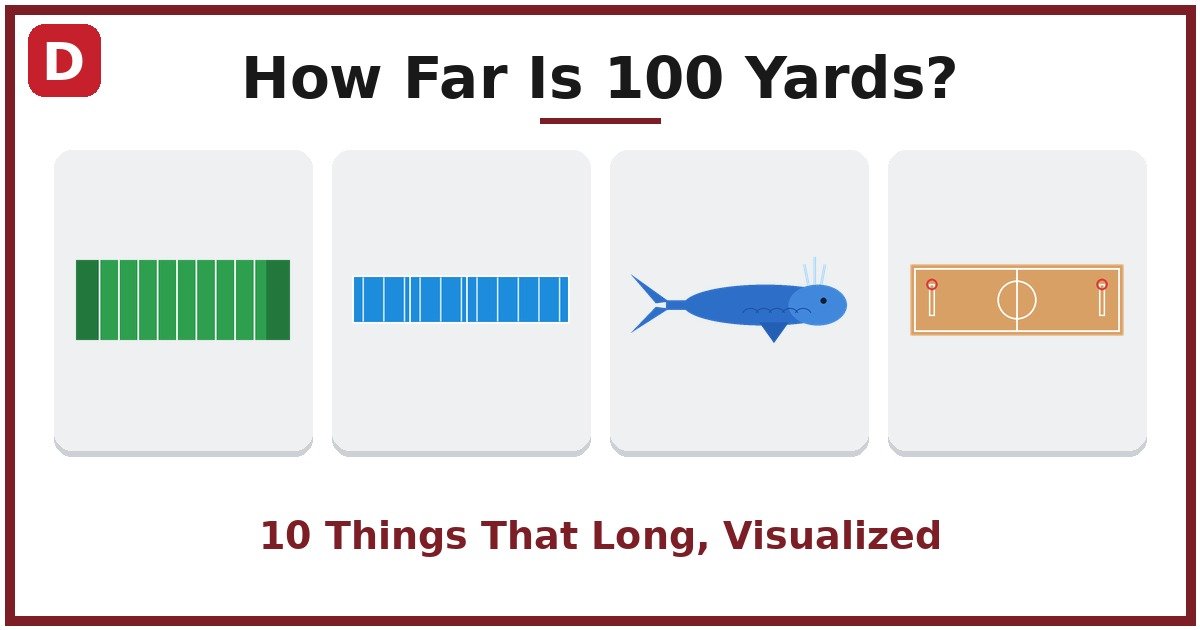
A friend tells you the restaurant is only 100 yards down the street, so you start walking and it feels like a marathon. Or maybe you are watching football and hear the commentator say a receiver ran the full 100 yards. How far is 100 yards in terms you can actually picture? It is 300 feet, or about 91 meters, which is exactly the length of a football field from goal line to goal line. Understanding this distance comes in handy when you are estimating walk times, judging golf shots, or making sense of a sports broadcast. This guide gives you the exact conversions plus 10 everyday things that measure about 100 yards, so the number starts to feel real.
How Long Is 100 Yards?
One hundred yards is a classic American measurement, the distance between the goal lines on a football field. It is long enough to feel like a real journey on foot, yet short enough to see clearly across.
The exact numbers: 100 yards equals 300 feet, 3,600 inches, 91.44 meters, and 9,144 centimeters. In miles, it is about 0.057 miles, just over one-twentieth of a mile.
Think of it this way: at a normal walking pace, you cover 100 yards in roughly a minute. That mental anchor helps every time someone gives you a distance in yards, from a golf caddie to a track coach.
100 Yards Conversion Tables
100 Yards to Inches
| Yards | Inches |
|---|---|
| 50 | 1,800 |
| 75 | 2,700 |
| 100 | 3,600 |
| 125 | 4,500 |
| 150 | 5,400 |
100 Yards to Meters
| Yards | Meters |
|---|---|
| 50 | 45.72 |
| 75 | 68.58 |
| 100 | 91.44 |
| 125 | 114.30 |
| 150 | 137.16 |
100 Yards to Centimeters
| Yards | Centimeters |
|---|---|
| 50 | 4,572 |
| 75 | 6,858 |
| 100 | 9,144 |
| 125 | 11,430 |
| 150 | 13,716 |
10 Things That Are 100 Yards Long
An American Football Field
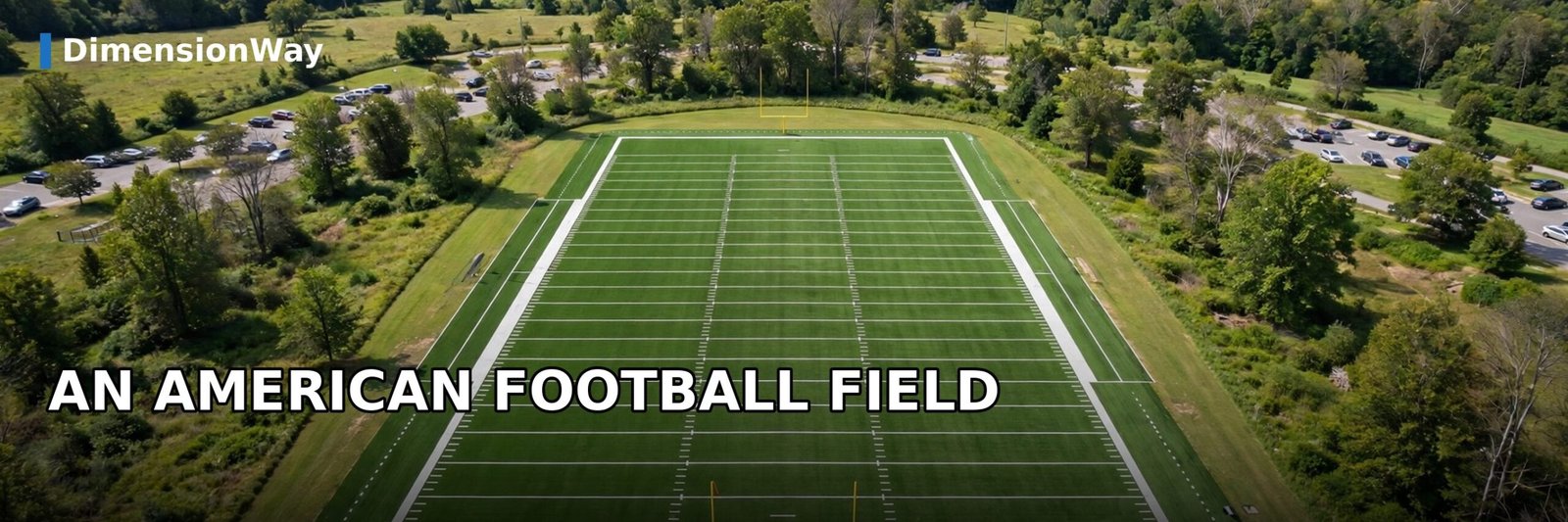
This is the definition people reach for first, and it is exact. An American football field measures 100 yards from goal line to goal line. The two end zones add 10 yards each, so the complete field including end zones is 120 yards.
Stand in one end zone and look to the other. The far goalpost looks tiny, and a kickoff that sails end zone to end zone travels the whole 100 yards. If you have ever watched a kickoff returned for a touchdown, you have watched someone cover exactly this distance at a sprint.
One detail many fans miss: the NFL keeps the field exactly this size in every stadium. Try picturing any familiar stretch of road near your home that runs 300 feet, and you will have a football field you can walk any day.
The 100-Yard Dash

Before the 100-meter dash took over international track, the 100-yard dash was the premier sprint in the United States. Elite sprinters cover this distance in about 9 seconds. In 1963, Bob Hayes famously ran it in 9.1 seconds, a record that stood in the history books for decades.
Nine seconds is not much longer than it takes to read this paragraph out loud. Next time you sprint across a parking lot, time yourself and compare: even a fast recreational runner takes 13 to 15 seconds to cover 100 yards.
The event disappeared from top-level competition when track switched to metric distances. That is why the Olympics run 100 meters today, which is 109.36 yards, about 9 yards longer than the classic dash.
Four Lengths of a Swimming Pool
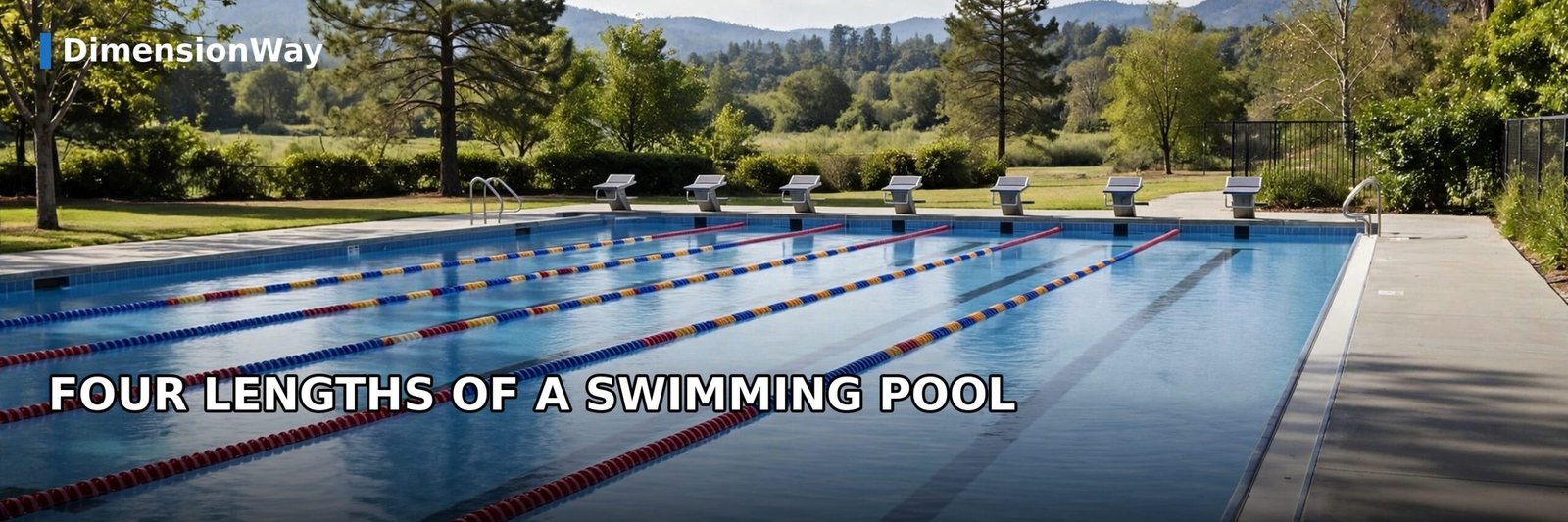
Almost every high school and college pool in the United States is built 25 yards long. Swim four lengths, down and back twice, and you have swum exactly 100 yards. The 100-yard freestyle is one of the signature events at high school swim meets.
Stand at the deep end and look across to the far wall: one length. Now picture yourself swimming it four times without stopping. Even a strong swimmer needs close to a minute for the full distance.
If your local pool is 25 meters instead of 25 yards, four lengths gets you 100 meters, which is about 9 yards farther. Check the deck markings before you count your laps.
Three Large Blue Whales

A large blue whale stretches about 100 feet from nose to tail, with the biggest verified individuals reaching around 110 feet according to NOAA Fisheries. Line up three large whales end to end and you get roughly 300 feet, or 100 yards, swimming in a row.
This is a heavy image to carry, and that is the point. Each whale weighs as much as 33 elephants, yet glides through the ocean at speeds that would let it cover 100 yards in under 30 seconds.
The blue whale is the largest animal known to have ever lived, bigger than any dinosaur. When three of them line up, you are looking at 100 yards of the most massive creatures on Earth.
The Statue of Liberty Laid Flat

The Statue of Liberty measures 305 feet 1 inch from the ground to the tip of her torch. Tip her over gently and lay her flat, and she would stretch just past 100 yards, about 101.7 yards.
Most visitors stand at her base and crane their necks upward, which makes her height hard to judge. Walking her full length on the ground would take you over a minute at a normal pace, the same as walking a football field.
She was dedicated in 1886 as a gift from France, and her copper skin was once bright and shiny like a new penny before it oxidized to the familiar green.
Seven to Eight School Buses

A full-size school bus runs about 35 to 45 feet long, with the classic Type C bus most of us rode measuring around 40 feet bumper to bumper. Park seven to eight of them nose to tail and you have covered 100 yards.
Picture the school pickup line at dismissal time. If there are seven or eight buses waiting with their stop signs out, the line stretching past the parking lot is your 100-yard reference.
The familiar yellow color, officially called National School Bus Glossy Yellow, was chosen because it is visible in every direction at dawn and dusk. You could spot that 100-yard convoy of yellow from a long way off.
Four Tennis Courts
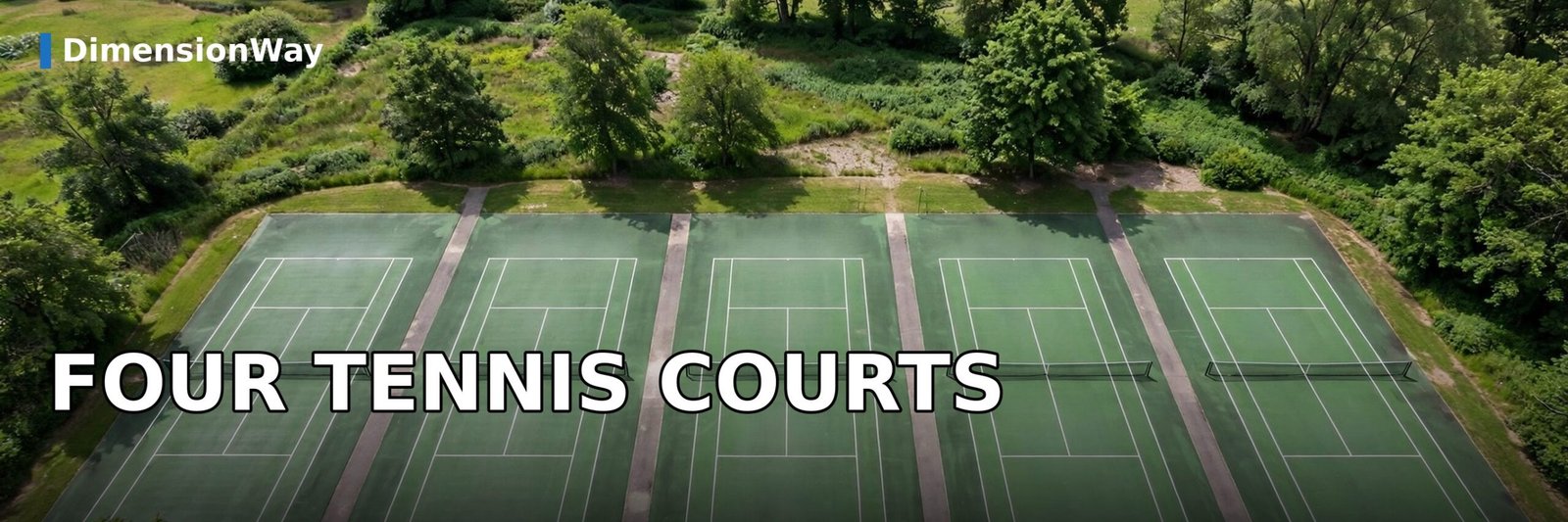
A regulation tennis court is exactly 78 feet long from baseline to baseline. Lay four courts end to end and you get 312 feet, which is 104 yards, just a touch past 100 yards.
If you play on public courts, you have a ready-made measuring tool. Most tennis parks line up several courts in a row, and four in a row is almost exactly the distance you are trying to picture.
The 78-foot length is fixed by the International Tennis Federation for every official match, from Wimbledon to your neighborhood park. The width changes for singles and doubles, but the length never does.
Three Basketball Courts

An NBA basketball court is 94 feet long. Put three of them end to end and you get 282 feet, which is 94 yards, just six yards short of the full 100.
Anyone who has played pickup ball knows how long a single court feels during a fast break. Now stretch that feeling across three full courts and you are close to 100 yards.
International courts run slightly shorter at about 91.9 feet under FIBA rules, so three of those land a bit further under the mark. Either way, the three-court image gets you in the right neighborhood.
A 30-Story Building on Its Side

A common rule of thumb puts one building story at about 10 feet. At that rate, a 30-story building stands roughly 300 feet tall. Tip it onto its side and it covers 100 yards.
Stand at the base of a downtown office tower and count the windows upward. Thirty floors of glass and concrete laid flat along your street would swallow a whole city block.
Real buildings vary: residential floors run shorter, around 8 to 10 feet, while luxury commercial floors can exceed 12 feet. The 30-story estimate is a mental anchor, not an architectural survey.
An Average Golfer’s Pitching Wedge

Golfers call the 50-to-100-yard range the scoring zone, because this is where rounds are won or lost. For an average male golfer, a full-swing pitching wedge carries about 100 yards. Distance charts for mid-handicap players typically list the pitching wedge between 100 and 135 yards, making it the textbook 100-yard club.
Golfers talk in yards the way runners talk in miles. When your playing partner says they are 100 yards out, they are already reaching for the wedge, because that shot is the one they have practiced thousands of times.
Tour professionals hit the same club 140 yards or more, which shows how much of the game comes down to swing speed. For the rest of us, 100 yards off a wedge is the honest number.
How Long Does It Take to Cover 100 Yards?
Walking time is the number one way people feel 100 yards, and it changes a lot with pace. Here is how long it takes at common speeds, based on 100 yards being 300 feet:
| Pace | Speed | Time for 100 Yards |
|---|---|---|
| Slow stroll | 2 mph | About 1 min 42 sec |
| Casual walk | 2.5 mph | About 1 min 22 sec |
| Normal walk | 3 mph | About 1 min 8 sec |
| Brisk walk | 3.5 mph | About 59 sec |
| Jog | 6 mph | About 34 sec |
| Fast run | 10 mph | About 20 sec |
| World-class sprint pace | 22+ mph | Under 10 sec |
Your stride length also decides how many steps the distance costs you. Using the common estimate that walking stride is about 0.413 times your height, here is what 100 yards looks like on foot:
| Your Height | Approx. Stride | Steps for 100 Yards |
|---|---|---|
| 5 ft 4 in | 2.2 ft | About 136 |
| 5 ft 8 in | 2.3 ft | About 128 |
| 6 ft 0 in | 2.5 ft | About 121 |
| 6 ft 4 in | 2.6 ft | About 115 |
Try it once on a football field or a marked track. Walk goal line to goal line at your normal pace, count your steps, and check your time. That single experiment teaches your body the distance better than any chart. If you want a precise number for your own pace, DimensionWay’s Walk-Time Calculator does the math for you.
How to Visualize 100 Yards Yourself
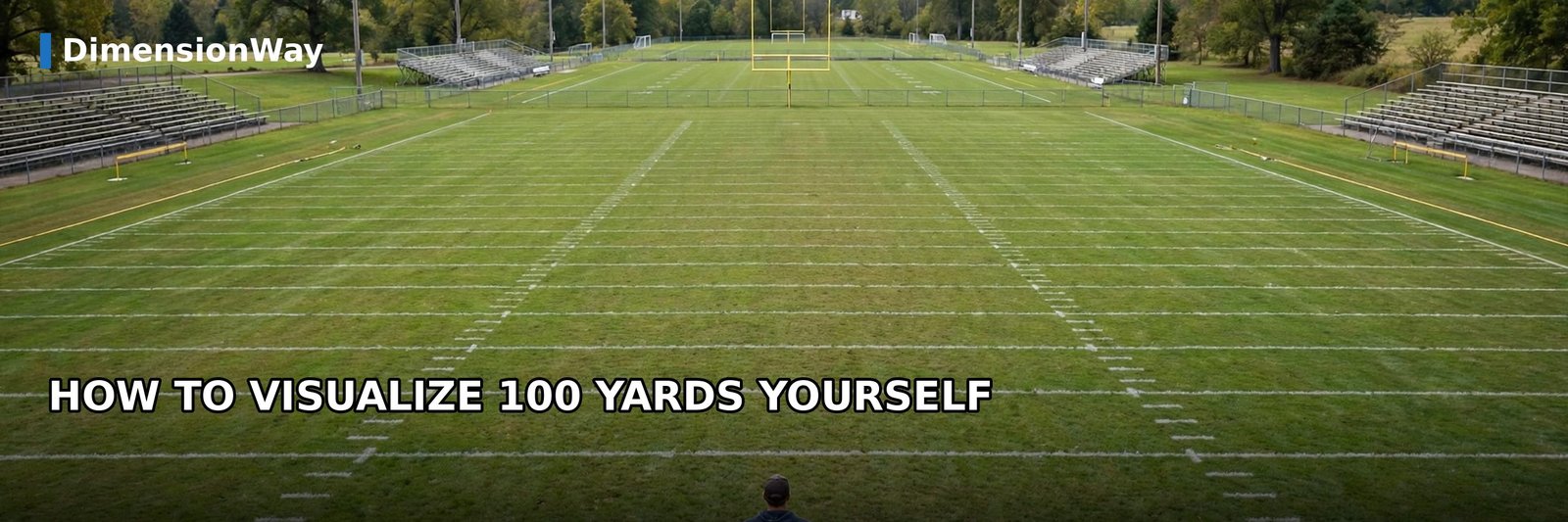
Most people can recite that a football field is 100 yards, but still cannot point at something 100 yards away. The number is memorized, not seen. Try these the next time 100 yards comes up. First, picture a football field: if you can see the whole field in your head, you can see 100 yards. Second, count walking time. At a normal pace you cover it in about a minute, so anything a minute’s walk away is roughly 100 yards. Third, count your steps: most adults take about 110 to 120 steps to walk 100 yards. Fourth, think of a minute on the clock during a swim or a sprint. Run any of these once and the distance stops being abstract. If you want to test your estimate, DimensionWay’s Distance Visualizer lets you draw the distance on a map and see what 100 yards looks like in your own neighborhood.
FAQs
How many feet is 100 yards?
100 yards equals exactly 300 feet. Multiply any yard measurement by 3 to get feet.
How many meters is 100 yards?
100 yards equals 91.44 meters. It is a little shorter than 100 meters, which is 109.36 yards.
How long does it take to walk 100 yards?
At a normal walking pace of about 3 miles per hour, 100 yards takes roughly 1 minute to 1 minute and 10 seconds. A brisk walker can do it in under a minute. If you are estimating a walk, DimensionWay’s Walk-Time Calculator gives you a precise number for any distance and pace.
How many steps is 100 yards?
Most adults take about 110 to 120 steps to walk 100 yards, assuming an average stride of about 2.5 feet. Taller people with longer strides may need closer to 100 steps.
Is a football field 100 yards or 120 yards?
The playing field itself is exactly 100 yards from goal line to goal line. Including the two 10-yard end zones, the complete field is 120 yards long.
How can I estimate 100 yards without a tape measure?
Walk it and time yourself: at a normal pace, 100 yards takes about a minute, or roughly 110 to 120 steps for most adults. One caution, borrowed from hunters and divers: open ground makes distances look shorter than they are, so your eyes will usually underestimate. Trust your feet and the clock, not your first guess.
Is 100 yards longer than 100 meters?
No. One hundred meters is 109.36 yards, so 100 meters is about 9 yards longer than 100 yards. This is why the Olympic sprint is slightly longer than the old American 100-yard dash.
How far can the average person throw a football?
Most adults can throw a football 30 to 50 yards. Throwing the full 100 yards is beyond human ability; even NFL quarterbacks top out around 70 to 80 yards in the air.
What is about 100 yards long in everyday life?
A football field from goal line to goal line, four lengths of a 25-yard pool, and about seven to eight school buses parked in a row are all about 100 yards.
How many city blocks is 100 yards?
It depends on the city, but many urban blocks are roughly 200 to 300 feet long on their short side. In those cities, 100 yards is about one short city block.
Conclusion
So how far is 100 yards? It is 300 feet, 91.44 meters, and exactly the distance from one goal line to the other on a football field. Picture four laps of a pool, three basketball courts end to end, or a full-swing pitching wedge, and you have it. The next time a coach, a caddie, or a commentator says 100 yards, you will not need to do the math in your head. You will already see the field, the pool, or the line of school buses. Once your eyes learn the distance, you will start spotting 100-yard stretches all around you.
Related Reading
- How Long Is 100 Feet?: a third of this distance, with ten everyday comparisons.
- How Far Is 500 Feet?: a longer distance with ten visual comparisons.
- How Far Is 200 Feet?: another everyday distance, visualized with familiar objects.
Sources
- NFL Official Rules and field specifications: field is 100 yards from goal line to goal line, with two 10-yard end zones.
- International Swimming and USA Swimming standards: short-course pools are 25 yards long; the 100-yard freestyle is four lengths.
- NOAA Fisheries: blue whales can grow to about 110 feet in length, the largest animals known to have lived.
- National Park Service and CNN Fast Facts: the Statue of Liberty measures 305 feet 1 inch from ground to torch.
- National Association of State Directors of Pupil Transportation Services: full-size school buses range from 35 to 45 feet long.
- International Tennis Federation Rules of Tennis: regulation court is 78 feet long from baseline to baseline.
- NBA official court specifications: regulation court is 94 feet long and 50 feet wide.
- Track and field records: Bob Hayes ran the 100-yard dash in 9.1 seconds in 1963, a mark recorded in the official record books of the era.
- Golf distance data (GolfSpan, Shot Scope, TrackMan): average male golfers carry a pitching wedge about 100 to 135 yards.
- Architectural standards: commercial building stories average about 10 feet floor to floor.

James Carter is the founder and editor of DimensionWay, where he researches, measures, and verifies real-world dimensions — from everyday objects to world-famous landmarks. Every number published on DimensionWay is cross-checked against manufacturer specifications and official sources, so readers always get accurate, easy-to-visualize comparisons.

2 thoughts on “How Far Is 100 Yards? 10 Things That Long, Visualized”