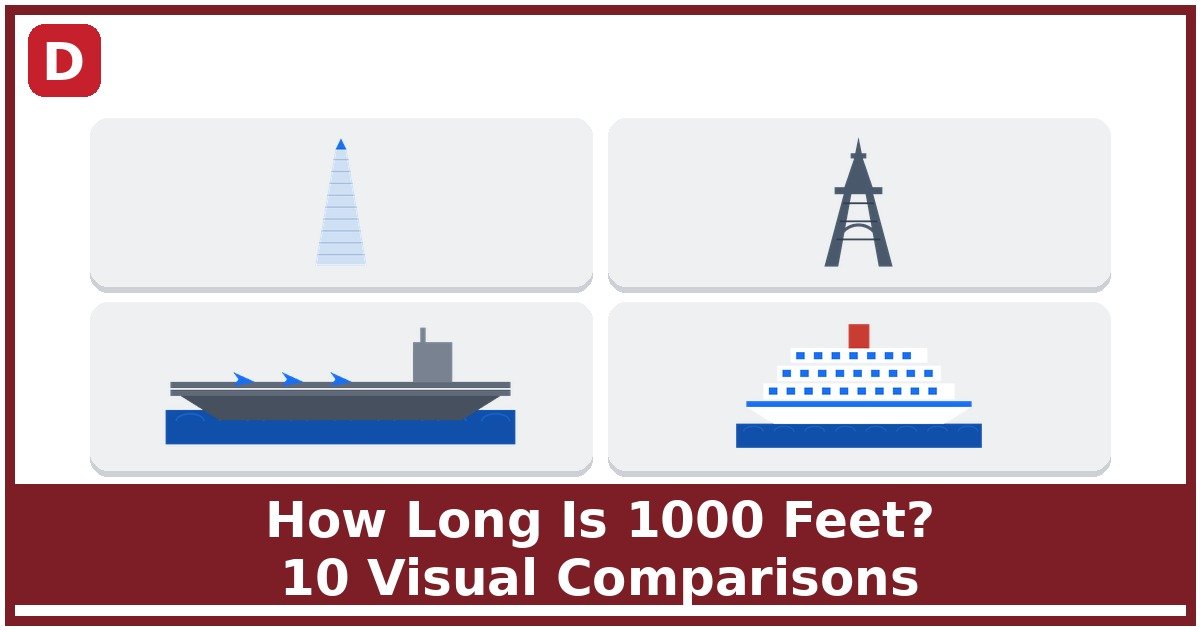
A thousand feet is one of those distances that sounds simple until you try to picture it. It is longer than three football fields, shorter than a quarter mile, and almost exactly the length of four jumbo jets parked nose to tail. Once you anchor it to objects you already know, 1000 feet stops being an abstract number and becomes something you can see in your mind.
In this guide, you will get the exact conversions for 1000 feet, plus ten carefully verified comparisons, from the Shard in London to an aircraft carrier, that make the distance click. Every measurement below is checked against an authoritative source, and the full source list sits at the end.
How Long Is 1000 Feet?
One thousand feet equals 12,000 inches, 304.8 meters, or 30,480 centimeters. In miles, it works out to about 0.19 miles, which is just under one-fifth of a mile. In yards, it is 333.33 yards.
This distance shows up more often than you might think. City planners use it for block lengths, pilots use it for runway references, and hikers meet it on trail signs. A helpful first picture: imagine three American football fields laid end to end, then add a little extra. That is roughly 1000 feet.
1000 Feet Conversion Tables
1000 Feet to Inches
| Feet | Inches |
|---|---|
| 500 | 6,000 |
| 750 | 9,000 |
| 1,000 | 12,000 |
| 1,250 | 15,000 |
| 1,500 | 18,000 |
1000 Feet to Meters
| Feet | Meters |
|---|---|
| 500 | 152.4 |
| 750 | 228.6 |
| 1,000 | 304.8 |
| 1,250 | 381.0 |
| 1,500 | 457.2 |
1000 Feet to Centimeters
| Feet | Centimeters |
|---|---|
| 500 | 15,240 |
| 750 | 22,860 |
| 1,000 | 30,480 |
| 1,250 | 38,100 |
| 1,500 | 45,720 |
The Shard Laid on Its Side

The Shard in London stands 1,016 feet tall (309.6 meters), which makes it one of the closest real-world matches to 1000 feet you will find anywhere. Lay the building on its side and you would need to trim only 16 feet to hit 1000 exactly.
Picture its tapering glass pyramid shape stretching horizontally across three city blocks. Because the difference is just 1.6 percent, the Shard works as a near-perfect mental ruler for this distance. Completed in 2012, it held the title of tallest building in the European Union for a time, and its height is documented by the Council on Tall Buildings and Urban Habitat.
The Eiffel Tower, Plus a Small Extension

The Eiffel Tower reaches 1,083 feet (330 meters) to the tip of its antennas. That is 83 feet more than 1000 feet, or roughly the height of an eight-story building stacked on top.
Stand the tower on its side and walk its full length, and you would pass the 1000-foot mark just before reaching the very top. The tower’s height has changed slightly over the years as antennas were added and replaced, but the 330-meter figure is the official one published by the Societe d’Exploitation de la Tour Eiffel.
A Nimitz-Class Aircraft Carrier

A Nimitz-class aircraft carrier measures 1,092 feet (333 meters) from bow to stern. If you could stand one of these floating airfields next to a 1000-foot line, the ship would overshoot it by 92 feet, about half a tennis court.
These carriers displace around 100,000 tons and carry more than 5,000 crew, yet their length is the detail that surprises most people. The U.S. Navy publishes the 1,092-foot figure in its official fact file, and the newer Gerald R. Ford class stretches a touch further at 1,106 feet.
Four Boeing 747-8s Nose to Tail
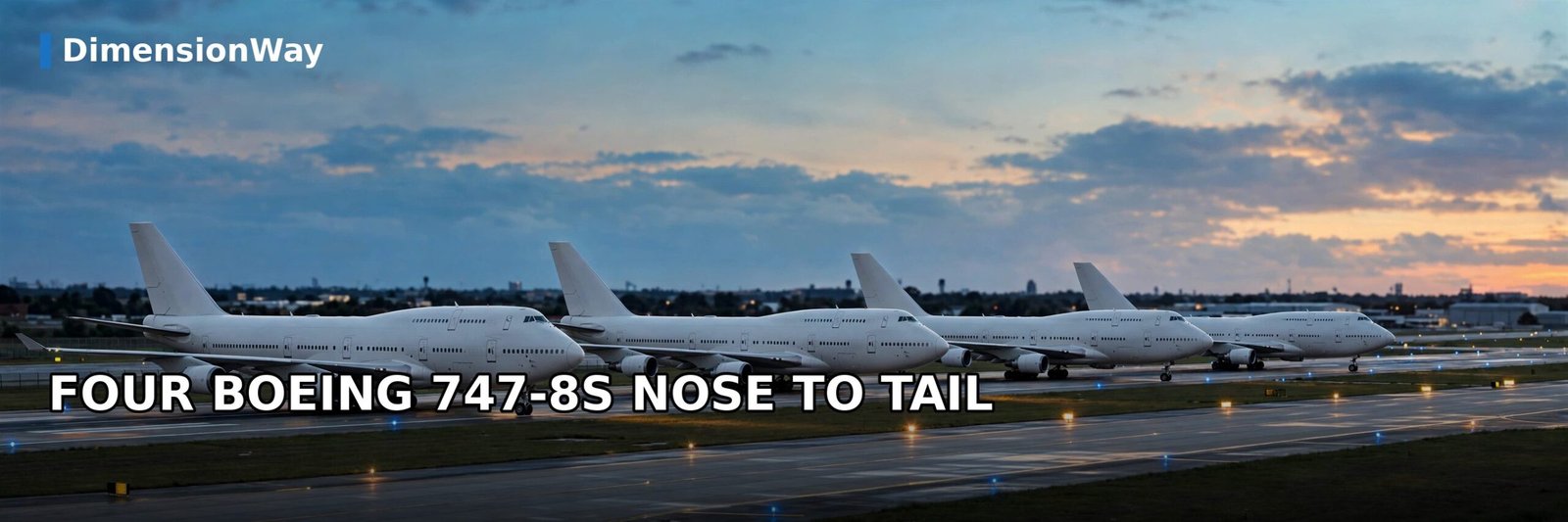
Here is the cleanest match on this list. A Boeing 747-8 is 250 feet 2 inches long (76.3 meters). Line up four of them nose to tail and you get 1,000 feet 8 inches, which misses 1000 feet by less than a single footstep.
Few comparisons land this neatly. The 747-8 is the longest passenger aircraft Boeing has built, and its dimensions come straight from Boeing’s official specifications. Next time you see a jumbo jet at the gate, remember that four of them in a row is your 1000-foot measuring stick.
Three Football Fields With End Zones
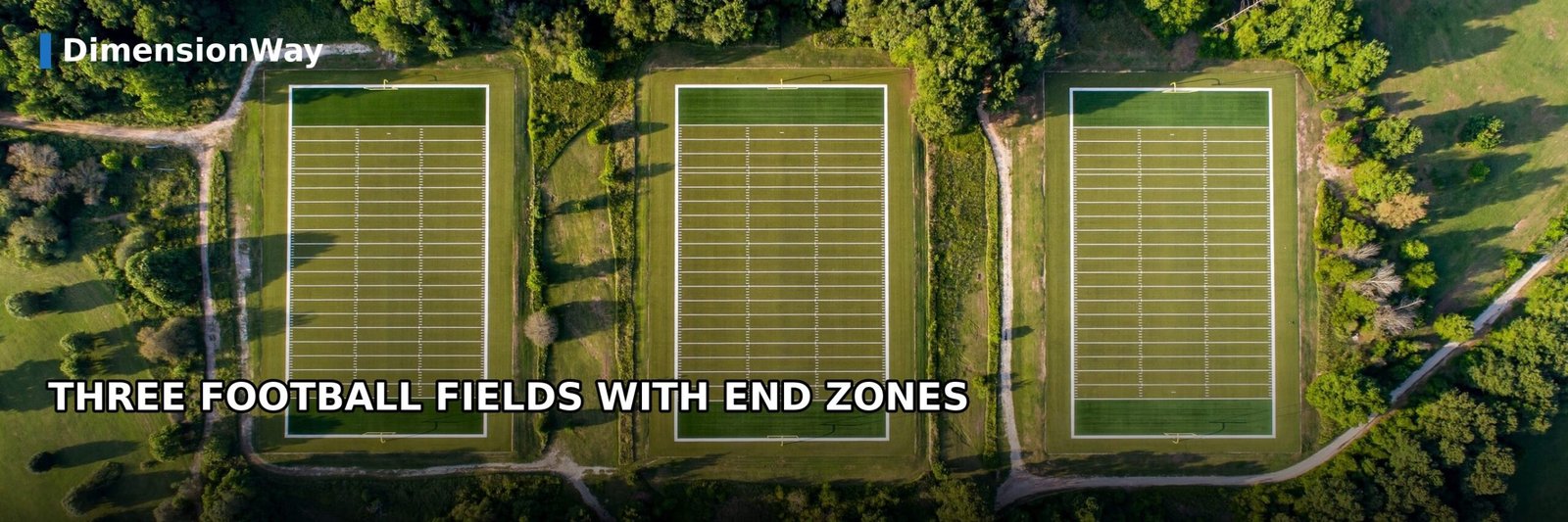
An American football field measures 300 feet between the goal lines, or 360 feet when you include both end zones. Three fields with end zones come to 1,080 feet, which overshoots 1000 feet by 80 feet in total.
Sports fields are the classic American yardstick for distance, and this one is easy to verify on any televised game. If you count only the playing field without end zones, three fields give you 900 feet, so 1000 feet sits right between the two versions. Either way, “about three football fields” is a fair shorthand.
Three International Soccer Fields
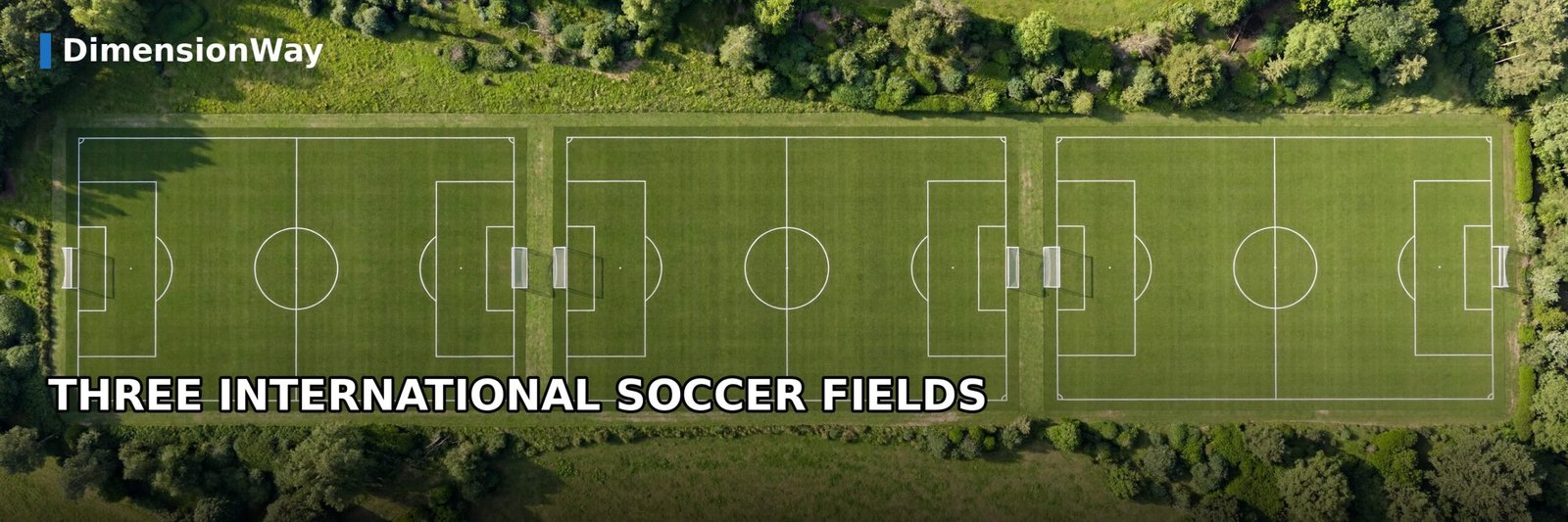
A FIFA international soccer field is 105 meters long, which converts to about 344.5 feet. Place three of them end to end and the total reaches roughly 1,033 feet, only 33 feet past the 1000-foot mark.
Because soccer is the world’s most watched sport, this comparison travels well across countries. The 105 by 68 meter dimensions are the standard FIFA uses for international matches, so the math behind this one is solid wherever you are.
Six Olympic Swimming Pools
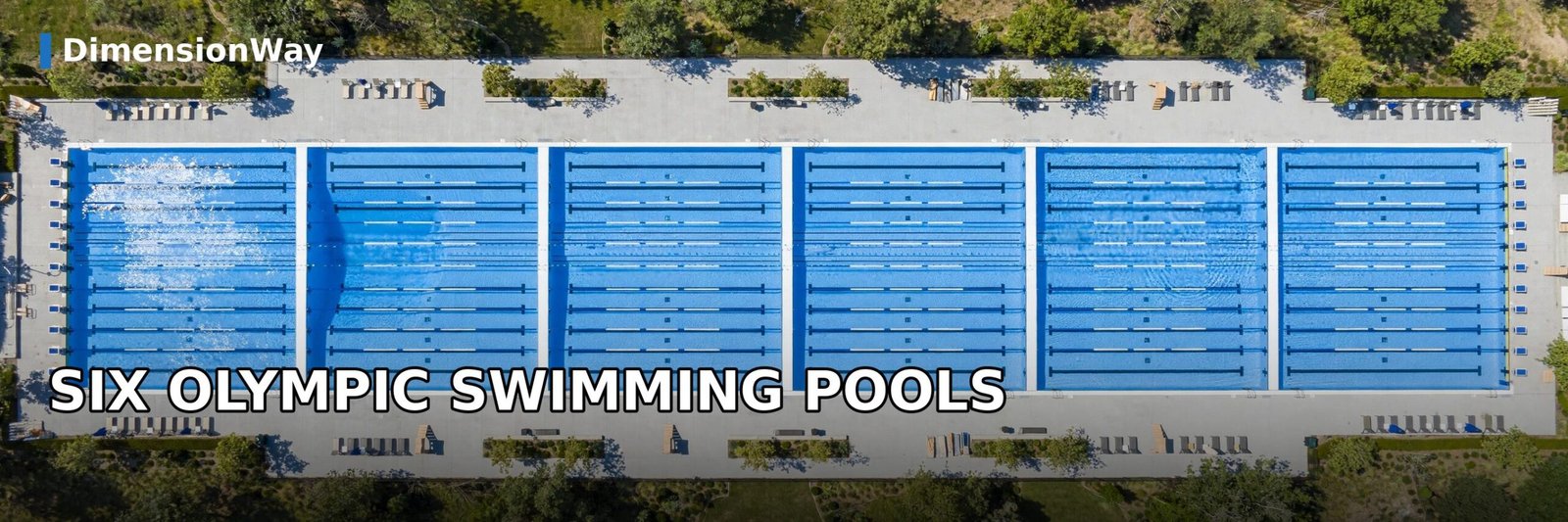
An Olympic swimming pool is exactly 50 meters long, or about 164 feet. Six of them laid end to end total 984 feet, landing just 16 feet short of 1000.
This one is satisfying because the pool length is fixed by World Aquatics regulations, not approximated. Swimmers, coaches, and lifeguards deal with the 50-meter standard daily. Picture the bright blue lanes stretching out six times over, and you have a crisp image of 1000 feet.
The Titanic, With Room to Spare
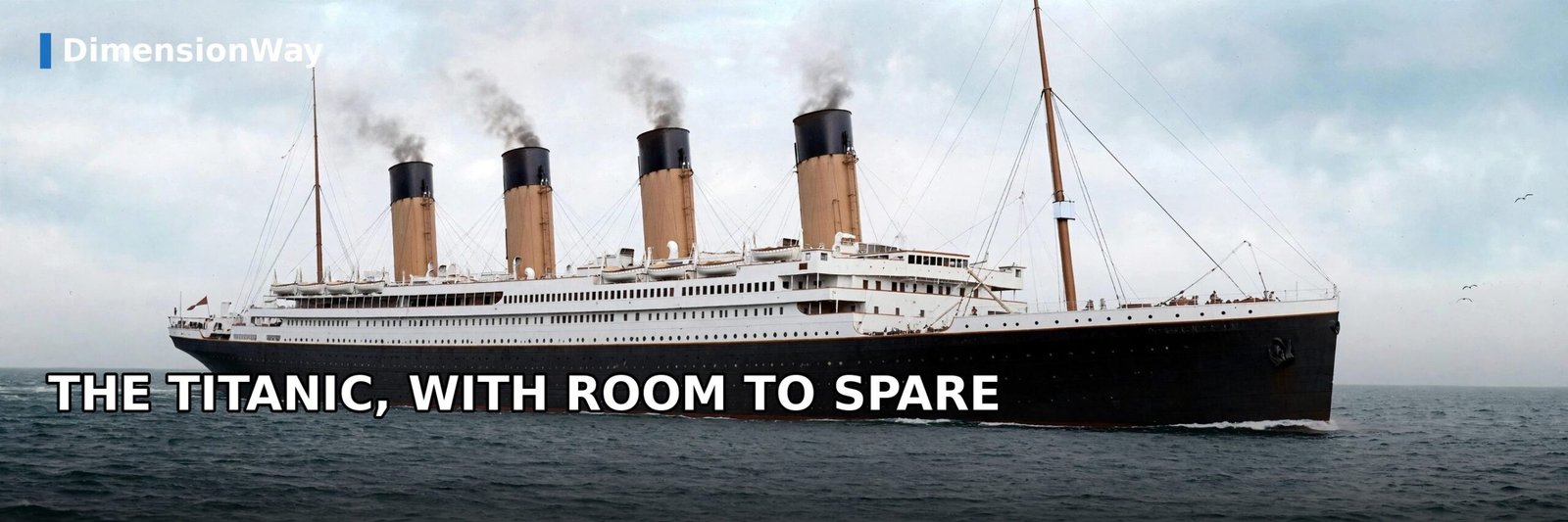
The RMS Titanic measured 882 feet 9 inches (269 meters) long. A 1000-foot line would extend about 117 feet beyond her stern, roughly the length of two city buses past the ship.
The Titanic remains one of history’s most famous ships, and her dimensions are documented in Harland and Wolff’s original specifications. Comparing against her gives 1000 feet a sense of scale that pure numbers cannot. If the great liner feels enormous to you, then 1000 feet is even bigger.
A Modern Cruise Ship

The world’s largest cruise ships have pushed well past the 1000-foot mark. Symphony of the Seas, for example, measures 1,188 feet (362 meters) long, which means 1000 feet covers about 84 percent of her length.
Royal Caribbean publishes these specifications for every ship in its fleet. Walking the length of the pool deck gives passengers a real feel for the scale, and most are surprised to learn the ship is longer than three football fields. For 1000 feet, picture the ship with the last couple of decks mentally trimmed off.
25 School Buses in a Line

A standard full-size school bus is about 40 feet long. Line up 25 of them bumper to bumper and you hit exactly 1000 feet, making this the simplest whole-number comparison on the list.
School bus lengths vary by model, typically ranging from 35 to 45 feet, so treat the 40-foot figure as a representative average rather than a universal spec. Still, almost everyone has stood next to a school bus, which is what makes this comparison stick. Count off 25 of them in your head and the distance becomes concrete.
How to Visualize 1000 Feet Yourself

You do not need a tape measure to feel this distance. Try these quick methods:
- Walk it. At a relaxed pace of 3 miles per hour, 1000 feet takes about 4 minutes and roughly 400 to 500 steps. Time yourself on a straight sidewalk and you will remember the distance in your legs.
- Stack what you know. Pick two or three comparisons from this article and combine them. Six Olympic pools plus a school bus, for example, lands you right around 1000 feet.
- Use your neighborhood. Many suburban streets run about 500 to 600 feet between intersections. Two typical blocks is often close to 1000 feet. Check a mapping app’s distance tool once, and your own street becomes a permanent reference.
FAQs
How many meters is 1000 feet?
1000 feet equals exactly 304.8 meters, since one foot is defined as 0.3048 meters. That is just under one-third of a kilometer.
How many miles is 1000 feet?
1000 feet is about 0.19 miles, or just under one-fifth of a mile. A full mile is 5,280 feet, so divide 1000 by 5280 to get 0.189.
How long does it take to walk 1000 feet?
At an average walking speed of 3 miles per hour, covering 1000 feet takes about 3.8 minutes, so roughly 4 minutes. Expect somewhere between 400 and 500 steps depending on your stride length.
How many football fields is 1000 feet?
1000 feet equals about 3.3 American football fields measured goal line to goal line (300 feet each), or about 2.8 fields if you include the end zones (360 feet each).
Is 1000 feet taller than the Eiffel Tower?
No. The Eiffel Tower stands 1,083 feet tall including its antennas, which is 83 feet more than 1000 feet. Laid on its side, the tower would extend past the 1000-foot mark.
Conclusion
One thousand feet is 304.8 meters, about 0.19 miles, and best pictured through objects you already know: four Boeing 747-8s nose to tail land within inches of it, the Shard misses it by only 16 feet, and 25 school buses in a row hit it exactly. Keep two or three of these comparisons in mind and you will never have to guess at this distance again.
Related Reading
- How Long Is 100 Feet? 10 Examples That Make It Click
- How Far Is 300 Feet? 13 Comparisons
- 50 Feet Long: 11 Everyday Comparisons
Sources
- Council on Tall Buildings and Urban Habitat (CTBUH), The Shard facts: 309.6 m (1,016 ft)
- Societe d’Exploitation de la Tour Eiffel, official height: 330 m (1,083 ft)
- U.S. Navy Fact File, Nimitz-class aircraft carriers: 1,092 ft (333 m)
- Boeing official specifications, 747-8: 250 ft 2 in (76.3 m)
- NFL rulebook, football field dimensions: 300 ft playing field, 360 ft with end zones
- FIFA Laws of the Game, international field length: 105 m (344.5 ft)
- World Aquatics regulations, Olympic pool length: 50 m (164 ft)
- Harland and Wolff / Titanic specifications: 882 ft 9 in (269 m)
- Royal Caribbean, Symphony of the Seas specifications: 1,188 ft (362 m)
- National Association for Pupil Transportation, standard school bus length: approx. 40 ft

James Carter is the founder and editor of DimensionWay, where he researches, measures, and verifies real-world dimensions — from everyday objects to world-famous landmarks. Every number published on DimensionWay is cross-checked against manufacturer specifications and official sources, so readers always get accurate, easy-to-visualize comparisons.
