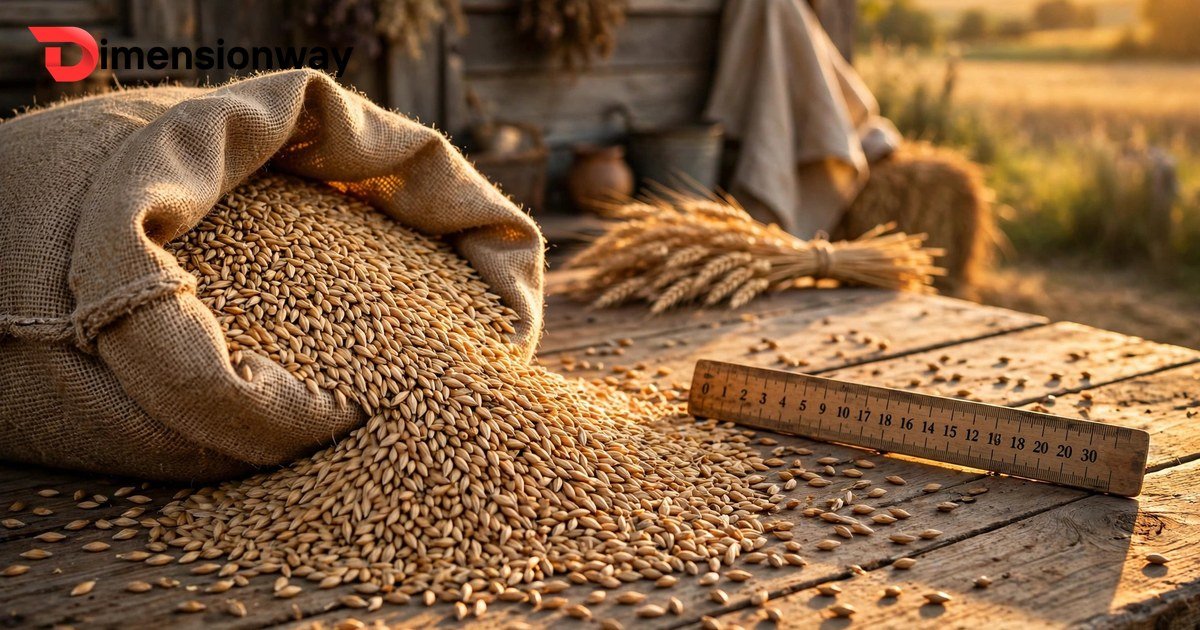
A barleycorn is one-third of an inch, about 8.5 millimeters. It is the tiny unit that shoe sizes are built on: every full shoe size is one barleycorn longer than the last.
Your shoe size is a count of grains. Not metaphorically. In the British and American sizing systems, each whole size step equals exactly one barleycorn, one-third of an inch, and has done so for well over a century. When you go from a size 9 to a size 10, your foot is being granted one more barley grain of room, at least on paper. It is one of the oldest units still hiding inside modern life, and almost nobody has ever seen one measured out.
What Is a Barleycorn?
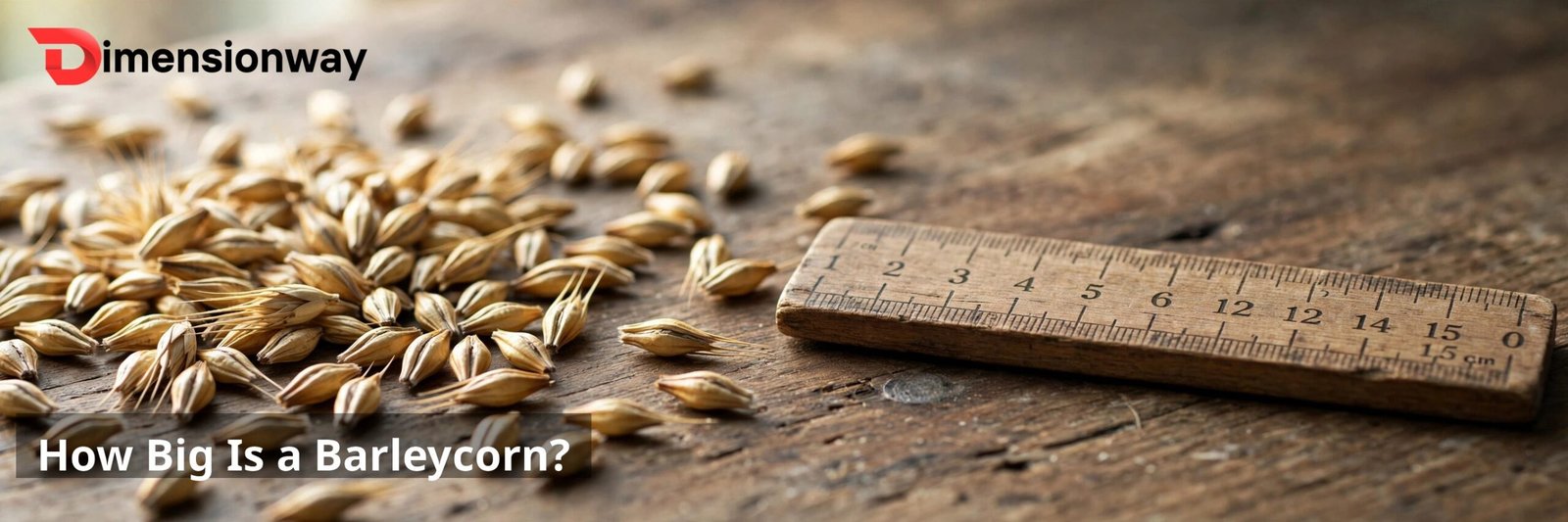
A barleycorn is an English unit of length equal to exactly one-third of an inch, which works out to about 8.47 millimeters. It is the notional length of a single grain of barley, and it is the legal foundation of the inch itself: three barleycorns laid end to end make one inch. The formal barleycorn was defined as one one-hundred-and-eighth of a yard, and the idea of three grains composing an inch goes back at least to the 10th-century Welsh Laws of Hywel Dda.
That makes the barleycorn a strange survivor. Most of its sibling units, the digit, the finger, the palm, the span, died out centuries ago or live on only in trivia. The barleycorn survived because it got a job: sizing shoes. As long as shoes are sold in whole and half sizes in the UK and the US, the barleycorn is quietly doing its work under every shoebox on the shelf.
How Big Is a Barleycorn, Exactly?
One barleycorn is 1/3 inch. That is the whole definition, and everything else follows by multiplication. Here is the unit laid out in the measurements people actually use.
| Barleycorns | Inches | Millimeters | Centimeters |
|---|---|---|---|
| 1 | 1/3 | 8.47 | 0.85 |
| 2 | 2/3 | 16.93 | 1.69 |
| 3 | 1 | 25.4 | 2.54 |
| 6 | 2 | 50.8 | 5.08 |
| 9 | 3 | 76.2 | 7.62 |
| 12 | 4 | 101.6 | 10.16 |
| 36 | 12 (1 foot) | 304.8 | 30.48 |
| 108 | 36 (1 yard) | 914.4 | 91.44 |
A half barleycorn is 1/6 of an inch, about 4.2 millimeters. That is the unit behind half sizes: when your shoe comes in a 10.5, that half step is half a barleycorn of extra length over the 10.
The Grain Behind the Unit
Here is the honest question: was a real grain of barley ever exactly one-third of an inch? Roughly, yes. Modern studies show that actual barley kernels range from about 4 to 7 millimeters in short cultivars up to 12 to 15 millimeters in long ones, depending on the variety. Older sources put the average length of a barley grain at about 8.8 millimeters, which lands remarkably close to the legal 8.47 millimeters. The medieval lawmakers who picked three dry round grains of barley as their standard were not being poetic. They were picking the most average object in an agrarian world, something every farmer could find, and averaging by eye.
The statute tradition even specified the details: the grains were to be dry and round, taken from the middle of the ear, which is where kernels grow most evenly. The barleycorn was the medieval answer to a calibration problem, a unit anyone could reproduce with a handful of grain, long before anyone owned a ruler.
A Short History of the Barleycorn
The barleycorn’s story is usually told wrong, so here is the corrected version. Under the Composition of Yards and Perches, a statute of uncertain date from around 1300, three dry round grains of barley laid end to end were declared to make one inch, and from that inch the foot, the yard, and everything larger was built up. King Edward II, who reigned from 1307 to 1327 and did a great deal to standardize English measures, is often credited with inventing the whole thing. The truth is more careful: the statute defined the inch, not shoe sizes. Edward II had nothing to do with sizing footwear.
The first recorded description of an actual shoe-sizing system came much later, in 1688, when the British genealogist Randle Holme described it in his book The Academy of Armoury and Blazon. That system, interestingly, used quarter-inch steps rather than thirds. It was not until 1856 that Robert Gardiner published The Illustrated Handbook of the Foot, the first description of a sizing system built on the third-of-an-inch barleycorn step. The American system followed in the 1880s, when New York businessman Edwin Simpson built a sizing system on the British barleycorn foundation, and the National Association of Shoe Retailers adopted it, giving the United States its first national guidelines. By the 1920s, measuring devices like the Brannock device had standardized the system in stores across the country.
So the barleycorn traveled a long road: from a 14th-century definition of the inch, to a 17th-century shoemaker’s quarter inch, to a 19th-century third of an inch, to the number printed inside every pair of sneakers you own. Our full guide to how long a shoe is walks through what those sizes mean in inches for the feet wearing them today.
How Shoe Sizes Run on Barleycorns
Here is the rule that matters: one full shoe size equals one barleycorn. Using the foot-length figures from our shoe guide, each step up the size chart adds exactly one-third of an inch of foot room.
| US men’s | Foot length (in) | Foot length in barleycorns | Step up adds |
|---|---|---|---|
| 7 | 9.56 | 28.7 | 1 barleycorn |
| 8 | 9.90 | 29.7 | 1 barleycorn |
| 9 | 10.23 | 30.7 | 1 barleycorn |
| 10 | 10.56 | 31.7 | 1 barleycorn |
| 10.5 | 10.73 | 32.2 | Half barleycorn |
| 11 | 10.90 | 32.7 | 1 barleycorn |
| 12 | 11.23 | 33.7 | 1 barleycorn |
| 13 | 11.56 | 34.7 | 1 barleycorn |
A size 10 foot is about 31.7 barleycorns long. Go up to a size 11 and the chart grants you 32.7 barleycorns, one grain more. This is also why half sizes feel the way they do: a half size is half a grain, about 4.2 millimeters, just enough to notice when the 10 pinches and the 11 swims.
The British system works the same way, one barleycorn per size, but it starts from a different zero point, roughly one size off from the American scale. A UK 9 and a US 10 cover the same foot. The step is identical. Only the starting line moved. The European system, meanwhile, skipped the grain entirely and uses the Paris point of two-thirds of a centimeter instead.
10 Comparisons That Make a Barleycorn Click
A barleycorn is 8.47 millimeters, one-third of an inch. Here is what that looks like next to things you can find in your kitchen, your pocket, and on your own hand.
A Real Barley Grain
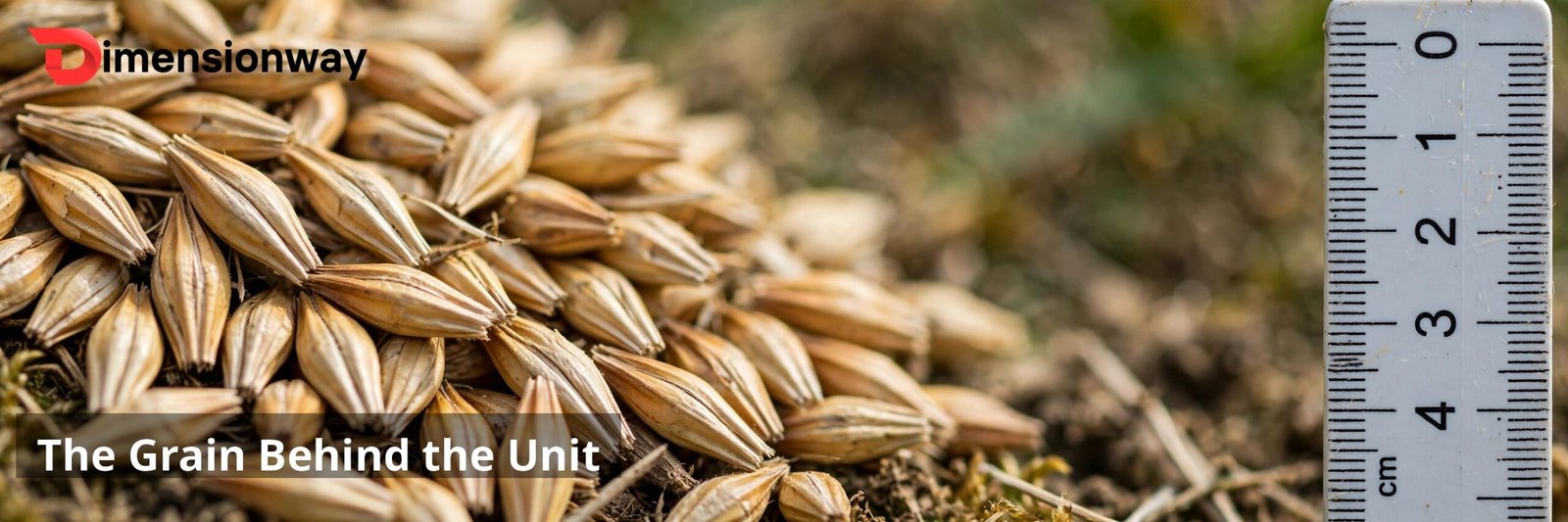
The most honest comparison is the original one. A legal barleycorn measures 8.47 millimeters, and older agricultural sources put the average length of a real barley grain at about 8.8 millimeters. Set the two side by side and the legal unit is almost exactly the average grain. The medieval system was not a guess. Pick up a handful of barley, take the middle-sized kernels from the middle of the ear, and you are holding the unit in your hand. The difference between the legal barleycorn and the average real grain is about three-tenths of a millimeter, thinner than a sheet of paper.
A Green Pea

A garden pea is about 7 to 9 millimeters across, which puts a barleycorn and a pea in the same visual family. Hold a pea between your thumb and forefinger and you are holding roughly one barleycorn of width. The pea is rounder and the grain is longer, but the scale is the same. If a recipe ever tells you to cut something into barleycorn-sized pieces, think pea, then stretch it slightly.
Your Pinky Fingernail

The width of an adult pinky fingernail runs about 8 to 10 millimeters, which makes your own smallest finger the most portable barleycorn gauge you own. Look at your pinky nail. That width is roughly one barleycorn, one-third of an inch. Half your pinky nail is roughly one half size in shoes. It is the kind of body-ruler trick that works anywhere, no tape measure required. Our guide to estimating distance without a tape measure is full of these built-in measuring tools.
A Grain of Rice

An uncooked grain of long white rice is about 6 to 7 millimeters long. A barleycorn at 8.47 millimeters is roughly a third longer than a rice grain, a neat little echo of the unit itself being a third of an inch. Line up three rice grains and you get about 20 millimeters, still short of the 25.4 millimeters of a true inch. Line up three barleycorns and you hit the inch exactly. Rice is close. Barley is the standard.
Half a US Dime

A US dime is 17.91 millimeters across. Divide that by the 8.47 millimeters of a barleycorn and you get just over two. So one barleycorn is a touch less than half a dime’s diameter. Lay a dime on the table and picture it cut in half: each half is one barleycorn wide, with a sliver to spare. It is a useful pocket comparison because dimes are everywhere, and unlike grains, they do not vary by cultivar.
The Thickness of a Pencil
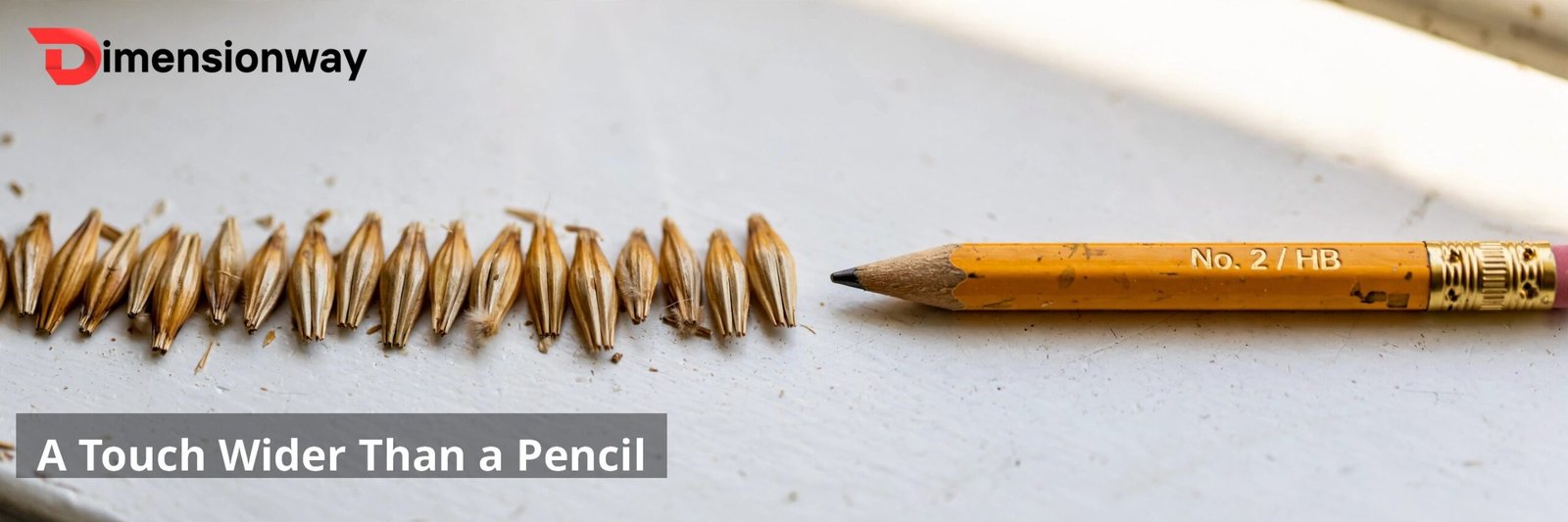
A standard hexagonal pencil is about 7 millimeters across its flats. A barleycorn at 8.47 millimeters is a little wider than a pencil is thick, about a fifth wider. Roll a pencil under your finger and feel its width. Add a hair more and you have the unit that sizes your shoes. The pencil is also a reminder of how the old units clustered: grains, fingers, and thumbs were all within the same order of smallness because they were all measured on the human body and its tools.
One LEGO Stud Gap

LEGO bricks are built on an exact 8 millimeter pitch: the centers of two neighboring studs sit exactly 8 millimeters apart. A barleycorn at 8.47 millimeters spans one stud gap with less than half a millimeter to spare. If you have a LEGO brick handy, the distance from one stud to the next is essentially one barleycorn. It is one of the cleanest modern equivalents there is, a plastic echo of a medieval grain standard, both defined to a fraction of a millimeter.
Three Quarters of a Shirt Button
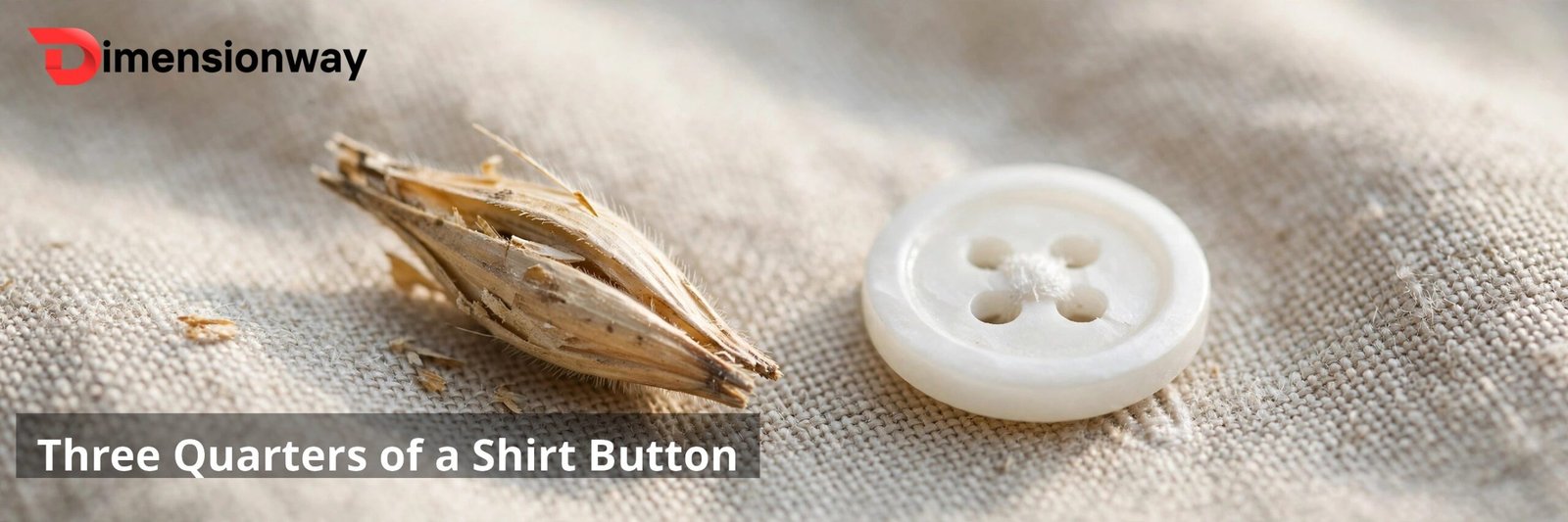
A standard shirt button is about 11.4 millimeters across. A barleycorn at 8.47 millimeters is roughly three-quarters of that diameter. Hold a button next to a ruler and mark off three-quarters of its width: that span is one barleycorn, one-third of an inch, one shoe size. Buttons, like grains, were once measured by eye against the body, which is probably why the two land so close together.
Between Five and Six Pennies Thick

A US penny is 1.52 millimeters thick. Stack five and you get 7.6 millimeters. Stack six and you get 9.12 millimeters. A barleycorn at 8.47 millimeters sits right between the two stacks. So if you want to feel one barleycorn of thickness, press a short stack of pennies between your fingers and imagine a coin and a half more. It is also a nice way to feel a half size: half a barleycorn is about 2.8 pennies of thickness.
A Third of Your Thumb
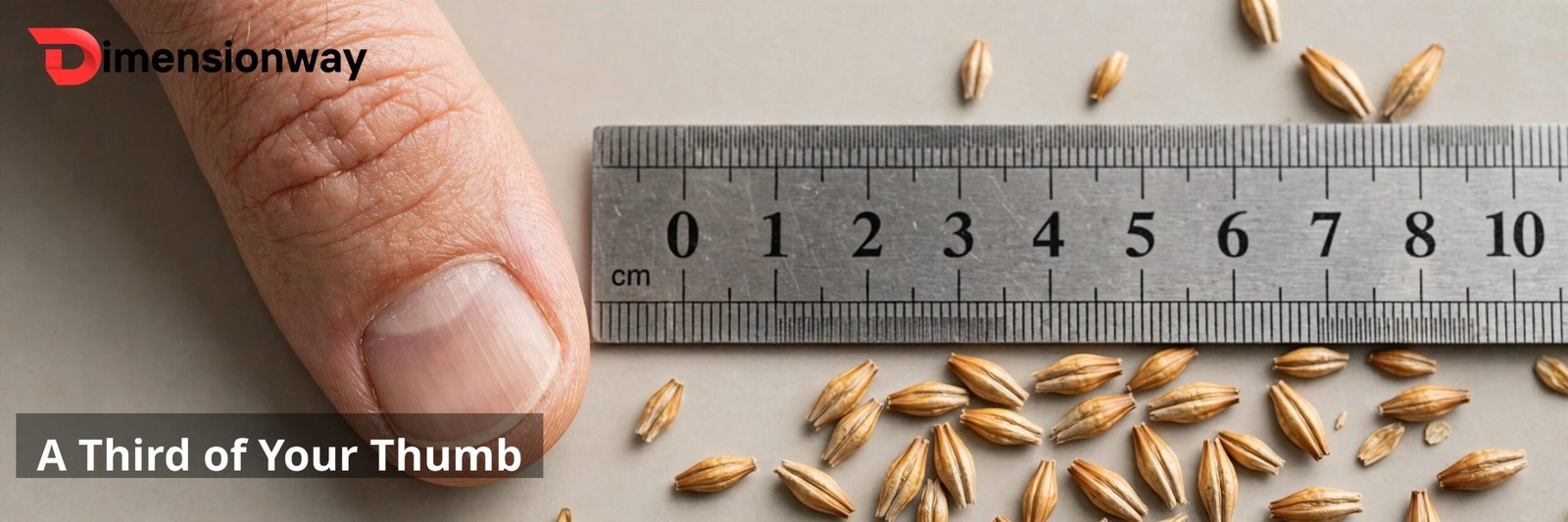
An adult thumb is about an inch wide at the knuckle, roughly 25 millimeters. Since three barleycorns make exactly one inch, one barleycorn is exactly one-third of your thumb’s width. This closes the circle the medieval lawmakers started: they defined the inch as three grains, and the grains they had in mind were roughly the width of the thumb’s three segments. Press your thumb against a ruler and divide it into thirds. Each third is one barleycorn, and it is also, by a very old definition, the width of the grain that started it all.
The Barleycorn Among Its Old Neighbors
The barleycorn was not alone. Medieval England measured small things with a whole family of grain and body units, and the barleycorn sat near the bottom of the ladder.
| Unit | Size | In barleycorns | Millimeters |
|---|---|---|---|
| Poppyseed | 1/4 barleycorn | 0.25 | 2.12 |
| Line | 1/4 barleycorn | 0.25 | 2.12 |
| Barleycorn | 1/3 inch | 1 | 8.47 |
| Digit | 3/4 inch | 2.25 | 19.05 |
| Finger | 7/8 inch | 2.625 | 22.23 |
| Nail (cloth) | 2 1/4 inches | 6.75 | 57.15 |
| Palm | 3 inches | 9 | 76.2 |
| Hand | 4 inches | 12 | 101.6 |
| Span | 9 inches | 27 | 228.6 |
The poppyseed is the most charming entry: a quarter of a barleycorn, about 2 millimeters, once used for fine measurements. The hand survives today in horse racing, still four inches, still twelve barleycorns. Everything else faded, but the barleycorn held its ground by becoming indispensable to the shoe trade.
Inches to Centimeters for Small Measurements
| Inches | Centimeters | What it is |
|---|---|---|
| 1/3 | 0.85 | One barleycorn |
| 1/2 | 1.27 | Half an inch |
| 2/3 | 1.69 | Two barleycorns |
| 1 | 2.54 | Three barleycorns, one inch |
| 2 | 5.08 | Six barleycorns |
| 4 | 10.16 | Twelve barleycorns, one hand |
| 12 | 30.48 | Thirty-six barleycorns, one foot |
| 36 | 91.44 | 108 barleycorns, one yard |
FAQs

What is a barleycorn?
A barleycorn is an English unit of length equal to one-third of an inch, about 8.47 millimeters. It is the notional length of a single grain of barley and the unit that British and American shoe sizes are built on: each full shoe size is one barleycorn longer than the previous size.
Why is a barleycorn exactly one-third of an inch?
Because medieval law said so. Under the Composition of Yards and Perches, from around 1300, three dry round grains of barley laid end to end were declared to equal one inch. From that inch the foot, the yard, and all larger measures were built up, making the barleycorn the foundation stone of the whole English length system.
Is the barleycorn still used today?
Yes, every time you buy shoes in the UK or the US. Each full size step is one barleycorn, each half size half a barleycorn. The European system uses the Paris point (two-thirds of a centimeter) instead, which is why EU sizes look so different from UK and US numbers.
How many barleycorns are in a shoe size?
Exactly one per full size. A US men’s size 10 foot is about 31.7 barleycorns long; a size 11 is about 32.7. The half size between them adds half a barleycorn, roughly 4.2 millimeters. For the full inch-by-inch breakdown, see our guide to how long a shoe is.
Did King Edward II invent the barleycorn?
Not exactly. Edward II standardized English measures in the 1300s, and the famous statute defining the inch as three barleycorns belongs to his era, but it defined the inch, not shoe sizes. There is no evidence he had anything to do with footwear. The first documented shoe-sizing system appeared in 1688, and the first one built on barleycorn steps in 1856.
Why do US and UK shoe sizes differ if both use barleycorns?
Because the step is the same but the starting line moved. Both systems advance one barleycorn per size, but the American scale starts from a different zero point, roughly one size off from the British scale. A UK 9 and a US men’s 10 fit the same foot. Same grains, different count.
How big is a real barley grain compared to the legal barleycorn?
Very close. Real barley kernels range from about 4 to 7 millimeters in short cultivars to 12 to 15 millimeters in long ones, and older agricultural sources put the average grain at about 8.8 millimeters. The legal barleycorn at 8.47 millimeters sits right near that average, which is exactly what the medieval standardizers were aiming for.
What is smaller than a barleycorn?
The poppyseed, defined as one-quarter of a barleycorn, about 2.12 millimeters. The line, an old printing and watchmaking unit, is the same size: one-quarter barleycorn, one-twelfth of an inch. Below that you are into fractions of grains, which is where the old system gracefully gave up.
How many barleycorns are in a foot? In a yard?
Thirty-six barleycorns make a foot (12 inches times 3), and 108 make a yard (36 inches times 3). The formal barleycorn was legally defined as one one-hundred-and-eighth of a yard, which is the same thing stated from the top down.
Can I measure a barleycorn at home?
Easily. Find the one-third inch mark on any ruler, or measure 8.5 millimeters on a metric ruler. No ruler? The gap between two LEGO studs is exactly 8 millimeters, and your pinky fingernail is about 8 to 10 millimeters wide. Either one gets you within half a millimeter of a true barleycorn.
Conclusion
A barleycorn is one-third of an inch, about 8.5 millimeters: a green pea, a pinky nail, one LEGO stud gap, three-quarters of a shirt button. It is the smallest unit most people will ever actually use, and they use it every time they pick a shoe size. Three of them make an inch, thirty-six make a foot, and one of them, added or taken away, is the entire difference between a shoe that fits and a shoe that does not.
Keep the three pictures that matter. The pea in your fingers. The pinky nail. The LEGO studs, one gap apart. The next time someone tells you they wear a size 10, you will know they are really telling you their foot is about thirty-two grains of barley long.
Related Reading
– How Long Is a Shoe? 10 Comparisons: the full inch-by-inch breakdown of what each shoe size means for the foot wearing it, built on the barleycorn steps explained here. – What Does 6 Inches Look Like?: eighteen barleycorns end to end, visualized with everyday objects. – How Big Is a Credit Card?: another small everyday object measured precisely, card thickness included.
Sources
- Wikipedia
- Country Life
- Footwearbiz
- Arab Times
- Cracked
- U.S. Mint

James Carter is the founder and editor of DimensionWay, where he researches, measures, and verifies real-world dimensions, from everyday objects to world-famous landmarks. Every number published on DimensionWay is cross-checked against manufacturer specifications and official sources, so readers always get accurate, easy-to-visualize comparisons.
