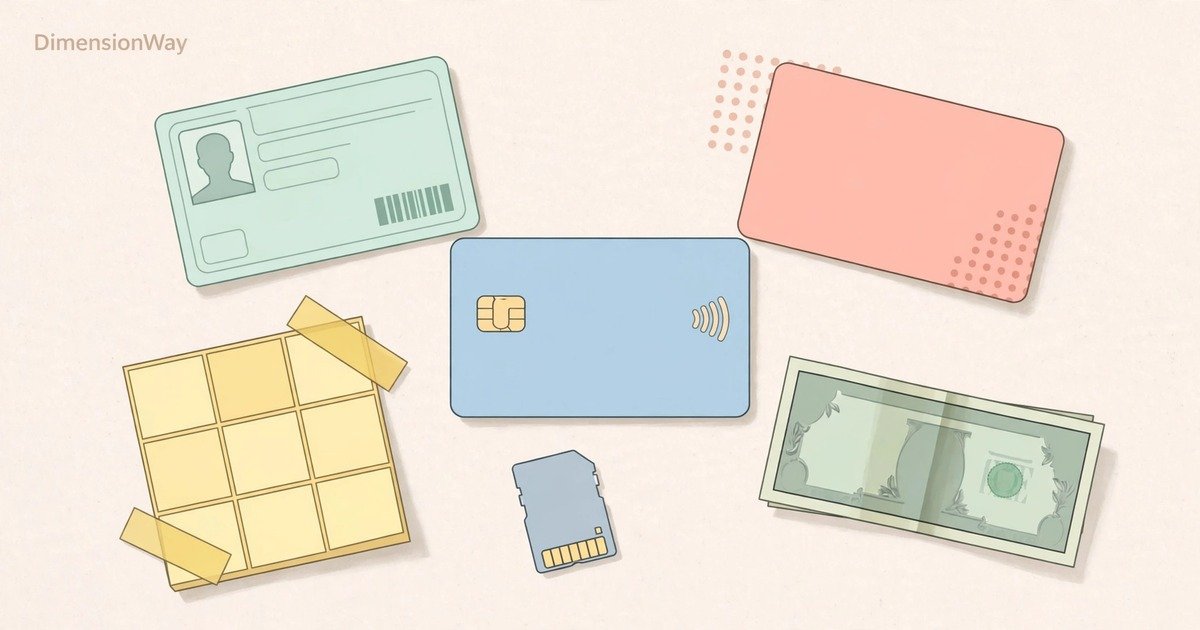
Pull a card from your wallet and hold it up. You handle this little rectangle every single day, yet almost nobody can tell you its exact size. People guess everything from “about two inches” to “the size of a phone screen.” The real answer is far more precise, and far more interesting, than most people expect.
That is because your credit card is not just any rectangle. It is one of the most strictly standardized objects on the planet, measured to a hundredth of a millimeter, and that tiny slab of plastic quietly dictates the design of wallets, ATMs, and card readers on every continent.
This guide gives you the exact dimensions, ten everyday things that match or nearly match it, and a few memory tricks that make the number stick for good.
How Big Is a Credit Card?
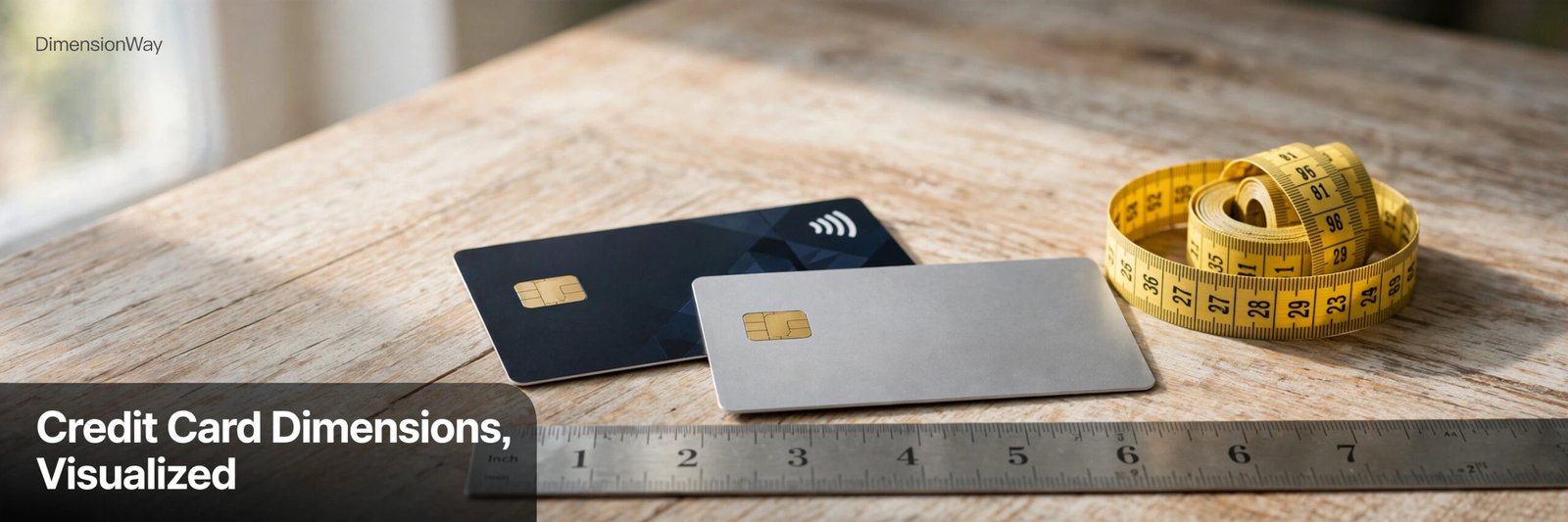
A credit card is 3.370 inches wide by 2.125 inches tall (85.60 by 53.98 millimeters), about 0.03 inches thick, following the ISO/IEC 7810 ID-1 standard used worldwide.
Here are the exact numbers. A standard credit card measures 3.370 inches (85.60 mm) wide, 2.125 inches (53.98 mm) tall, and 0.76 mm (0.030 inches) thick, with softly rounded corners of 3.18 mm radius. Its total area is 7.16 square inches, and its diagonal measures almost exactly 4 inches.
Why does it matter? Because this one rectangle is the key that unlocks every wallet, ATM, and payment terminal on Earth. Once you know its size by heart, you can estimate the size of licenses, gift cards, business cards, and dozens of pocket objects without ever reaching for a ruler.
Credit Card Dimensions in Every Unit
| Unit | Width | Height | Thickness |
|---|---|---|---|
| Inches | 3.370 in | 2.125 in | 0.030 in |
| Centimeters | 8.560 cm | 5.398 cm | 0.076 cm |
| Millimeters | 85.60 mm | 53.98 mm | 0.76 mm |
A few derived numbers worth knowing. The card’s aspect ratio is 1.59 to 1, curiously close to the famous golden ratio of 1.618. Its diagonal works out to 3.98 inches, so you can call it an even 4 inches corner to corner. And at 0.76 mm thick, one card equals roughly seven or eight sheets of ordinary copy paper stacked together.
Credit Card vs Everyday Items
| Item | Dimensions | Compared to a credit card |
|---|---|---|
| Driver’s license | 3.370 x 2.125 in | Identical, same ISO standard |
| Debit / ATM card | 3.370 x 2.125 in | Identical |
| Gift card | 3.370 x 2.125 in | Identical |
| Hotel key card | 3.370 x 2.125 in | Identical |
| US business card | 3.5 x 2 in | A touch wider, a touch shorter |
| 3×3 sticky note | 3 x 3 in | Square, about 26% more area |
| Poker playing card | 2.5 x 3.5 in | Taller and narrower, about 22% more area |
| US dollar bill | 6.14 x 2.61 in | Nearly twice as long |
| SD memory card | 32 x 24 mm | About one sixth the area |
Credit Card Stack and Row Math
| Arrangement | Math | Result |
|---|---|---|
| 3 cards stacked by height | 3 x 2.125 in | 6.375 in, about 6 inches |
| 6 cards stacked by height | 6 x 2.125 in | 12.75 in, about 1 foot |
| 11 cards laid end to end | 11 x 3.370 in | 37.07 in, about 3 feet |
| 33 cards in a stack | 33 x 0.030 in | About 1 inch tall |
| Cards to cover a dollar bill | 6.14 / 3.370 | About 1.8, so just under 2 |
10 Things Exactly (or Nearly) the Size of a Credit Card
A Driver’s License
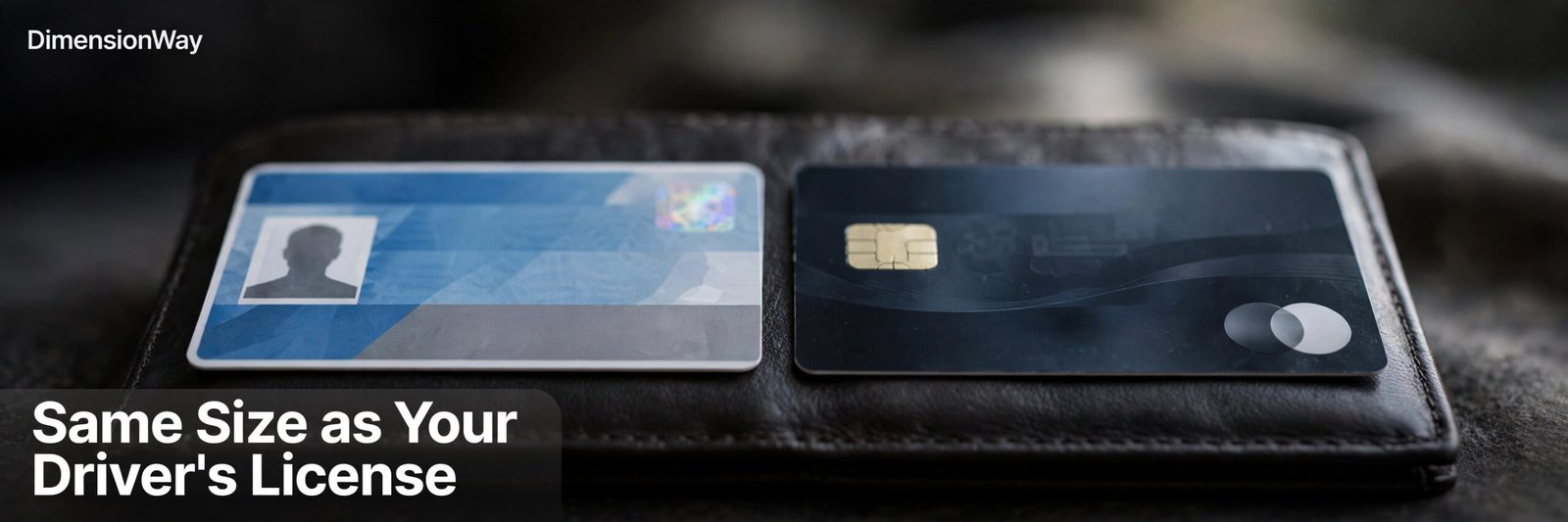
Your driver’s license is not just similar to your credit card. It is the exact same object, dimensionally speaking. Licenses follow the same ISO/IEC 7810 ID-1 standard: 85.60 by 53.98 mm, 0.76 mm thick. That is why a license slides into any card slot built for a credit card, from a wallet pocket to a hotel check-in scanner.
The shared standard is deliberate. Governments adopted the ID-1 format so that the machines already built for bank cards, readers, printers, and laminators, would work for IDs too. When you hand over your license at a bank, you are handing over a credit-card-sized credential by international design.
A Debit Card
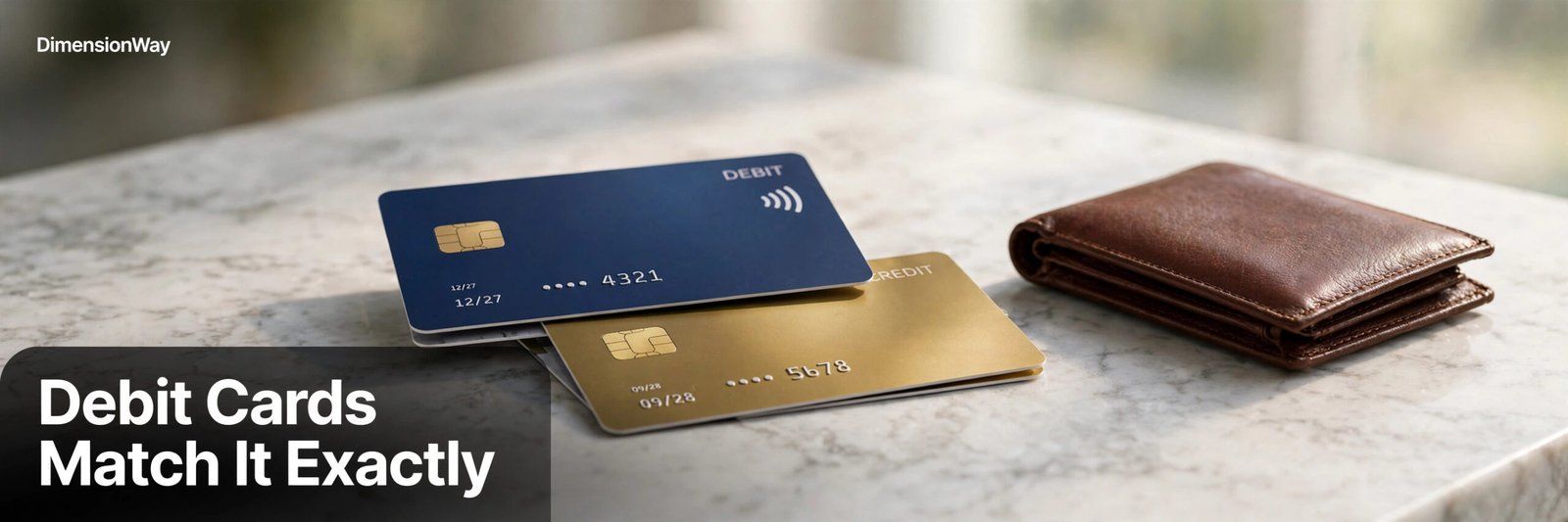
Debit cards match credit cards down to the fraction of a millimeter, and for the same reason: they travel through the same machines. An ATM card reader cannot tell whether the plastic it swallows draws from credit or checking. It only knows the ISO/IEC 7810 ID-1 rectangle, 3.370 by 2.125 inches.
This is why banks never experiment with debit card shapes. A card that deviated by even a millimeter could jam an ATM, and a jammed ATM is a customer-service disaster. So every debit card on Earth, from every bank, keeps the exact credit card footprint.
A Gift Card
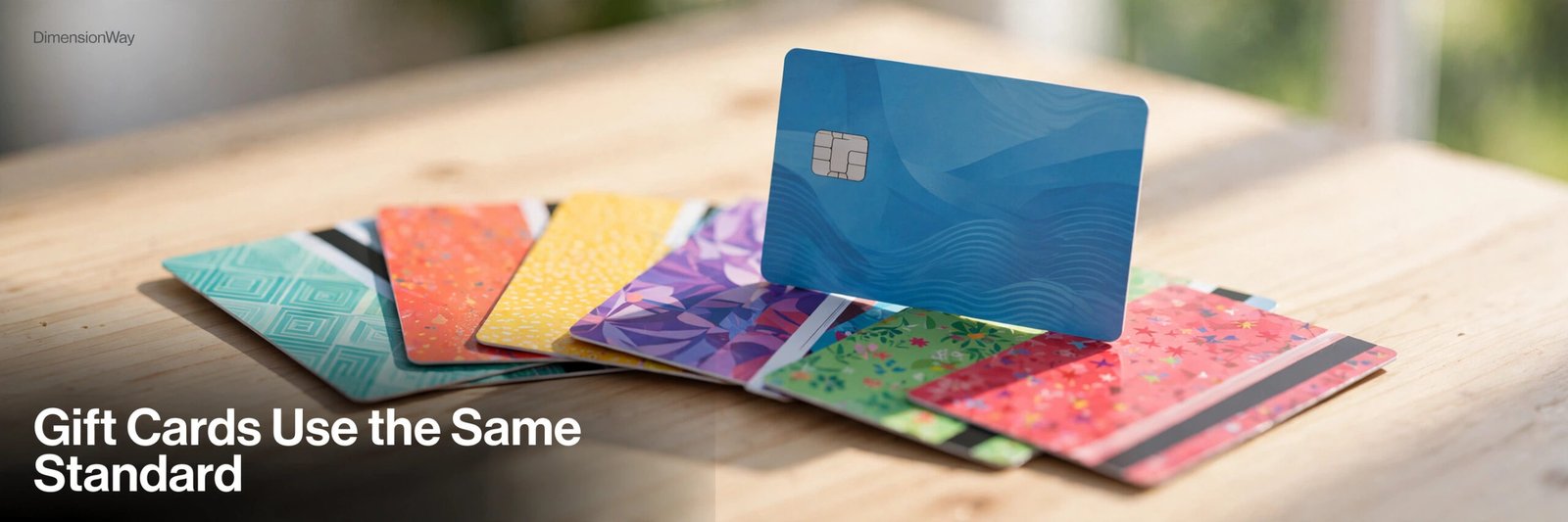
That birthday gift card from a coffee chain is a credit card in disguise. Retail gift cards are manufactured to the same CR80 specification, 3.370 by 2.125 inches, so they fit the same wallets, the same point-of-sale sleeves, and the same card printers that banks use.
The economics explain it. Card manufacturers run their presses for the ID-1 size all day long. Ordering a gift card in the standard size is cheap and instant. Ordering a custom size means custom tooling and higher cost per card. So the gift card industry simply borrows the credit card’s measurements.
A Hotel Key Card

Slide a hotel key card into the door lock and you are using the credit card standard to open a room. Hotel key cards are cut to the ID-1 size because the door-lock readers, like ATMs, were engineered around one universal rectangle.
There is a practical bonus. Travelers already carry wallets built for this exact size, so a key card tucks into the same slot as a credit card without a second thought. The next time you tap your room door, notice how the card feels exactly like the one you pay with. That is not a coincidence.
The First SIM Card (1991)
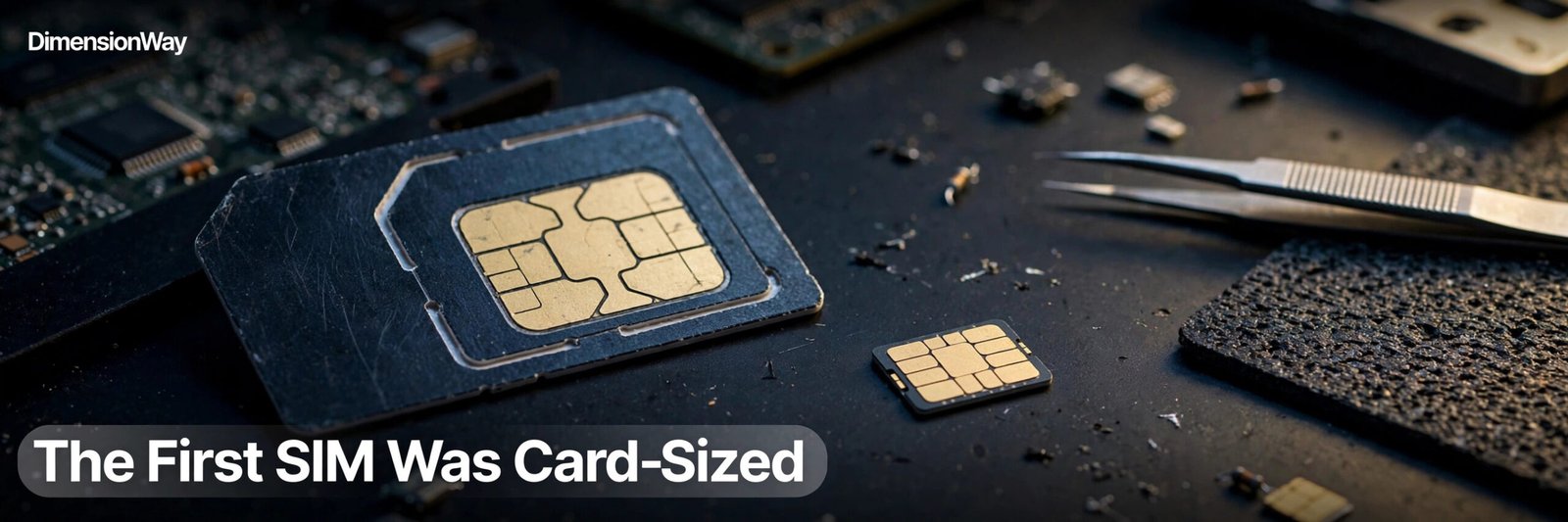
Here is the best piece of trivia on this list. When the first SIM cards shipped in 1991, they were exactly the size of a credit card: 85.6 by 53.98 by 0.76 mm, the full ID-1 format. They went into car phones and the giant portable phones of the era, where a card-sized SIM made perfect sense.
As phones shrank, the SIM shrank with them, from mini to micro to nano, but every generation kept the same 0.76 mm thickness and the same chip contact layout. The card-sized original is now obsolete, but it proves how dominant the credit card rectangle once was in tech design.
A US Business Card
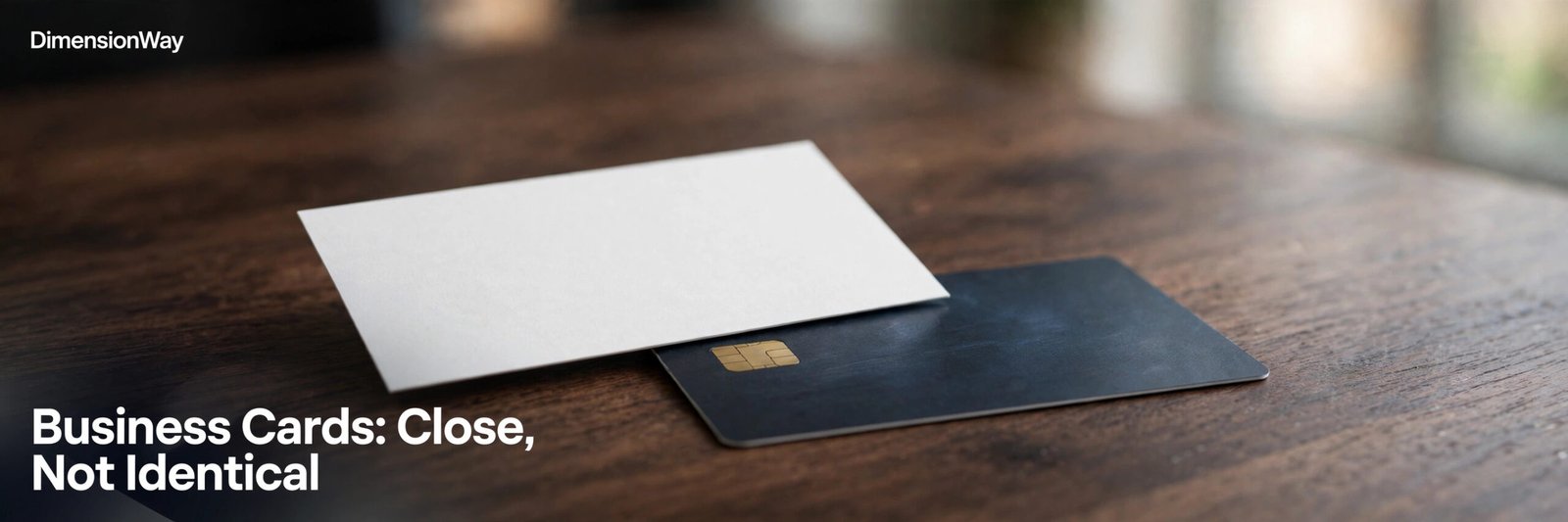
Hold a business card next to your credit card and you will spot the difference, but only just. The US business card standard is 3.5 by 2 inches, so it runs 0.13 inches wider than a credit card but 0.125 inches shorter. Laid on top of each other, the edges peek out on two sides.
The near-match is no accident either. Business cards evolved to fit the same wallets and cardholders as payment cards, so printers settled on a size that slides into a credit card slot without swimming in it. If your business card feels at home in your wallet, now you know why.
A 3×3 Sticky Note
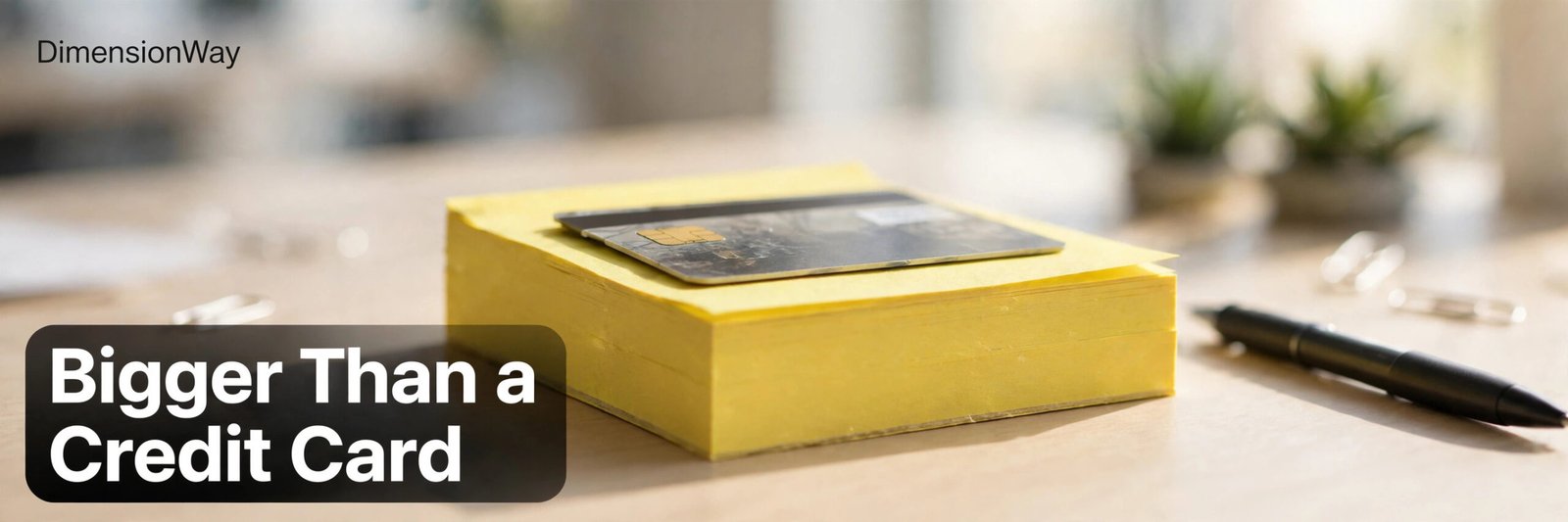
The classic yellow sticky note pad measures 3 by 3 inches, a perfect square with about 26 percent more area than a credit card. Place a card on one and it covers most of the square, leaving a small yellow border on the sides and a larger one top and bottom.
This makes the sticky note a handy desk ruler. Need to picture a credit card without one in hand? Think of the sticky note on your monitor, then shrink it a little in both directions and stretch it slightly wider. You are now holding the right rectangle in your mind.
An SD Memory Card
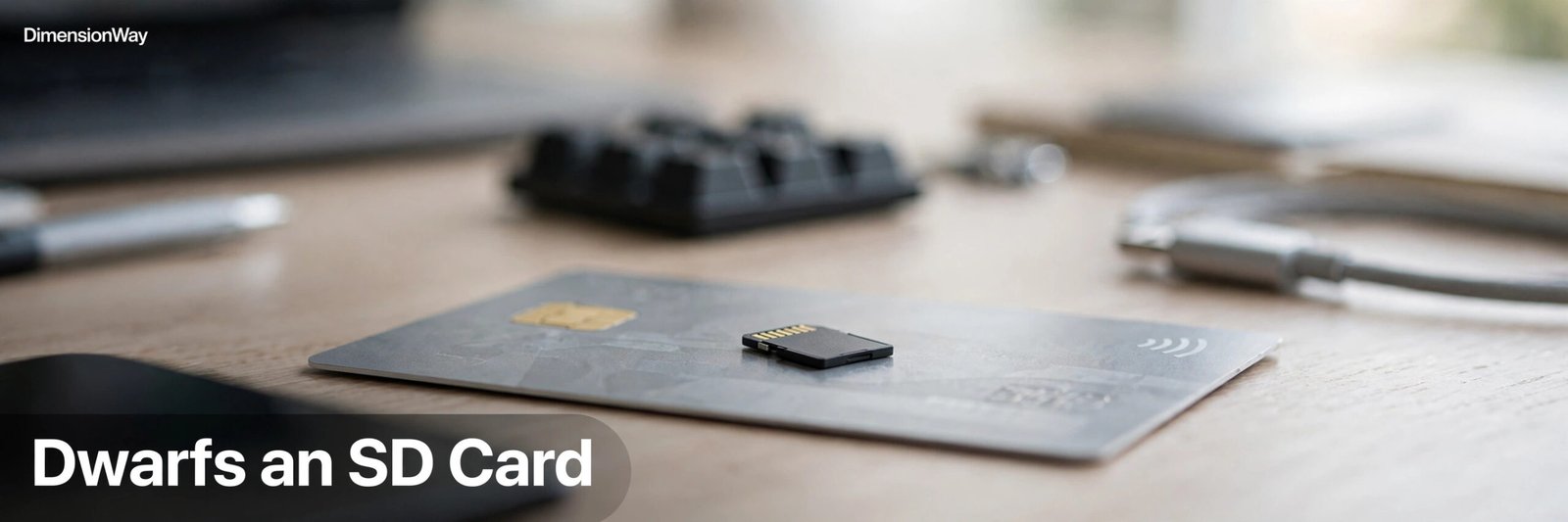
For a dramatic contrast, look at an SD memory card: 32 by 24 mm, barely a sixth of a credit card’s area. You could fit about six SD cards on the face of one credit card with room to spare, which is remarkable when you remember the SD card can hold a terabyte of data.
The comparison shows how much empty plastic a credit card really is. The chip and antenna occupy a tiny fraction of the surface. The rest exists for one reason: the ISO standard says the card must be that big so that every machine on Earth can grip it.
A Dollar Bill
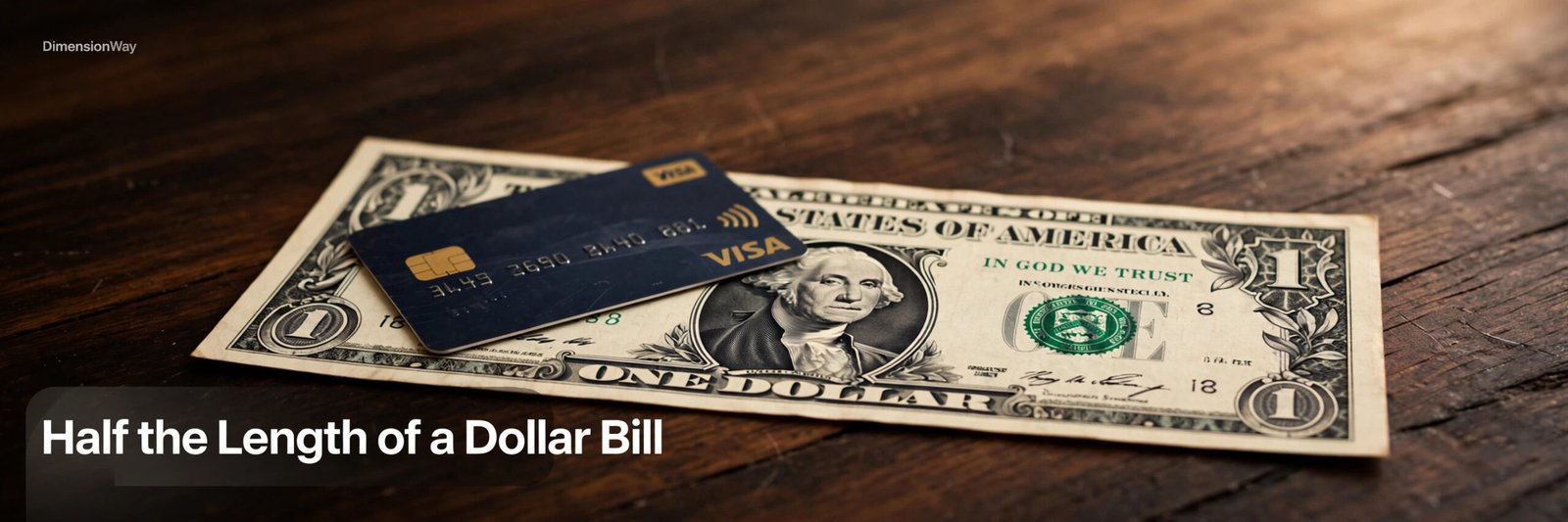
A US dollar bill measures 6.14 by 2.61 inches, which makes a credit card look small by comparison. The card is about 55 percent as long as the bill and 81 percent as tall. Lay two cards end to end and you nearly span a full dollar.
This is a useful wallet trick. Bills and cards share the wallet because the wallet was designed around both, but the bill was there first. American paper currency settled on its size in 1929, decades before the credit card standard arrived, so the card had to fit the wallet, not the other way around.
A Poker Playing Card
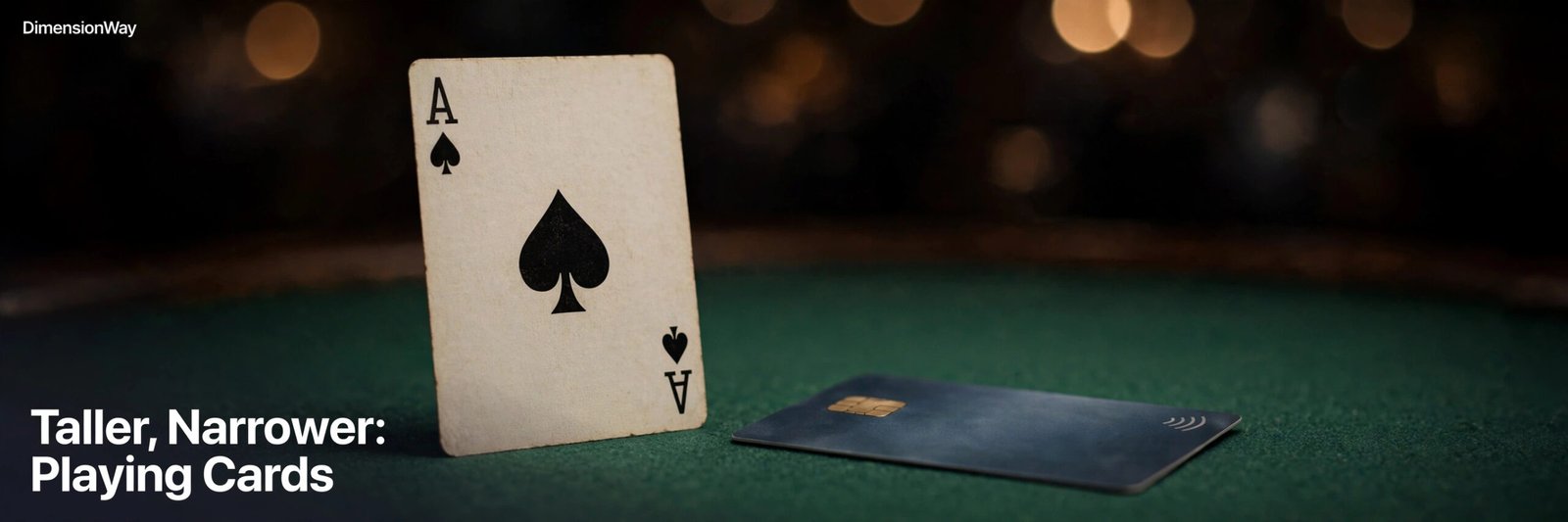
A poker playing card measures 2.5 by 3.5 inches, giving it about 22 percent more area than a credit card in a taller, narrower shape. Stand them side by side and the playing card towers over the credit card while looking slimmer.
The different proportions come from different jobs. Playing cards are held in a fan in one hand, so height matters more than width. Credit cards are swiped through slots, so a wide, low rectangle feeds machines more reliably. Same pocket, different engineering.
How to Picture a Credit Card Without One
Want a faster way to lock in the size? Try these three tricks.
First, use your driver’s license. You carry an exact copy of the credit card rectangle in your wallet right now, issued by your state government. If you can picture your license, you can picture any credit card ever made.
Second, stack three cards for six inches. Three credit cards stacked by their short edge measure 6.375 inches, just over six. Our guide to what 6 inches looks like breaks that length down with its own everyday objects.
Third, lay eleven cards for three feet. Eleven credit cards laid end to end stretch 37 inches, just past the three-foot mark. Our guide to how long 3 feet is shows what that distance looks like in the real world.
FAQs
What are the exact dimensions of a credit card?
A standard credit card is 3.370 inches wide by 2.125 inches tall (85.60 by 53.98 millimeters) and 0.76 mm (0.030 inches) thick, per the ISO/IEC 7810 ID-1 standard. The corners are rounded with a 3.18 mm radius.
Why are all credit cards the same size?
All credit cards follow the ISO/IEC 7810 ID-1 international standard so they work in every ATM, payment terminal, and card reader worldwide. The size was first standardized in the 1960s and later harmonized globally. Without it, a card issued in one country might jam a machine in another.
Is a debit card the same size as a credit card?
Yes, exactly. Debit cards, ATM cards, and prepaid cards all use the identical ID-1 dimensions (3.370 by 2.125 inches) because they pass through the same machines as credit cards.
Is a driver’s license the same size as a credit card?
Yes. Driver’s licenses and most government ID cards follow the same ISO/IEC 7810 ID-1 standard, so they are dimensionally identical to credit cards and fit the same wallet slots.
How thick is a credit card?
A standard credit card is 0.76 mm thick, which is 0.030 inches. That is roughly the thickness of seven or eight sheets of ordinary copy paper. A stack of about 33 cards would stand one inch tall.
How much does a credit card weigh?
A standard plastic credit card weighs about 5 grams. Premium metal cards are much heavier, typically 13 to 18 grams, which is why they feel so substantial in the hand. The dimensions stay the same either way.
Are metal credit cards the same size as plastic ones?
Yes. Metal cards from premium issuers keep the exact ID-1 footprint (3.370 by 2.125 inches) so they fit every reader and wallet. They may feel slightly thicker, but the standard dimensions do not change.
What is the diagonal measurement of a credit card?
Corner to corner, a credit card measures 3.98 inches, so you can call it an even 4 inches on the diagonal. In metric that is 101.2 mm, or just over 10 centimeters.
How many credit cards laid end to end make 3 feet?
About 11. Eleven cards laid end to end measure 37.07 inches, just past the 36-inch three-foot mark. Ten cards get you 33.7 inches, a little short.
Do all countries use the same credit card size?
Yes. The ISO/IEC 7810 ID-1 standard is global, so a card issued in any country has the same physical dimensions. That is what lets you use your card in ATMs and terminals anywhere in the world.
Conclusion
A credit card is 3.370 by 2.125 inches, 0.76 mm thick, and identical in size to your driver’s license, your debit card, your gift cards, and even the very first SIM card from 1991. It is a touch smaller than a business card, clearly smaller than a dollar bill, and about six times the area of an SD card.
Pick the two or three comparisons that clicked for you and keep them. The next time someone asks how big something pocket-sized is, you will not need to guess. You already carry the reference in your wallet.
Related Reading
- What Does 6 Inches Look Like? 10 Visual Examples: three credit cards stacked reach just past six inches.
- How Long Is 3 Feet? 10 Everyday Comparisons: eleven credit cards laid end to end pass the three-foot mark.
Sources
- ISO
- Chase Bank
- WalletHub via Sapling
- Wikipedia
- Office Depot
- U.S. Bureau of Engraving and Printing
- SD Association
- 3M

James Carter is the founder and editor of DimensionWay, where he researches, measures, and verifies real-world dimensions, from everyday objects to world-famous landmarks. Every number published on DimensionWay is cross-checked against manufacturer specifications and official sources, so readers always get accurate, easy-to-visualize comparisons.
