Look up at a downtown tower and ask how high 300 feet really is. Most people cannot get past “really tall.” The number shows up in drone rules, building listings, and trivia questions, but it stays blurry in the mind.
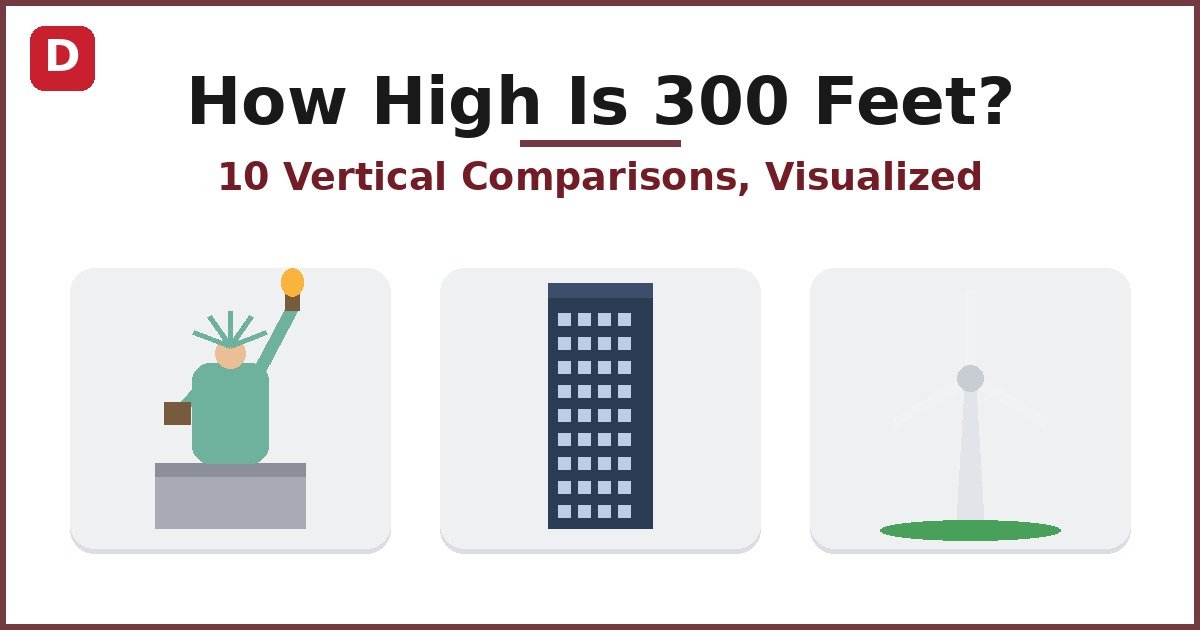
That is a shame, because 300 feet is one of the most useful heights to know. It is the Statue of Liberty from the ground to her torch. It is a 30-story office building. It is a football field stood on its end.
Once you can picture 300 feet, you can judge the height of almost any tower, crane, or tree you meet. This guide gives you ten vertical landmarks, exact conversions, and a few tricks to lock the number in for good.
How High Is 300 Feet?
300 feet is the height of the Statue of Liberty from the ground to her torch, a 30-story office building, or a football field stood on end.
Here are the exact numbers. Three hundred feet equals 3,600 inches, 9,144 centimeters, 91.44 meters, and exactly 100 yards. In miles it is about 0.057, so it fits into a single mile roughly 17.6 times.
Why does it matter? Because 300 feet is the height where buildings stop feeling human-sized. Anything at this scale, from wind turbines to cell towers, shares the same vertical footprint, so one mental image covers them all.
300 Feet Conversion Tables
300 Feet to Inches
| Feet | Inches |
|---|---|
| 250 | 3,000 |
| 275 | 3,300 |
| 300 | 3,600 |
| 325 | 3,900 |
| 350 | 4,200 |
300 Feet to Meters
| Feet | Meters |
|---|---|
| 250 | 76.20 |
| 275 | 83.82 |
| 300 | 91.44 |
| 325 | 99.06 |
| 350 | 106.68 |
300 Feet in Building Stories
| Building type | Feet per floor | Stories in 300 feet |
|---|---|---|
| Office tower | 10 | about 30 |
| Apartment building | 11 | about 27 |
| Luxury condo | 12 | about 25 |
| Historic loft | 13 | about 23 |
| Big-box retail | 14 | about 21 |
10 Things That Stand 300 Feet Tall
The Statue of Liberty (305 Feet)

The Statue of Liberty stands 305 feet from the ground to the tip of her torch, according to the National Park Service. That makes her just five feet taller than our 300-foot mark, close enough to serve as the perfect vertical ruler. The stone pedestal contributes 154 feet of that height, and the copper figure rises 151 feet above it.
Picture yourself on the ferry deck looking up. The torch sits higher than a 30-story building, and her index finger alone stretches nearly 8 feet, longer than a tall man is tall. When you stand at the base and crane your neck, that is exactly what 300 feet of height feels like.
Here is a detail most visitors miss. The statue was a gift from France, completed in 1884 and assembled in New York Harbor in 1886, and Gustave Eiffel designed its inner steel skeleton. The same engineering mind behind the Eiffel Tower helped Liberty reach her full 305-foot height.
A 30-Story Office Building

A standard commercial floor measures about 10 feet from one finished floor to the next. Multiply that by 30 stories and you land exactly on 300 feet. Walk through any American downtown and the mid-size glass towers around you are living 300-foot rulers.
Count the windows the next time you pass one. Thirty rows of glass stacked above the sidewalk is a sight you can find in almost every city, which makes this the most repeatable reference on the list. If the tower looks a little shorter or taller, you are still within a story or two of 300 feet.
A practical tip for travelers: hotel booking sites often list the floor count but not the height. Multiply the floors by 10 and you will know roughly how high your room sits. A 30th-floor room puts you right at the 300-foot line.
A Football Field, Stood Upright

An American football field measures exactly 100 yards from goal line to goal line, and 100 yards equals exactly 300 feet. Tip that field on its end and the far goal line floats 300 feet in the air. No other example on this list matches the number so perfectly.
This is the trick our companion guide to how far 300 feet is uses in reverse. If you have ever stood on a field, you already know the distance. Stand it upright in your mind and you know the height too.
One honest footnote: the full field including both end zones runs 360 feet. The 300-foot figure covers the playing field between the goal lines only. For a quick mental picture, though, the goal-line-to-goal-line version is the one to keep.
Big Ben (Elizabeth Tower)
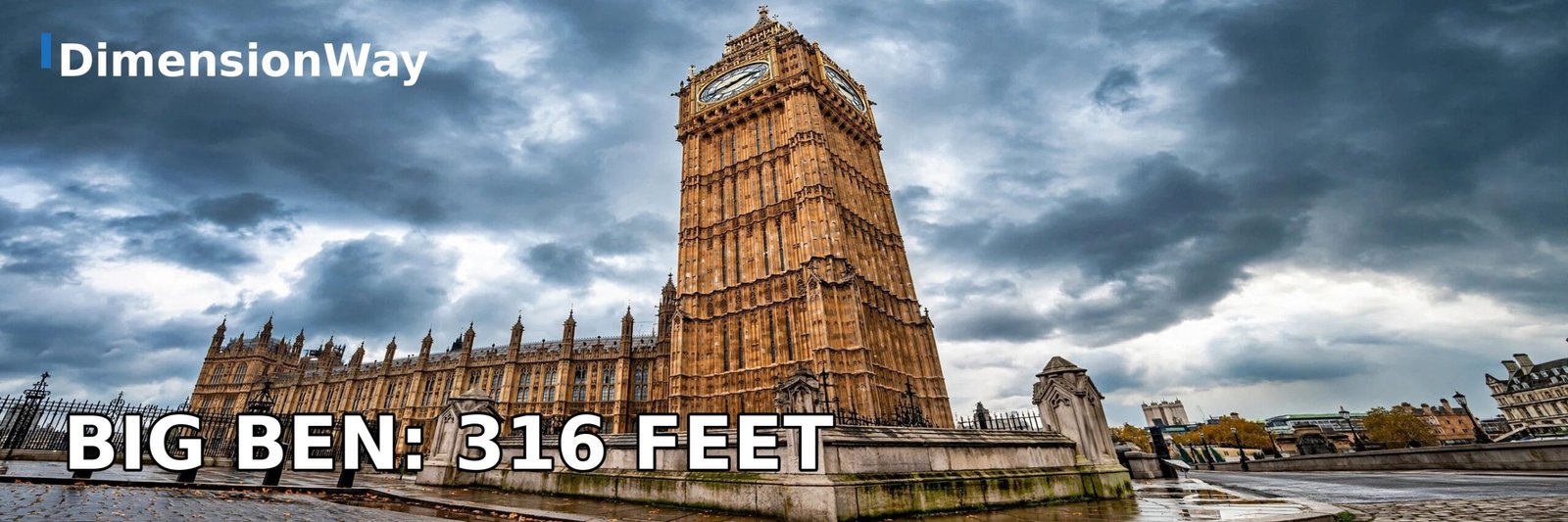
The Elizabeth Tower in London, home to the bell called Big Ben, rises about 316 feet above the Thames. That is 16 feet taller than our mark, so picture the 300-foot line sitting just below the clock face. The four clock dials each measure 23 feet across.
Stand in Parliament Square and look up. The tower narrows as it climbs, which makes it feel even taller than it is. If you can hold that image, you can spot a 300-foot tower in any skyline, because Big Ben’s proportions are famous worldwide.
A bit of history: the tower was completed in 1859 and renamed the Elizabeth Tower in 2012 for Queen Elizabeth II’s Diamond Jubilee. It has survived more than 160 years of London weather, which says something about building tall and building well.
A Giant Sequoia

The tallest giant sequoias in California reach about 300 feet into the sky. The famous General Sherman tree stands 275 feet tall, and the tallest known members of the species push right up to the 300-foot line. These are among the largest living things by volume on Earth.
Walk the trail in Sequoia National Park and the scale breaks your brain a little. The trunk at the base can measure 25 feet across, wider than a city bus is long. Looking up from the roots, the top disappears into the canopy, and that vanishing point sits at 300 feet.
Worth knowing before you visit: coast redwoods, the sequoia’s taller cousins, can pass 370 feet. So if a ranger tells you the tree in front of you is 300 feet, you are looking at a sequoia near its maximum, a true giant even among giants.
A Modern Wind Turbine
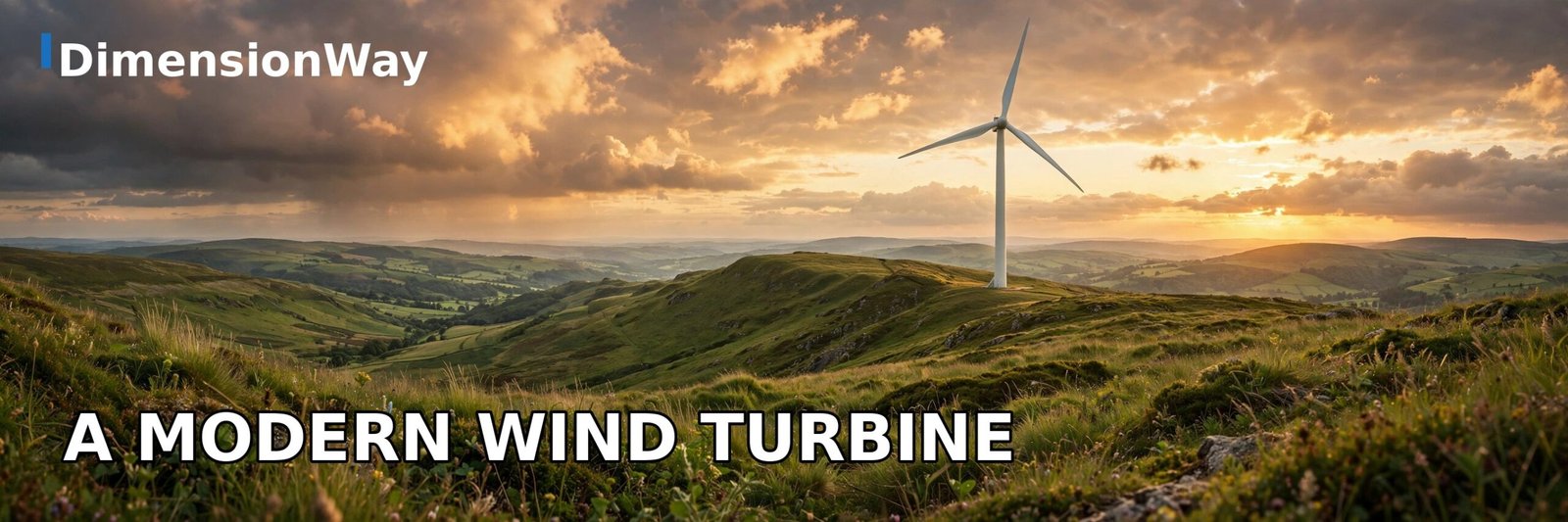
A modern onshore wind turbine typically reaches 300 to 400 feet from the ground to the tip of its highest blade. The 300-foot class is the workhorse of American wind farms, tall enough to catch steady wind and short enough to transport by road.
Drive past a wind farm and pick one turbine. The white tower looks slender from the highway, but the blade sweeping overhead reaches as high as the Statue of Liberty’s torch. That quiet giant on the ridge is a 300-foot landmark you can visit for free.
The scale keeps growing. Offshore turbines now push past 800 feet, but onshore machines stay near 300 because of road and crane limits. So the turbines spinning over farmland today are likely the closest 300-foot structures to your home.
A Drone at 300 Feet

In the United States, the FAA caps most drone flights at 400 feet above ground level. A drone hovering at 300 feet is flying at three quarters of its legal ceiling, high enough that it looks like a small dark speck from the ground.
If you fly a drone, you know this altitude well. At 300 feet the camera sees rooftops, treetops, and whole neighborhoods in one frame, but individual people shrink to dots. It is the sweet spot for aerial photos: high enough for scope, low enough for detail.
A safety note worth remembering: manned aircraft can legally fly as low as 500 feet over uncongested areas, which leaves only a 200-foot buffer above the drone ceiling. That slim margin is exactly why the 400-foot rule exists, and why 300 feet keeps you comfortably inside it.
A Tower Crane at Full Height

A typical freestanding tower crane stands 200 to 265 feet tall, and large cranes with extra climbing sections reach 300 feet and beyond. On a big downtown project, the crane operator’s cab sits right around our 300-foot mark.
Watch a crane climb a growing tower and you are watching 300 feet of steel do slow gymnastics. The operator climbs a ladder inside the mast every morning, and the view from the cab covers the whole construction site like a map.
Here is what surprises people: the crane is anchored to the building as it rises, so its final height depends on the project. On supertall towers, cranes can climb past 1,000 feet. But on the ordinary 30-story buildings that fill our cities, 300 feet is where the cab parks.
A 27-Story Apartment Tower

Residential floors run a little taller than office floors, about 11 feet each, to fit ductwork and deeper ceilings. Divide 300 by 11 and you get about 27 stories. The apartment towers ringing most city centers are 300-foot buildings wearing a different uniform.
If you live on the 27th floor, your balcony sits at the 300-foot line. Look down and cars become toys, look across and you are eye to eye with office workers in the next tower. It is the same height as the office building, just counted in homes instead of desks.
Renters can use this math too. Listings rarely state the height, but the floor number tells the story. Multiply your floor by 11 and you will know how far above the street your morning coffee sits.
A 300-Foot Cell Tower
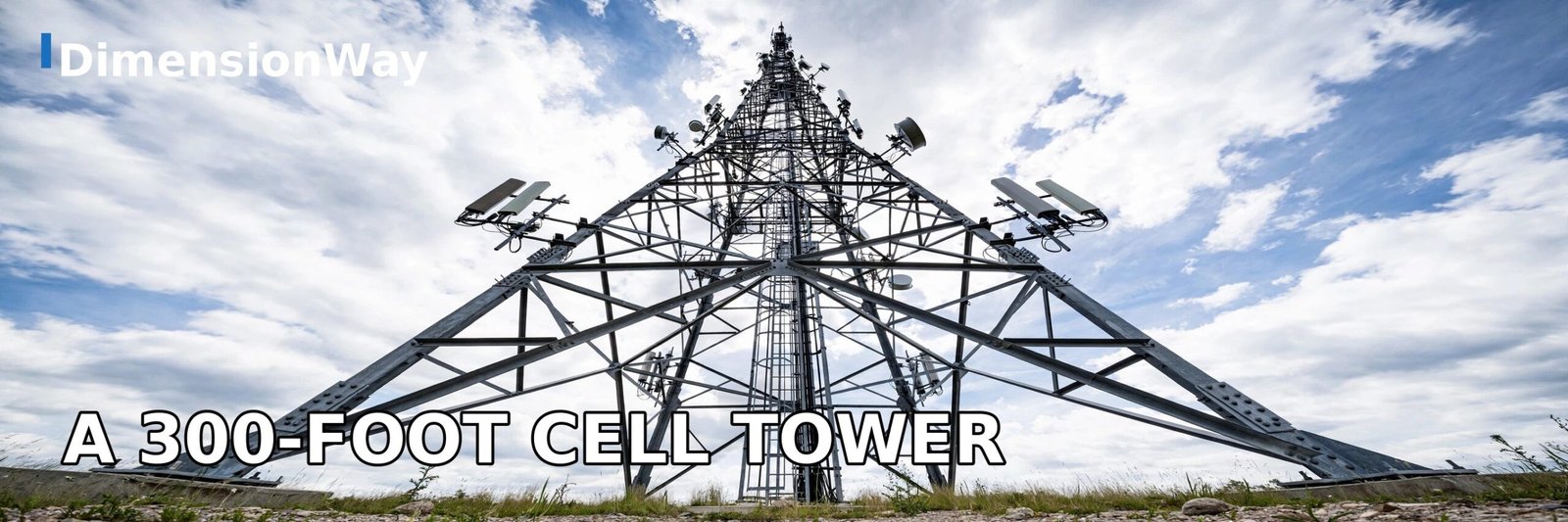
The macro cell towers that carry mobile signals typically stand 200 to 400 feet tall, and 300 feet is one of the most common heights. Carriers like that number because it clears trees and low buildings while staying under stricter aviation lighting rules.
You have driven past hundreds of them disguised as pine trees, flagpoles, or church steeples. The next time you spot one, remember that its blinking red light sits at the 300-foot line, the same height as Lady Liberty’s torch.
Why not taller? In the US, structures above 200 feet generally need FAA obstruction lighting, and the requirements step up with height. Three hundred feet hits the sweet spot: tall enough for coverage, simple enough to permit.
How to Picture 300 Feet High in Everyday Life
Want a faster way to lock in 300 feet? Try these three tricks.
First, use the Statue of Liberty. You have seen her in a hundred movies, and now you know she stands 305 feet from the ground to her torch. Round down five feet and you have the number.
Second, stand a football field on end. You already know the field is 100 yards long from our guide to how far 300 feet is. Flip it vertical and the far goal line marks 300 feet in the sky.
Third, count thirty stories. Any downtown tower with about thirty rows of windows is a 300-foot ruler you can revisit anytime. You can also compare any two heights side by side with our free Height Comparator tool.
FAQs
How many meters is 300 feet?
Exactly 91.44 meters. Multiply 300 by 0.3048 and you get 91.44, which most people round to about 91 meters.
How many stories is 300 feet?
About 30 stories in a commercial building at 10 feet per floor, or about 27 stories in a residential building at 11 feet per floor.
Is the Statue of Liberty 300 feet tall?
Almost exactly. She stands 305 feet from the ground to the tip of her torch, according to the National Park Service, just five feet over the mark.
How many yards is 300 feet?
Exactly 100 yards. Three feet make a yard, so 300 divided by 3 gives you a clean 100.
How long does it take to fall 300 feet?
About 4.3 seconds in free fall, ignoring air resistance. That comes from the physics formula using 91.44 meters of drop height.
Can you see a person from 300 feet up?
Yes, you can see a person’s outline and movement clearly, but fine facial details are impossible to make out at that distance.
How many 6-foot people stacked equal 300 feet?
Exactly 50. Stack fifty 6-foot adults head to toe and the top of the pile reaches the 300-foot line.
Is 300 feet taller than Big Ben?
No. The Elizabeth Tower, which holds Big Ben, rises about 316 feet, so it stands roughly 16 feet taller than 300 feet.
How far can you see from 300 feet high?
About 21 miles to the horizon over flat ground or open water. Height buys you a long view, which is why lighthouses and watchtowers were built tall.
Is 300 feet the same as a football field?
Goal line to goal line, yes. An American football field measures exactly 100 yards between the goal lines, which is exactly 300 feet.
Conclusion
Three hundred feet is 3,600 inches, 91.44 meters, and exactly 100 yards. It is the Statue of Liberty from the ground to her torch, a 30-story office building, and a football field stood on end. It is the height where a drone nears its legal ceiling and a tower crane parks its cab.
Pick the two or three comparisons that clicked for you and keep them. The next time you look up at a tower, a turbine, or a tree, you will not need to guess. You will already know what 300 feet of height looks like.
Related Reading
- How Far Is 300 Feet? 13 Things That Long, Visualized: the horizontal twin of this guide, from goal line to goal line.
- How Long Is 50 Feet? 10 Real-World Examples: step down and see what fifty feet looks like next to buildings and landmarks.
- How Long Is 3 Feet? 10 Everyday Comparisons: the humble yard, explained with everyday objects.
Sources
- National Park Service
- UK Parliament
- Federal Aviation Administration
- NFL
- U.S. Commercial Construction Standards
- Wind Industry Data
- Crane Industry Data
- Telecom Industry Data

James Carter is the founder and editor of DimensionWay, where he researches, measures, and verifies real-world dimensions, from everyday objects to world-famous landmarks. Every number published on DimensionWay is cross-checked against manufacturer specifications and official sources, so readers always get accurate, easy-to-visualize comparisons.

1 thought on “How High Is 300 Feet? See It Next to Everyday Giants”